
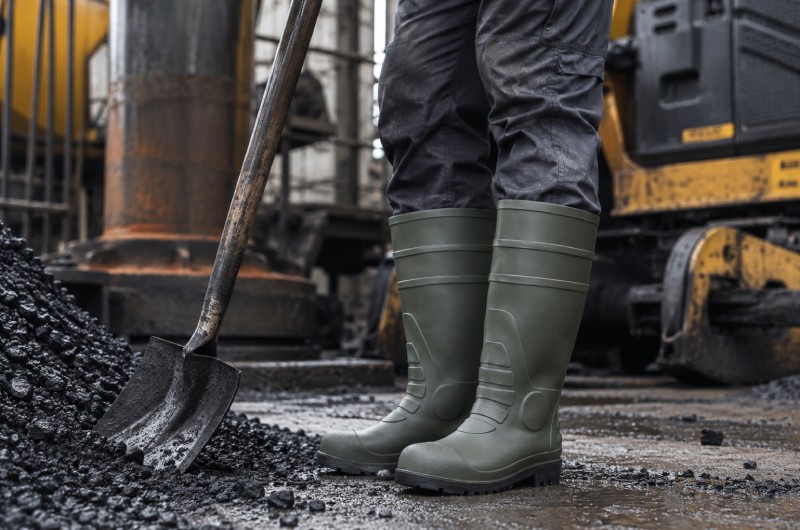
We provide and specially design a safety work rain boots to solve the danger that might happened in mining areas, and other heavy-duty workplaces, requiring waterproof protection, anti-slip performance, anti-smashing, and anti-puncture safety support.
Mining and industrial workplaces can combine water, mud, uneven ground, heavy materials, long shifts, and site-specific hazards. A suitable work rain boot must be selected for the actual risk assessment rather than chosen by appearance alone. Anhui Yufeng New Material Technology Co., Ltd. works with PPE distributors, industrial suppliers, importers, and private-label brands to develop waterproof boot programs around the intended task, working conditions, destination standards, and buyer specification.
Our solution can cover general waterproof industrial boots as well as styles developed with requested protective options. The exact performance depends on the complete finished product and must be verified under the applicable test method. We therefore distinguish between a requested feature, such as a protective toe or penetration-resistant component, and a certified claim for a specific model.
A boot for a surface maintenance crew may need a different specification from footwear used around extraction areas, processing plants, workshops, wash-down zones, utilities, or material handling. Before recommending a direction, we ask where the boot will be worn, what surfaces and contaminants are present, how long it is worn, whether the work is indoors or outdoors, and which hazards have been identified by the employer or PPE buyer.
Important questions include exposure to standing water, mud, oils, fuels, cleaning agents, abrasion, falling objects, sharp debris, cold, heat, or electrical risks. No single material or tread is suitable for every condition. Chemical and slip performance, in particular, should be evaluated against the substances, floor surfaces, and test requirements relevant to the workplace.
Depending on the project, an OEM industrial boot specification may consider:
- Waterproof molded construction and a shaft height suitable for the task.
- PVC or another agreed material direction based on use and target market.
- Outsole pattern designed for the expected ground and contamination conditions.
- Protective toe options where impact or compression hazards are identified.
- Penetration-resistant components where sharp underfoot hazards are part of the risk assessment.
- Heel, ankle, shin, kick-off, or other structural details as applicable to the design.
- Lining and insole choices for comfort, moisture management, or seasonal use.
- High-visibility color accents, size identification, logos, and private-label packaging.
These options require compatibility review. Adding a component can change weight, fit, flexibility, production method, cost, and test scope. The final combination is confirmed through product development rather than assembled from isolated marketing claims.
Safety footwear requirements vary by country and buyer. For example, ISO 20345 addresses basic and optional requirements for general-purpose safety footwear, including areas such as mechanical risks, slip resistance, thermal risks, and ergonomic behavior. Other markets or employers may apply different standards or additional rules. The buyer should state the target standard, classification, optional markings, and destination before sampling.
Where testing is required, both parties should agree on the exact model, size selection, test method, laboratory, acceptance criteria, report format, and responsibility for cost. A passing result for one construction, material, or size cannot automatically be applied to every boot. Labels and packaging claims should match the verified product and current report.
Protection must be considered together with fit and work routine. Size range, toe space, calf opening, shaft flexibility, boot weight, lining, insole, and ease of removal can affect daily acceptance by workers. Thick socks or cold-weather liners may change the fit direction. A deep tread may support certain outdoor surfaces but can also retain more material and require different cleaning.
Sample wear evaluation can provide useful feedback before bulk production, but it should not replace formal testing for regulated safety claims. Buyers should confirm how the footwear will integrate with trousers, protective clothing, and other PPE used at the site.
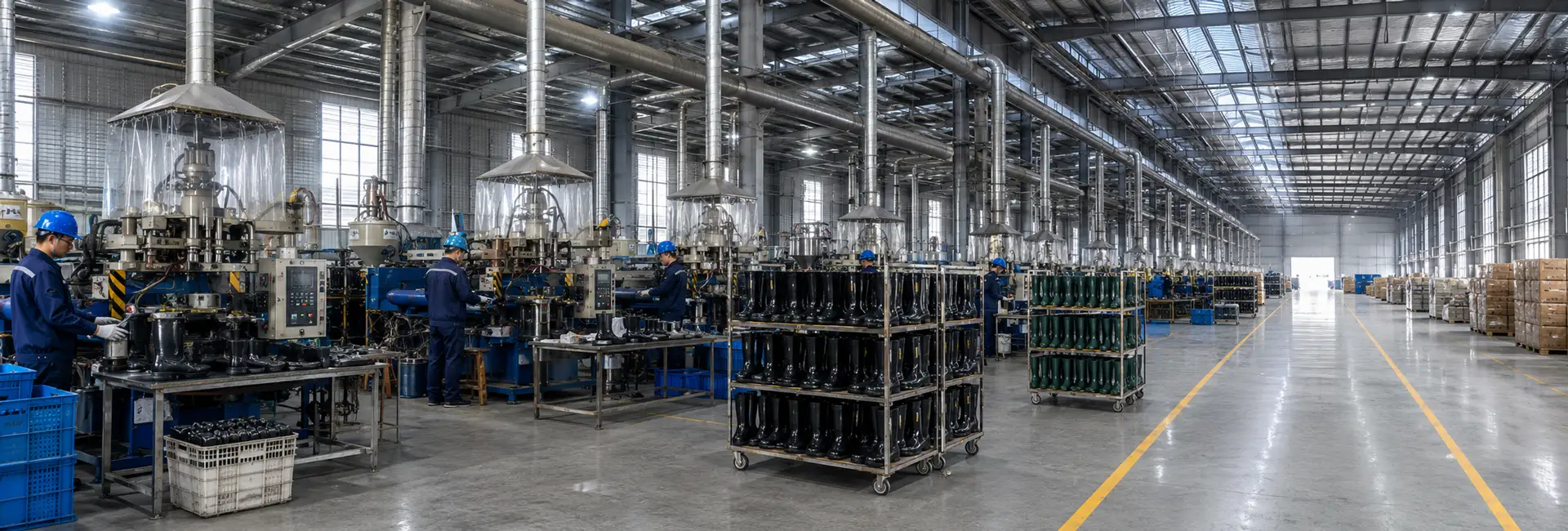
Industrial programs need a clear approved specification. Our production and quality inspection process can include material and component identification, first-piece review, in-process checks, finished appearance, size marking, requested protective components, packaging, and project-specific functional checks. Buyer-appointed inspection or third-party testing can be coordinated when agreed in advance.
If a nonconformity is found, affected goods are separated for review and corrective action. Inspection records and approved references also support repeat-order consistency and later claim investigation.
Begin with our OEM and private label solution if you are building a complete distributor range, or review the related construction rain boot solution for job-site applications.
Provide the workplace description, identified hazards, floor and ground conditions, contaminants, climate, required standard and classification, size range, estimated quantity, branding needs, and destination. If possible, include an existing boot, specification, risk assessment summary, or test requirement.
Contact Anhui Yufeng to discuss waterproof industrial rain boots, safety boot development, samples, testing coordination, and bulk OEM supply. We will review the project against the stated use rather than assume one model fits every industrial environment.