
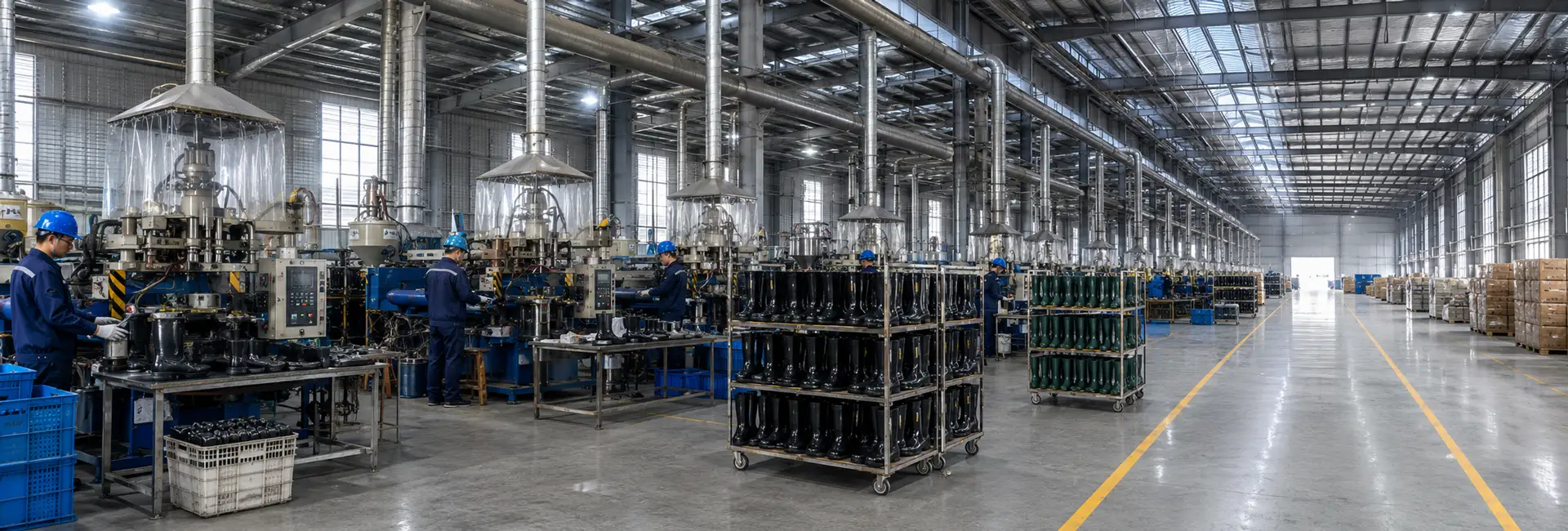
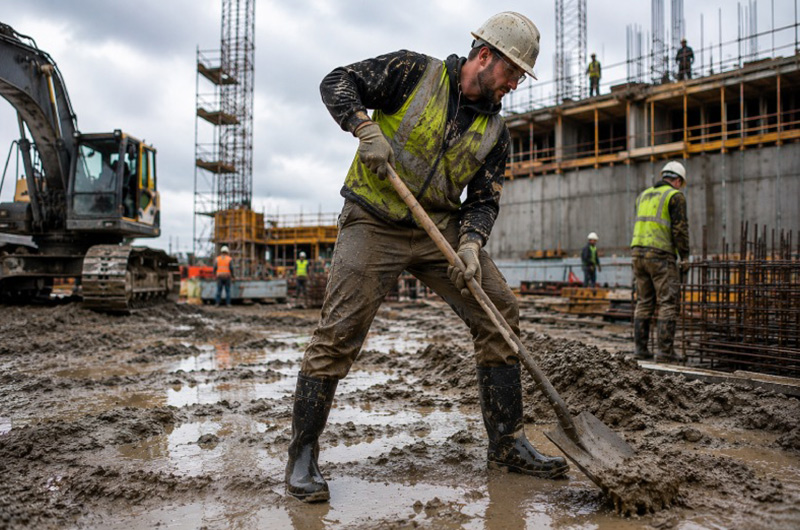
We provide and specially design a safety work rain boots to solve the danger that might happened in construction sites, factories, and other heavy-duty workplaces, requiring waterproof protection, anti-slip performance, anti-smashing, and anti-puncture safety support.
Construction sites often combine rain, mud, concrete residue, uneven ground, sharp debris, moving materials, and changing weather. Footwear selection should begin with the contractor’s risk assessment and the requirements of the destination market. Anhui Yufeng New Material Technology Co., Ltd. supports PPE distributors, building-material suppliers, importers, and private-label brands with OEM waterproof boot programs for construction and infrastructure applications.
We can develop general work rain boots or styles with requested protective components, depending on the project. Waterproof construction alone does not make a boot certified safety footwear. Toe protection, penetration resistance, slip performance, electrical properties, chemical resistance, and other claims must be defined and verified for the specific finished model.
A groundworks crew, concrete team, road contractor, utility worker, equipment cleaner, and site visitor may not need the same boot. Buyers should identify the work task, ground surface, contamination, weather, duration of wear, and interaction with machinery or materials. The required specification may also change between early excavation, structural work, interior finishing, and maintenance.
Common assessment points include water and mud depth, loose gravel, ladders, sharp nails or scrap, falling tools, compression hazards, wet concrete, oils, fuels, and cleaning agents. No outsole prevents every slip, and no material resists every chemical. Site controls, housekeeping, worker training, and correct footwear use remain essential.
Depending on the buyer’s needs and production feasibility, a construction boot can consider:
- Waterproof molded PVC construction and a practical shaft height.
- An outsole tread designed around mud release, ground contact, and walking stability.
- A safety toe component where impact or compression protection is required.
- A penetration-resistant insert where sharp underfoot objects are an identified hazard.
- Reinforced toe, heel, ankle, shin, or kick-off details where suitable.
- High-visibility colors or accents for product identification, subject to design feasibility.
- Lining and insole options for comfort, seasonal use, and fit adjustment.
- Custom logos, size markings, labels, barcodes, and contractor or distributor packaging.
Each added feature affects weight, flexibility, fit, cost, and test scope. The boot should be reviewed as one system rather than a list of independent components.
Construction footwear requirements vary internationally. ISO 20345 is one framework for general-purpose safety footwear and includes basic and optional requirements covering areas such as mechanical risks, slip resistance, thermal risks, and ergonomic behavior. Other countries, customers, or project owners may require different standards and classifications.
The buyer should specify the destination, current standard, protection category, optional properties, marking, and documentation needed. Testing plans should identify the exact model, construction, material, sizes, laboratory, and acceptance criteria. A report for one boot cannot automatically support a different mold, material, or component combination. Marketing, label, and packaging claims must match the verified result.
Construction workers may walk long distances, climb, crouch, drive, or stand for extended periods. Fit direction, calf opening, shaft flexibility, toe space, heel hold, boot weight, insole, and sock allowance all affect practical wear. A protective toe must be positioned correctly and should not be treated as a way to correct poor sizing.
Sample wear feedback can help evaluate movement and fit before bulk production. If thick winter socks or a removable liner will be used, that should be included in the sizing review. A boot selected for occasional site visits may differ from one intended for full-shift daily wear.
Wet concrete and industrial chemicals can create skin and material hazards. Buyers must describe the expected substance, concentration, contact time, temperature, and cleaning process when resistance is important. We can review material options and testing requirements, but broad statements such as “acid-proof” or “chemical-proof” should not be applied without a defined exposure and verified performance.
Employers should establish cleaning, inspection, and replacement procedures. Boots with cuts, cracks, worn tread, exposed protective components, or other damage should be removed from service according to the site’s PPE program.
Our OEM and private-label solution supports custom colors, branding, size ranges, labels, packaging, and product development. An approved sample, specification, test requirement, and packaging file form the production reference. Bulk quality checks can cover materials, protective components, first-piece output, molded workmanship, size marking, finished appearance, and packing.
Buyer-appointed inspection or third-party laboratory testing can be coordinated when agreed before production. See our production and quality inspection service for the full process.
Provide the job type, identified hazards, surface conditions, substances, climate, required standard and classification, size range, estimated quantity, colors, logo, packaging, and destination. An existing specification or reference boot can help us understand the project more accurately.
Contact Anhui Yufeng to discuss waterproof construction rain boots, safety component options, private-label development, testing coordination, and bulk orders for contractors or PPE distribution.