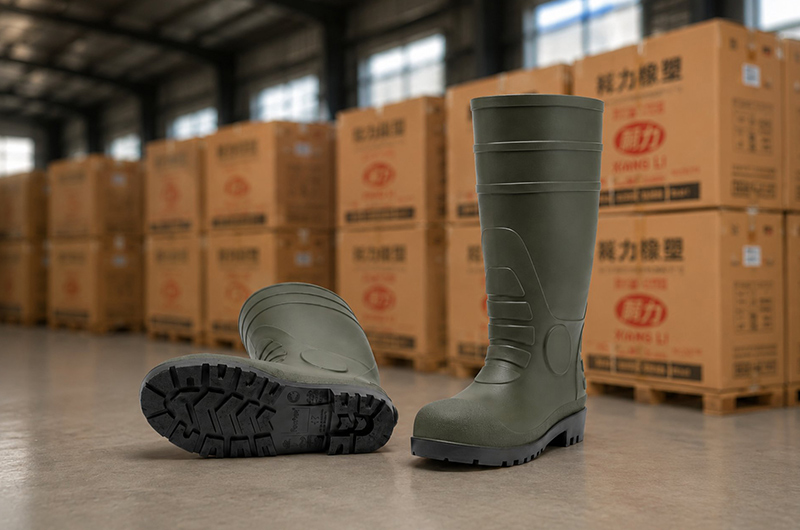
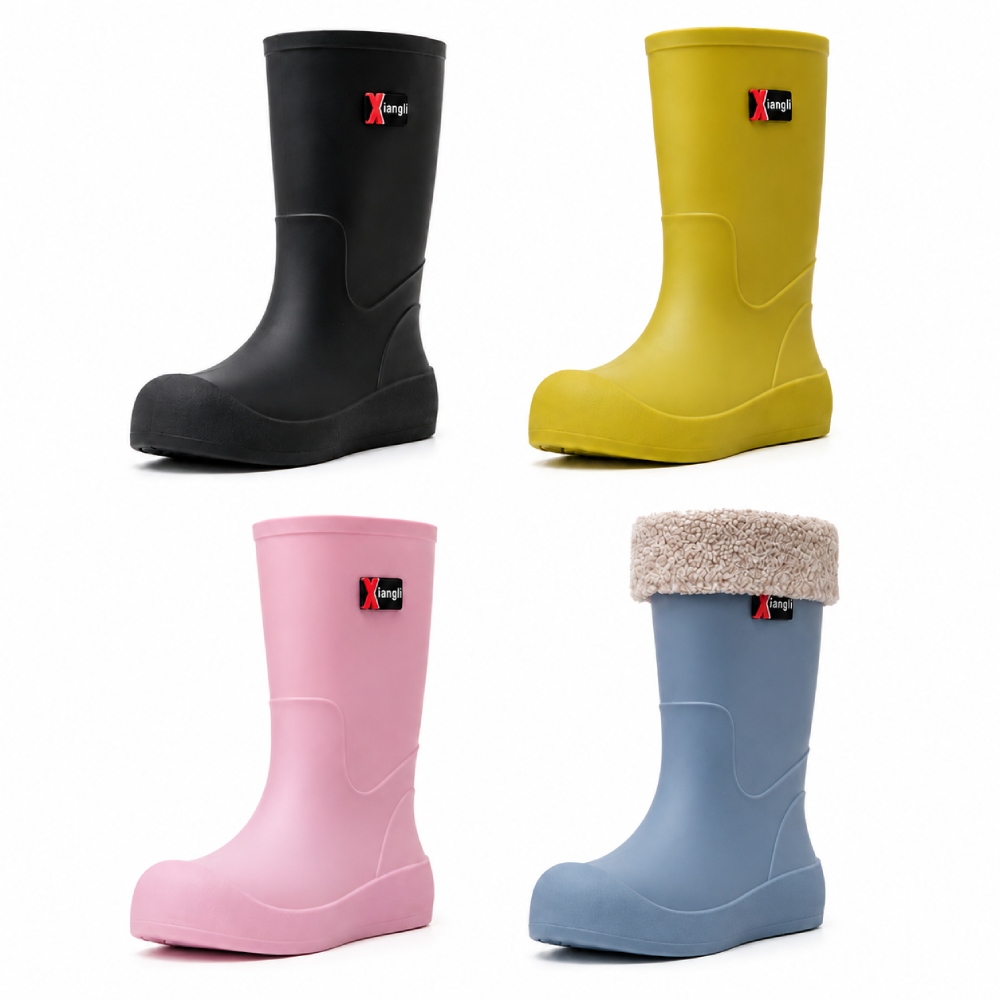
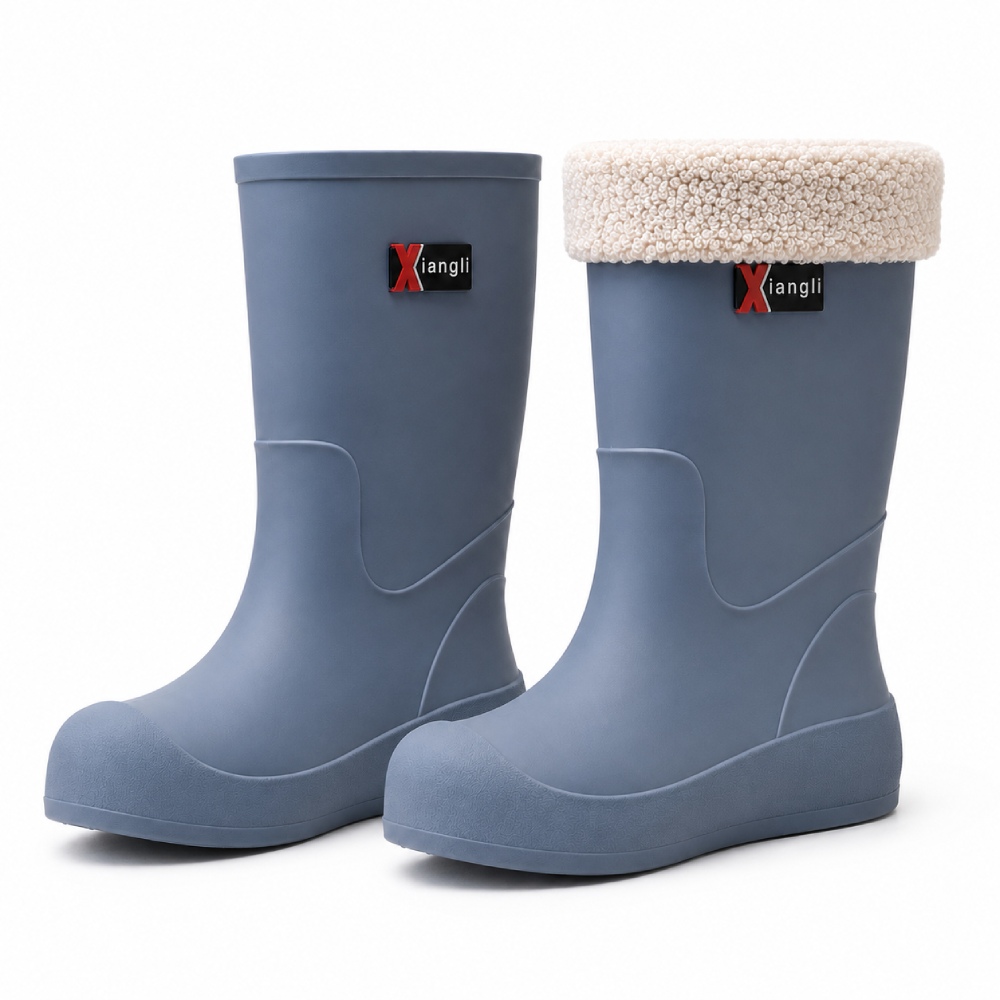
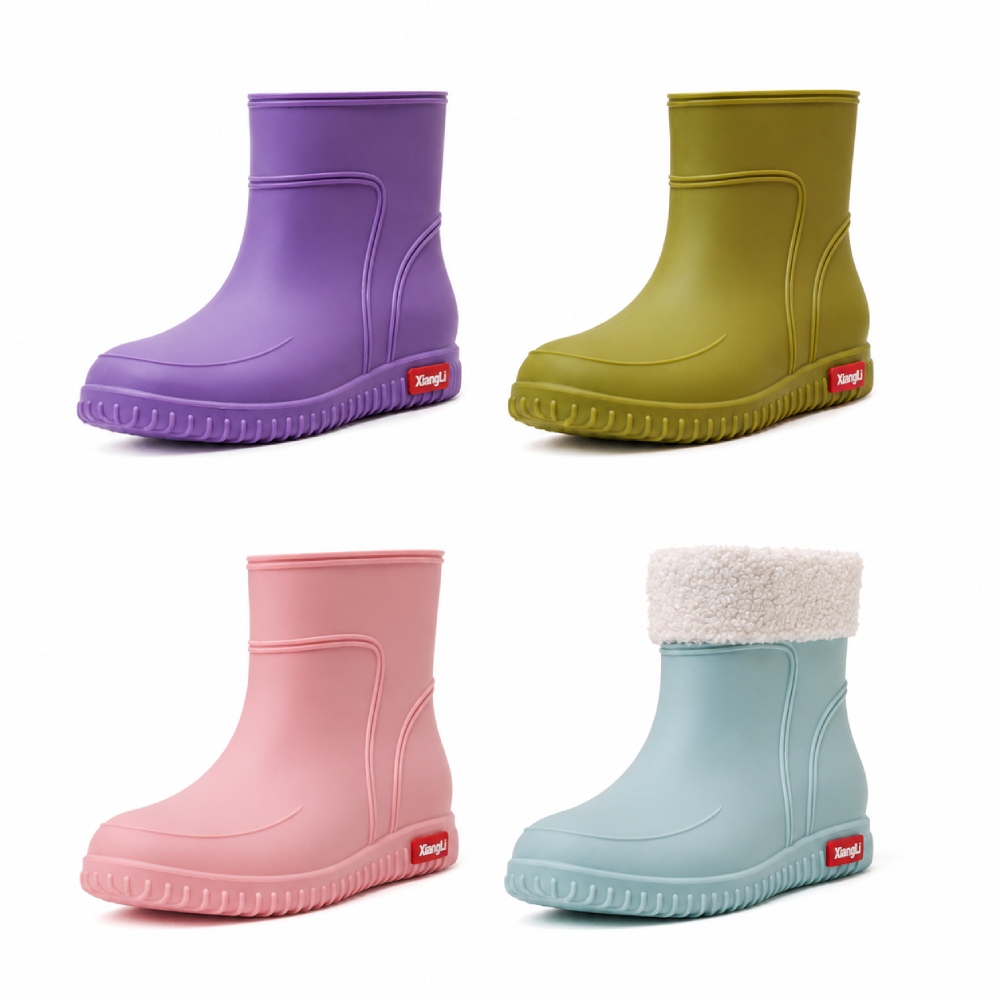
Mid-Calf Rain Boots with a Removable Warm LinerModel 708 is built for buyers who want one waterproof boot direction that can move across more than one selling season. The molded PVC shell provides wet-weather coverage, while the removable warm liner adds a winter-ready presentation when temperatures fall. Removing the liner creates more internal space for milder conditions, subject to fit confirmation.
Seasonal Flexibility for Retail Programs
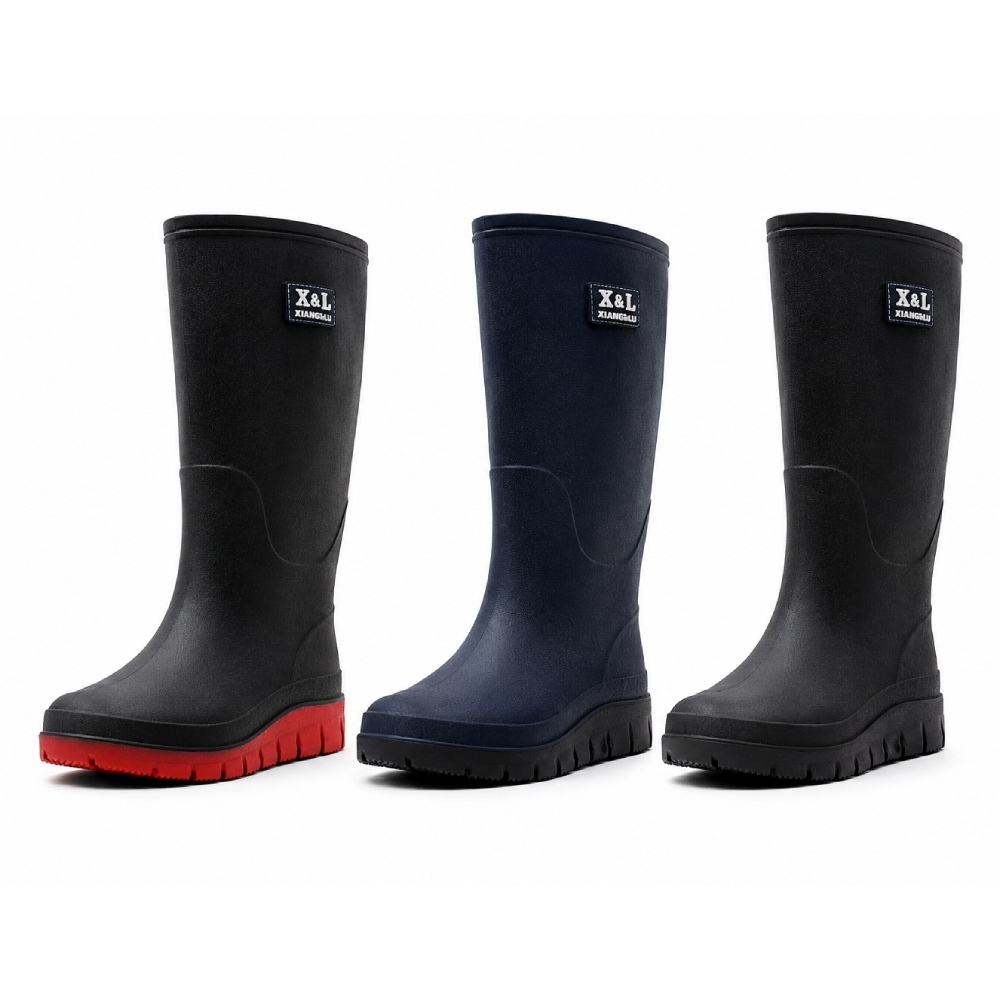
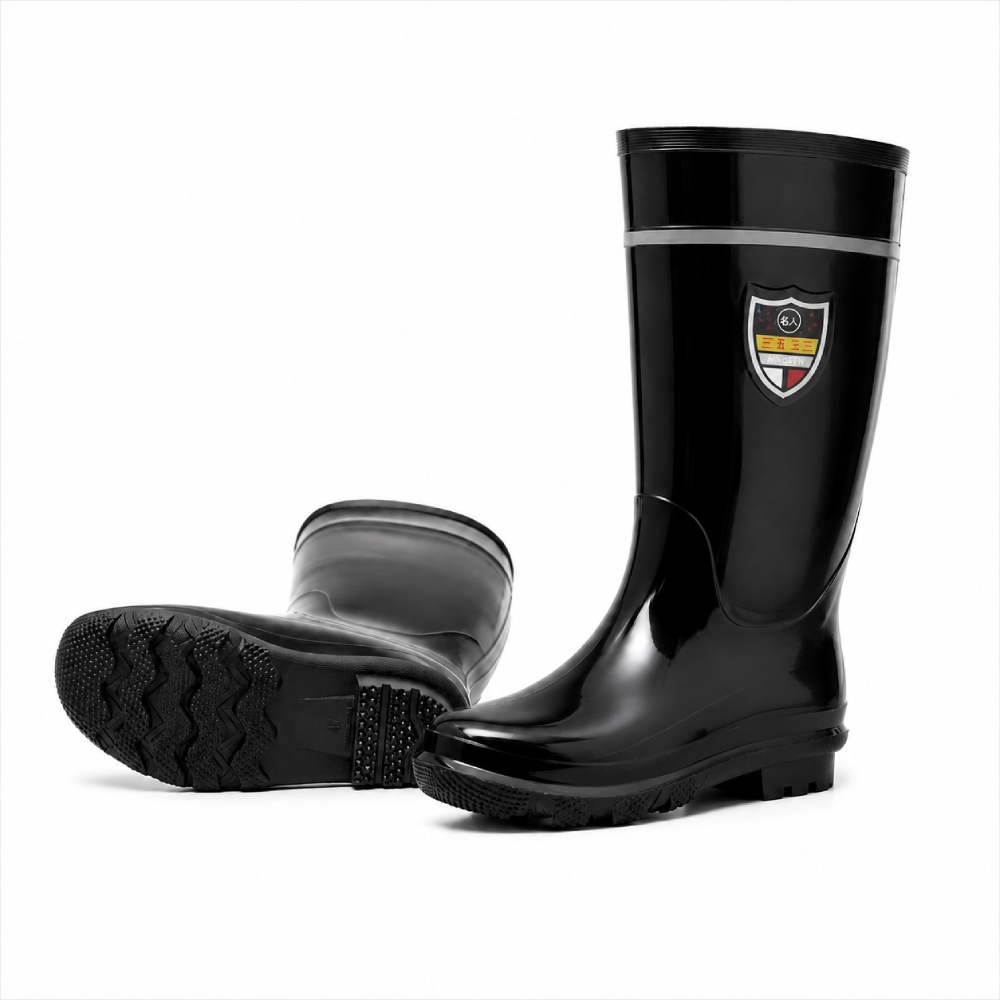
The taller shaft protects more of the lower leg from rain, puddles, mud, and slush than a short ankle boot. A clean upper leaves room for brand patches and color development, while the liner can create a contrasting cuff that makes the cold-weather version immediately recognizable on a product page or store shelf.
- Waterproof PVC outer boot for rainy and muddy conditions.
- Removable warm lining that can be dried or stored separately.
- Mid-calf coverage for commuting, garden, travel, and casual outdoor use.
- Custom shell color, liner color, logo, label, and packaging possibilities.
Fit and Care Considerations
A lined boot should be fitted with the liner and intended sock combination. Buyers need to confirm whether the size chart represents lined use, unlined use, or both. After wear, loose dirt should be removed and the liner allowed to dry naturally in a ventilated area. Excessive direct heat may affect the PVC shell or textile components.
Private-Label Development for Model 708
This style can support winter rainwear collections, outdoor shops, agricultural retail, supermarkets, and online seasonal campaigns. It is intended as consumer waterproof footwear, not certified cold-storage or safety PPE unless a separate tested specification is developed. Temperature comfort varies with activity, socks, exposure time, and the wearer.
Share your market, size range, color references, liner material direction, branding, quantity, and packaging plan. Our cold-weather solution explains the selection process, and our sales team can arrange the next sampling step.
Buyer and Market Positioning
A useful product page for model 708 mid-calf lined PVC boot begins with application, not slogans. The likely buyers are winter rainwear brands, agricultural retailers, outdoor stores, and seasonal wholesalers, and the footwear can be evaluated for cold rainy commutes, muddy gardens, travel, slush, and casual winter outdoor work. Stating these points helps search users understand the model, helps distributors compare it with nearby products, and gives the factory a better brief for sampling and bulk-order confirmation.
Design Details to Confirm
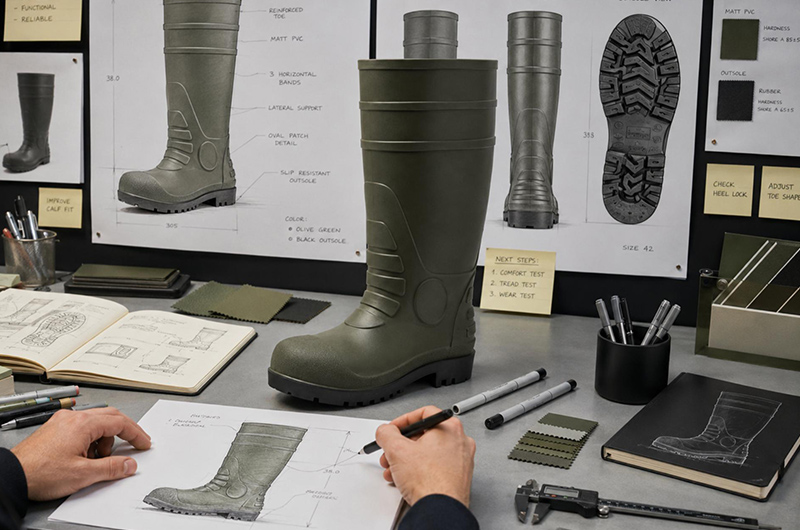
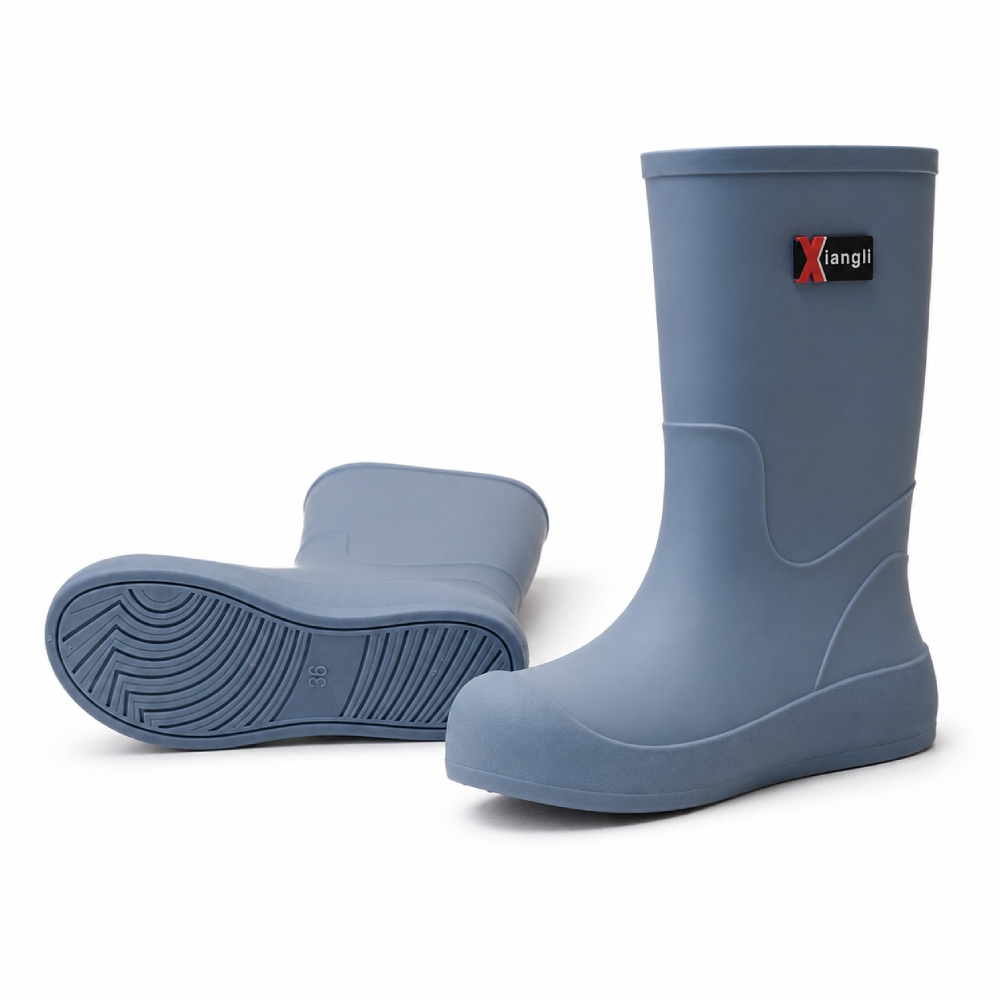
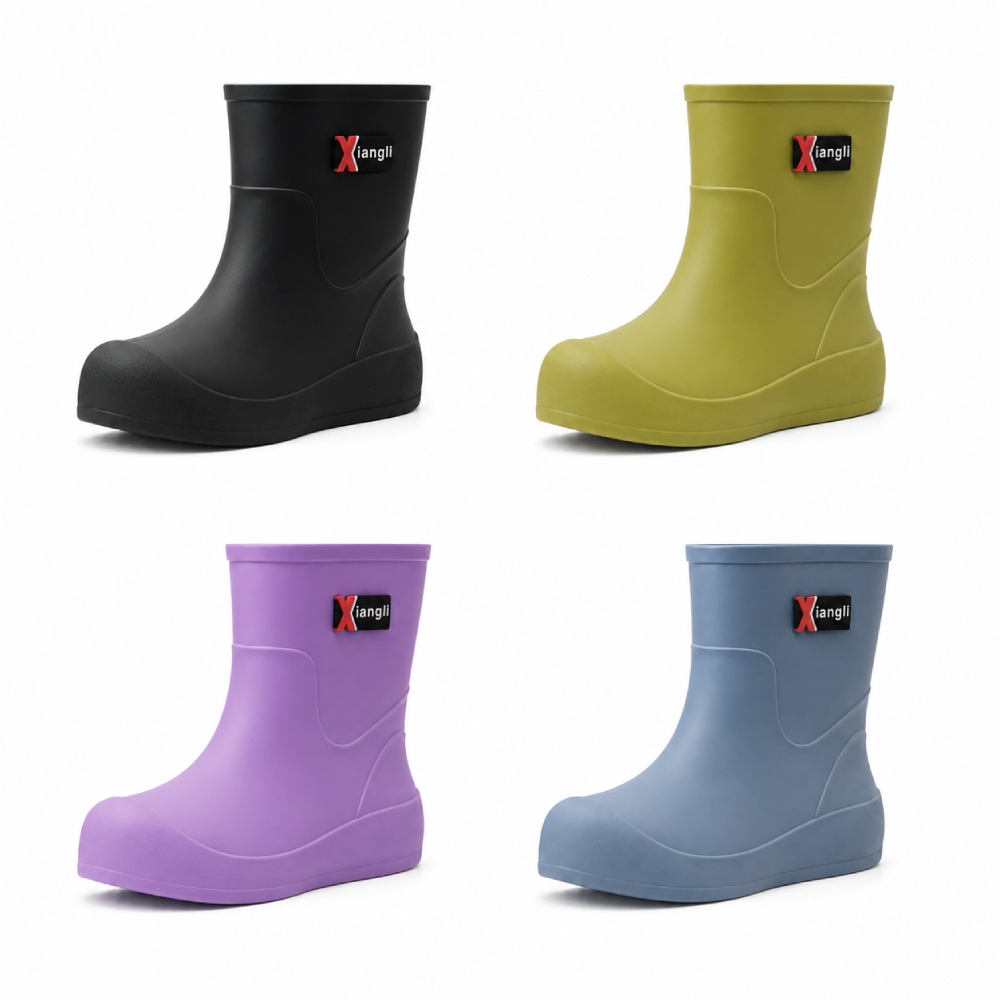
The visible identity is based on a tall clean shell with a removable warm liner that can form a contrasting cuff. During sampling, review the product from several angles instead of approving only a front image. Color, surface, outsole, logo position, left and right matching, size marking, and packing should be connected to one approved specification. Where a buyer requests a material or construction change, its effect on appearance, weight, flexibility, cost, and testing must be reviewed before bulk production.
Fit and Wear Evaluation
Fit planning for this item should consider fit assessed with the intended liner and winter sock because insulation reduces internal space. Size conversion tables are useful, but the physical sample remains important because liners, protective components, sock thickness, and regional fit expectations can change internal volume. A buyer preparing several sizes should confirm how measurements are taken and whether the same construction is maintained across the range. Wear feedback can support comfort decisions, but it does not replace formal testing for regulated performance claims.
Cleaning, Storage, and Service Life
Recommended handling is to remove the liner after damp use, ventilate both components, and avoid direct high-temperature drying. Cleaning instructions must match the actual material and any workplace substance. Boots should be stored in a cool, dry, ventilated area away from prolonged sunlight, unsuitable chemicals, sharp objects, and excessive heat. Users or employers should inspect the upper, outsole, lining, markings, and any protective components. Footwear that is cracked, cut, badly worn, deformed, or otherwise damaged should be reviewed and replaced when it no longer suits the intended use.
Product Boundaries and Accurate Claims
This model should be described within the following boundary: seasonal consumer footwear unless a separate professional cold or safety specification is tested. Waterproof construction does not automatically prove slip resistance, chemical resistance, insulation, electrical properties, or occupational certification. If a claim is required, the buyer should identify the destination standard, test method, classification, laboratory, and acceptance criteria before production. Reports, labels, catalogs, and online descriptions must all refer to the same finished construction.
Range Planning and Model Comparison
For a broader product range, compare this item with short lined model 709 for easy entry or unlined work styles for warm-season use. This gives distributors a meaningful assortment instead of several pages with interchangeable text. The comparison can be based on shaft height, finish, lining, outsole appearance, intended user, protective construction, or cleaning environment. Related products should be linked only when the difference is clear enough to help the visitor choose, and each SKU should retain its own images, model number, barcode, and approved specification.
OEM Order Checklist
Before requesting a quotation, prepare the target country, sales channel, application, size range, estimated quantity, colors, logo artwork, lining or insole request, packaging, delivery window, and any required tests. Identify mandatory points separately from preferences. Anhui Yufeng can then review feasibility, arrange a sample, confirm product and packaging details, and connect the approved references with production and quality inspection. Changes after approval should be documented because they may affect components, cost, timing, or existing test evidence.

 Learn More