

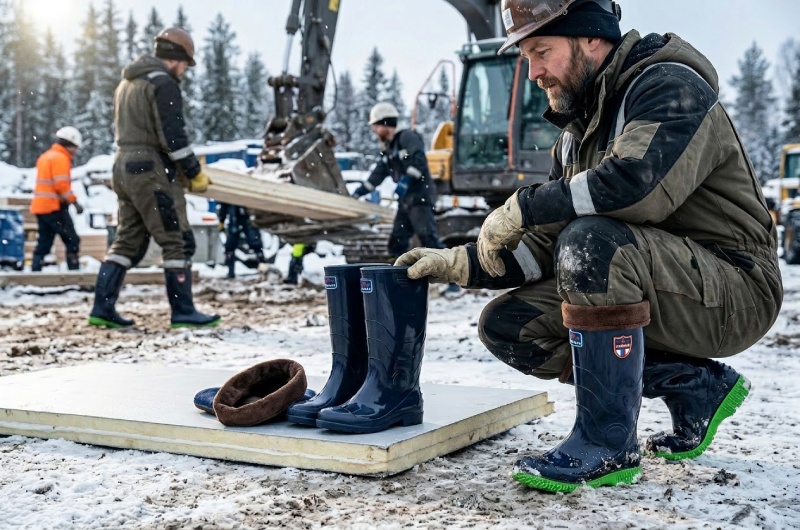
We provide warm boots to solve cold and wet problem in cold storage areas and wet low-temperature workplaces.
Cold-weather footwear must manage more than low air temperature. Snow, slush, standing water, frozen ground, cold-room floors, wind, activity level, shift length, and the wearer’s socks all affect practical comfort. Anhui Yufeng New Material Technology Co., Ltd. supports importers, outdoor suppliers, cold-chain distributors, retailers, and private-label brands with OEM waterproof boot programs developed around a defined climate and use case.
Our solution can include lightweight EVA boot directions, PVC rain boots with warm linings, and other project-specific combinations available within our manufacturing scope. The correct choice depends on target market, fit, desired weight, flexibility, insulation approach, outsole needs, and commercial positioning. A general “winter boot” label is not enough to define performance.
A boot for occasional snow clearing is different from footwear worn throughout a refrigerated warehouse shift. Outdoor retail, farming, fishing, municipal work, cold storage, and rainy winter commuting each create a different balance of insulation, movement, waterproofing, grip, and durability. We ask buyers to provide the expected temperature range, exposure time, indoor or outdoor use, activity level, ground conditions, and whether the wearer regularly moves between warm and cold zones.
Temperature ratings should be treated carefully. Human comfort depends on physiology, socks, moisture, circulation, activity, wind, contact with cold surfaces, and duration. Any thermal claim for professional footwear should relate to a defined finished product and an applicable test method, not only the material used in the boot.
EVA is often considered for cold-weather molded boots because it can support a lightweight feel and accommodate removable warm liners. PVC may be selected for other waterproof work or consumer rain boot programs with suitable lining options. Material formulation, thickness, boot design, and temperature all influence flexibility and wear behavior, so selection should follow the intended application and confirmed sample.
A cold-weather boot specification may consider:
- Waterproof molded boot construction and suitable shaft height.
- Material behavior at the expected operating temperature.
- A removable or fixed warm lining, depending on cleaning and use needs.
- Sock allowance, toe space, calf opening, and overall fit direction.
- Outsole tread for snow, mud, wet floors, or other defined surfaces.
- Insole and footbed choices that separate the foot from cold contact surfaces.
- Pull handles, collars, cuffs, kick-off details, or other practical features.
- Custom colors, logos, size marking, retail packaging, and master cartons.
Insulation adds volume inside the boot. A removable liner, thick sock, or layered insole can change toe space, instep fit, and heel movement. For this reason, fit should be reviewed with the intended liner and sock combination rather than using the unlined shell alone. Size conversion and market fit also need confirmation, especially for private-label programs serving multiple regions.
Removable liners can support drying and replacement, while fixed linings may offer a different feel and construction. The most suitable direction depends on the user, cleaning method, cost target, and product design. During sample confirmation, buyers should review warmth expectations, fit, weight, movement, and ease of putting on and removing the boot.
Cold environments may include snow, compacted snow, ice, wet concrete, freezer floors, or mixed surfaces. These conditions do not behave the same way. Tread depth, pattern, contact area, material hardness, contamination, and wear can all affect traction. No outsole eliminates the risk of slipping on every surface, particularly smooth ice.
If a buyer requires formal slip performance, the test method and target classification should be stated for the specific model. Workplace controls, floor maintenance, ice removal, and appropriate walking practices remain necessary. Specialized traction devices may be required by the employer for conditions beyond the boot’s verified use.
Cold-chain and industrial applications may require protective toes, penetration resistance, slip classification, cold insulation, antistatic properties, or other verified features. These must come from the employer’s risk assessment and destination rules. The buyer should identify the applicable safety standard, category, optional markings, and operating conditions before development.
Testing and certification, where required, apply to the specific boot construction and components. A thermal or safety result for one model should not be transferred to another without technical review. Product labels and marketing statements must reflect the current verified report.
Moisture inside a warm boot can reduce comfort. Users should remove loose dirt, follow the material-appropriate cleaning instructions, and allow boots and removable liners to dry naturally in a ventilated place. Excessive direct heat can affect molded materials or linings. Products should be stored away from prolonged sunlight, unsuitable chemicals, sharp objects, and extreme heat.
Employers and consumers should inspect the boot, outsole, and liner regularly. Worn tread, cuts, cracks, compressed lining, or damaged protective components may mean the footwear no longer suits the intended use.
We support private-label color, logo, liner, insole, outsole, size, label, and packaging development subject to feasibility. The approved specification connects to production and quality inspection, including material identification, molded appearance, lining assembly, size marking, packing, and agreed performance checks.
To request a recommendation, provide the temperature range, exposure time, activity, surfaces, safety requirements, size range, target market, quantity, branding, and packaging. Contact Anhui Yufeng to discuss wholesale EVA winter boots, lined waterproof boots, cold-storage footwear, or an OEM cold-weather program.