How to Maintain Waterproof Rain Boots and Prevent Cracking
-
 Tom
- 9th October 2026
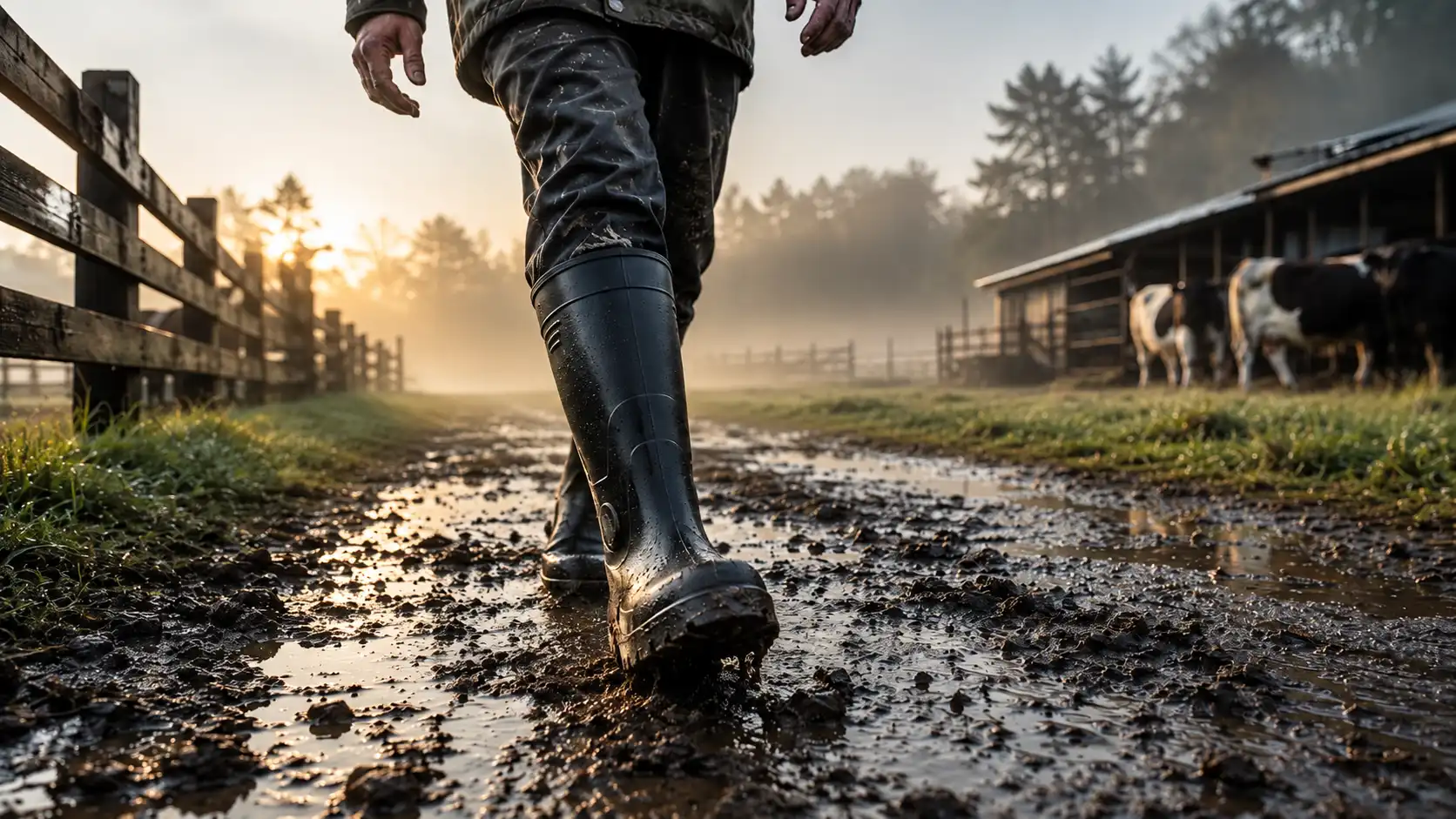
Rain boots rarely crack because of one rainy day. The damage usually builds quietly. Mud dries on the shaft, the boot is left in a hot car, a fold stays in the same place for months, or moisture sits inside after a long shift. By the time a split becomes visible, the material has already lost flexibility.
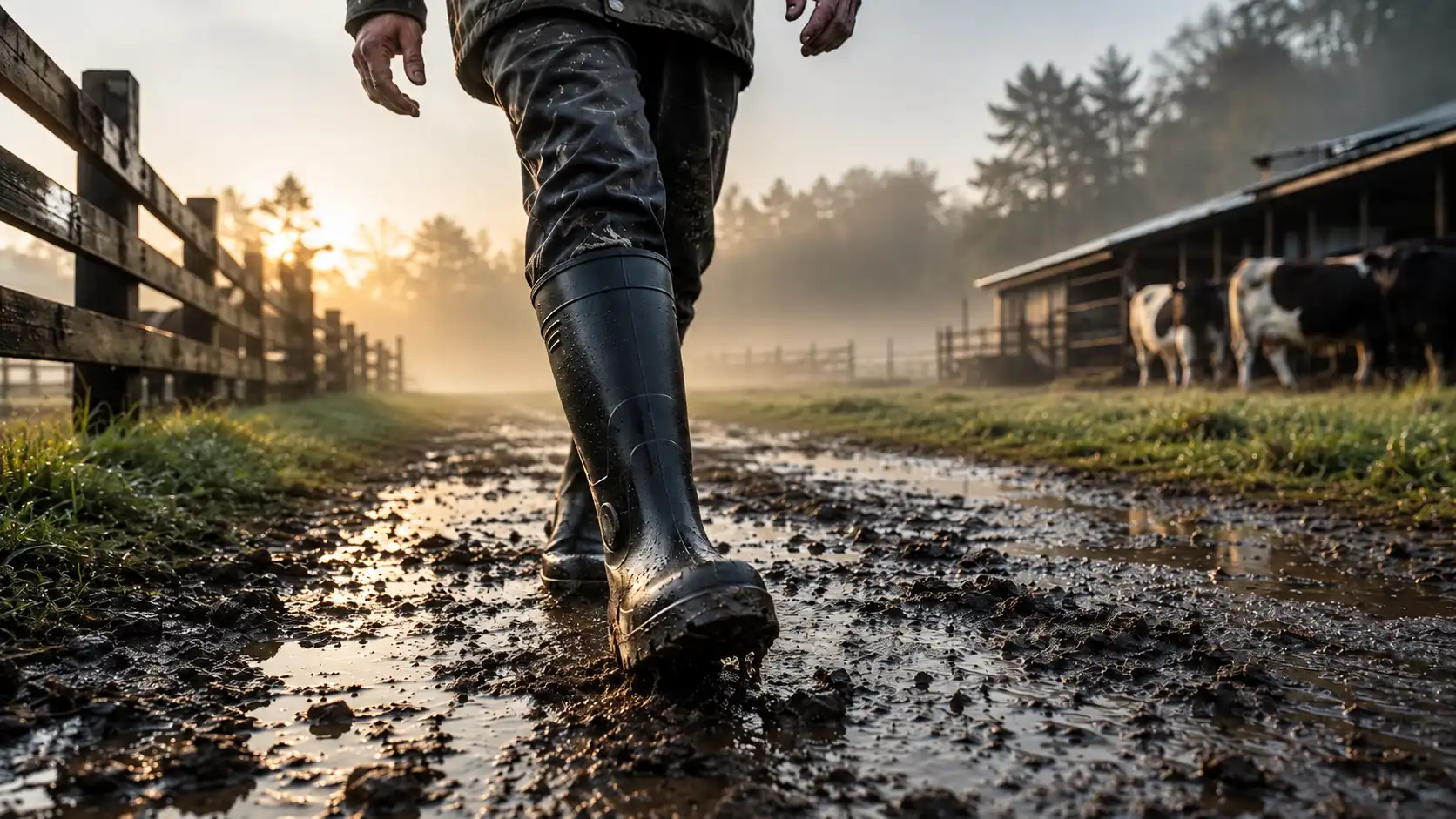
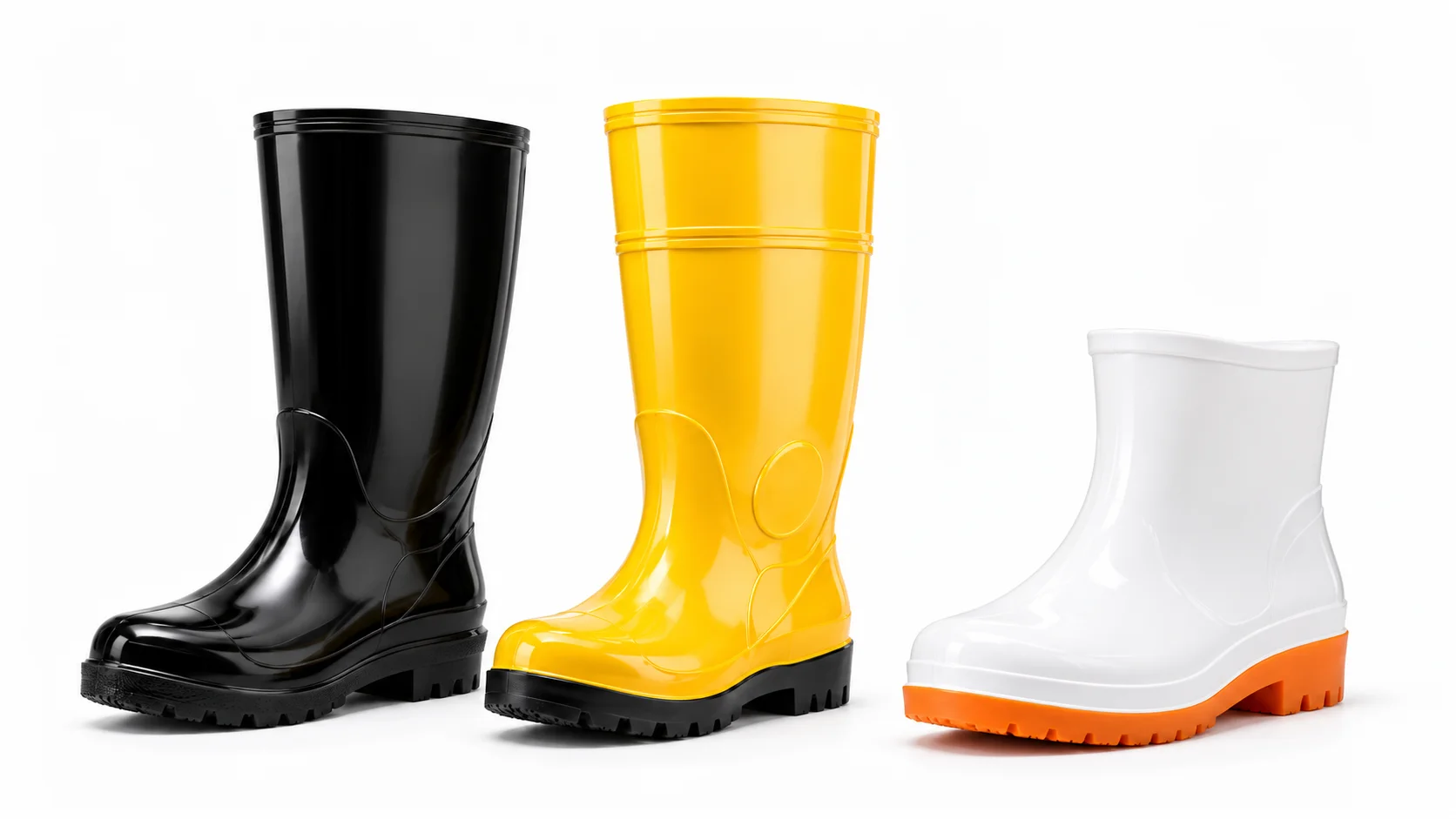
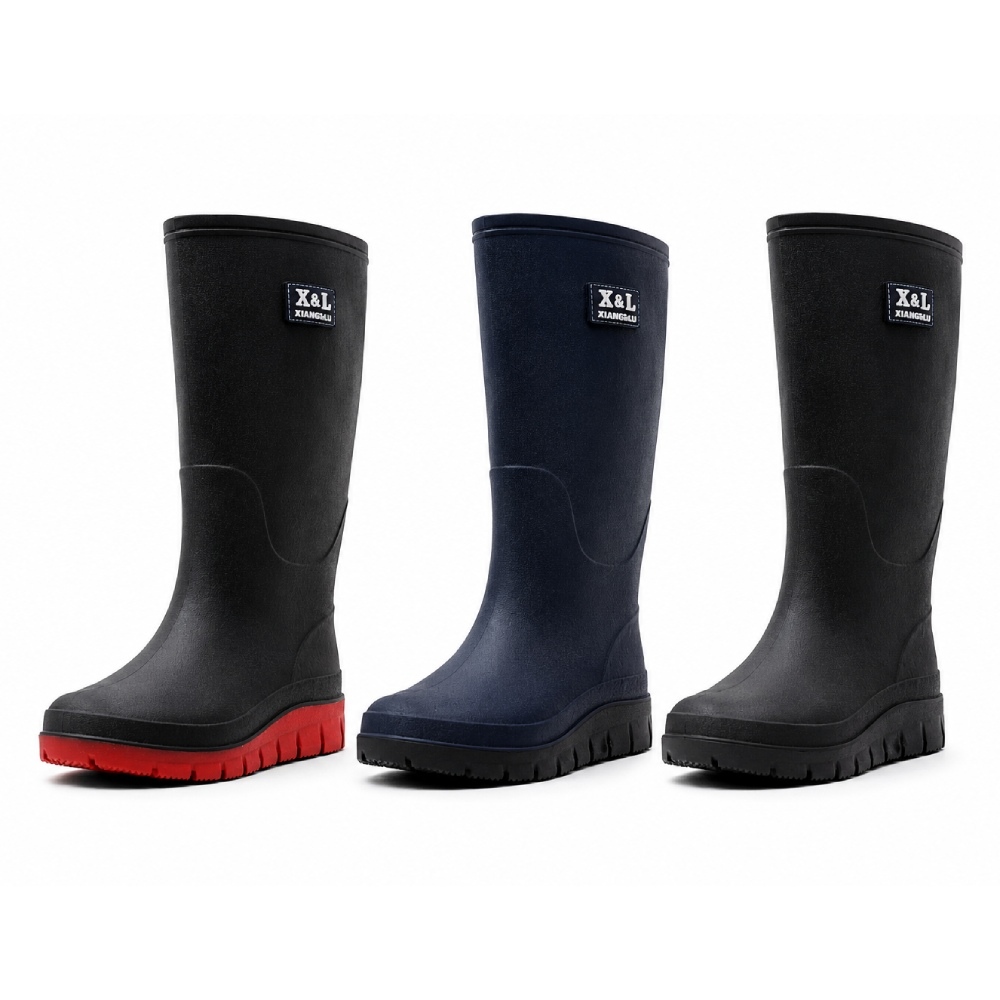
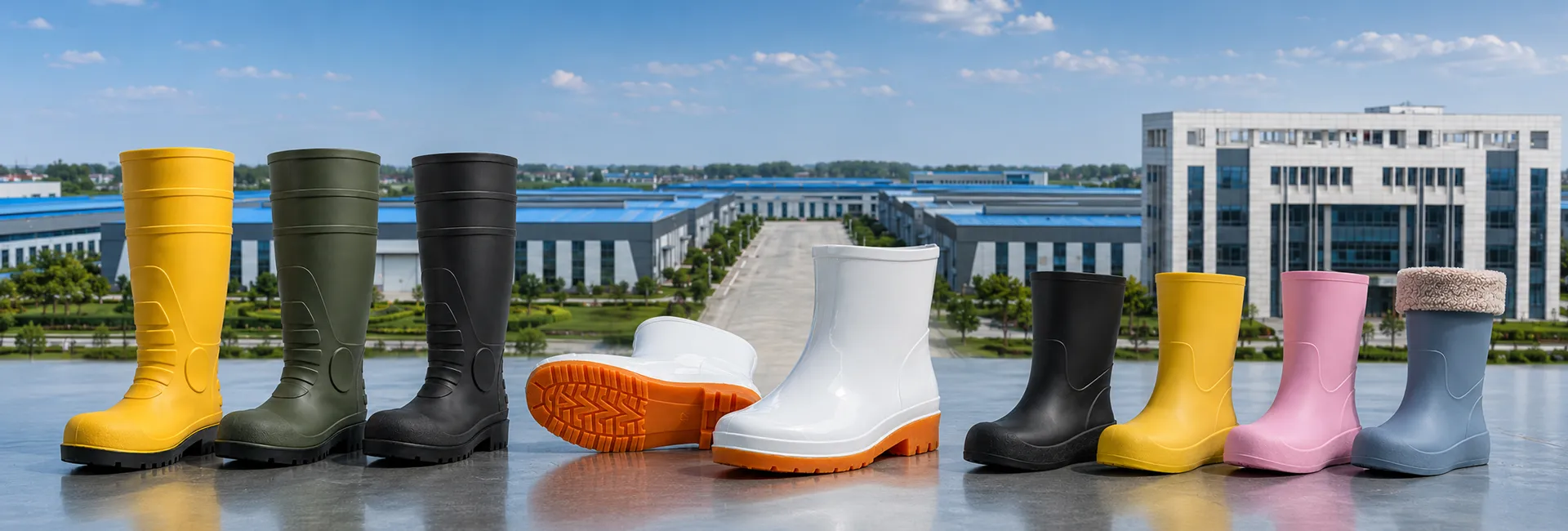
Most care is simple. Rinse off grit, dry the boots at room temperature, keep them away from heat and strong sunlight, and store them without a hard crease. These habits help preserve the waterproof barrier. YUFENG’s waterproof rain boots for general outdoor work are made for wet ground, farming, gardening, cleaning, and daily outdoor use.
Why Waterproof Rain Boots Crack
Cracking is a material and stress problem. Repeated flexing at the ankle or instep can create a weak line. Dirt and dried salt can pull moisture from the surface. Ultraviolet light and high temperatures accelerate aging, while cold weather can make a boot feel stiffer and easier to crease. Folding a tall boot for storage adds another load at exactly the same point.
PVC and rubber also behave differently. PVC rain boots are molded from a formulated compound, so flexibility depends on the recipe, thickness, and temperature. Rubber boots can react badly to unsuitable dressings. Follow the material and maker’s instructions rather than treating every waterproof boot the same.
The After-Use Routine That Prevents Most Damage
Rinse Away Mud, Salt, and Chemicals
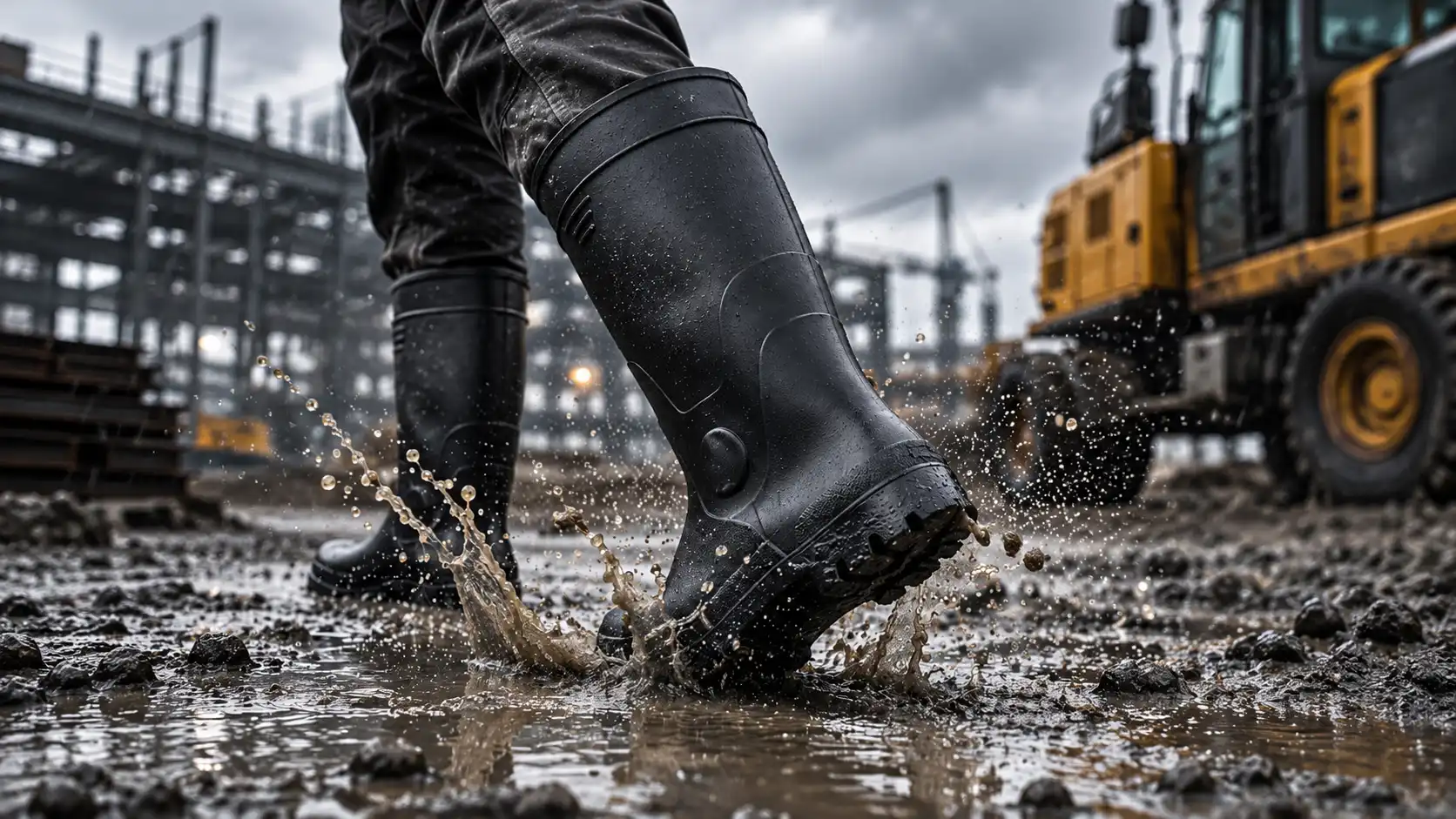
When you finish your chores, wash the boots. Rinse the outside completely with clean, lukewarm water very soon after wearing them. Pay close attention to the special flex points where the boot bends. Wash the deep tread grooves on the bottom. Clean the back heel and the wide top opening so dirt does not fall inside. Grab a nice soft cloth. Gently rub the cloth to loosen the stuck soil without scratching the shiny surface. Did you step in nasty grease or sticky food residue? If yes, use a very mild soap cleaner. Just make sure the soap is safe and compatible with the boot material. After that, rinse all the bubbles off fully.
Tiny sand grit works exactly like a fine, sharp abrasive sandpaper when the tall shaft bends back and forth. Also, winter salt and harsh cleaning soap residues can leave the outside surface feeling very dry or looking chalky white. Smooth PVC surfaces are amazing. They perfectly suit messy food-processing jobs and dirty sanitation work. But, your daily cleaning routine still needs a very gentle method. YUFENG’s PVC food processing boots are designed for waterproof, easy-clean use in wet workplaces.
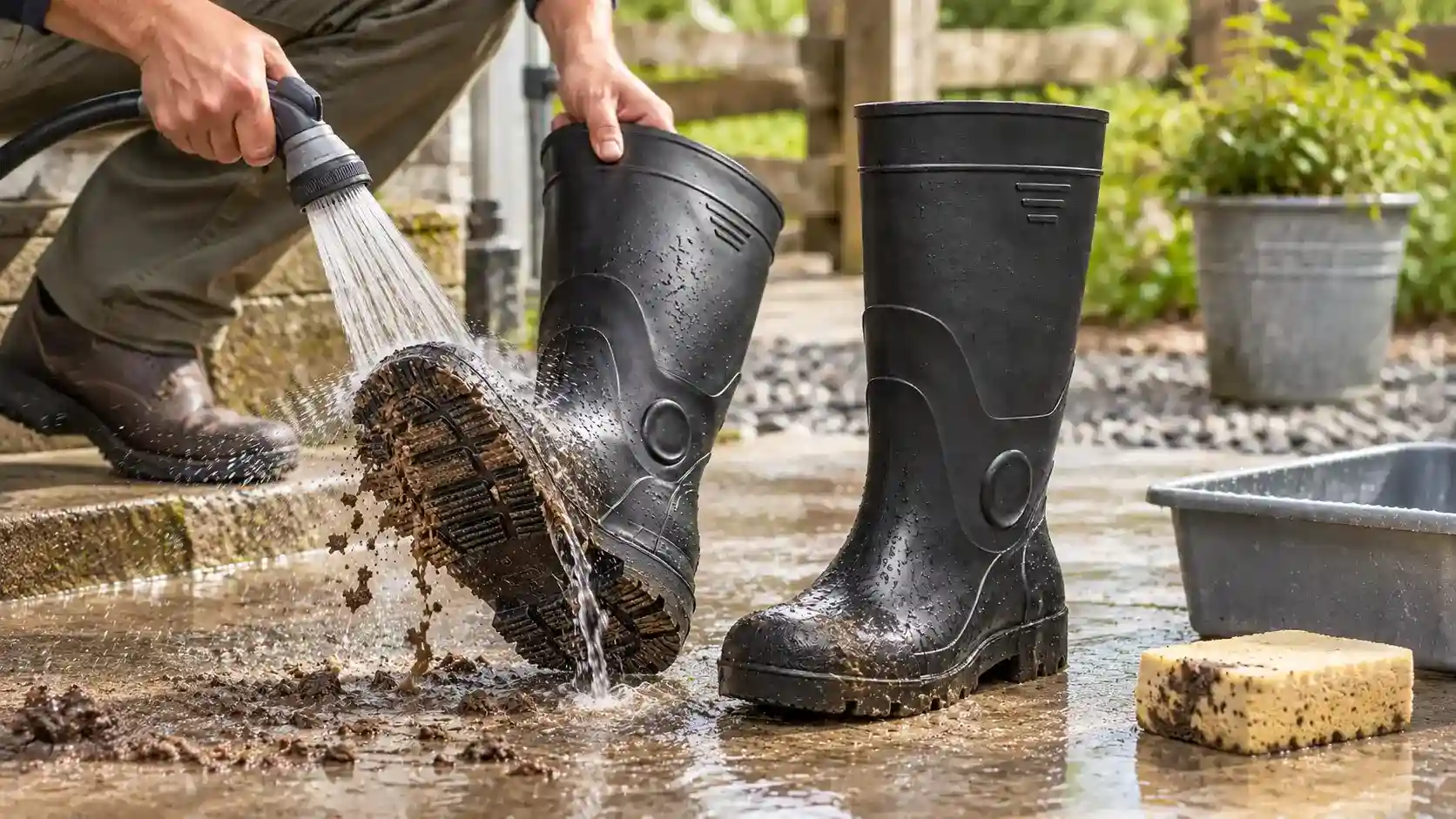
Dry the Inside and Outside Naturally
After rinsing, shake out loose water and stand the boots upright in a ventilated room. Remove insoles or liners when the design allows it. Let air reach the shaft and footbed before the next wear. A loosely packed sheet of plain paper can help absorb inner moisture, but do not pack the boot tightly because pressure can distort the shape.
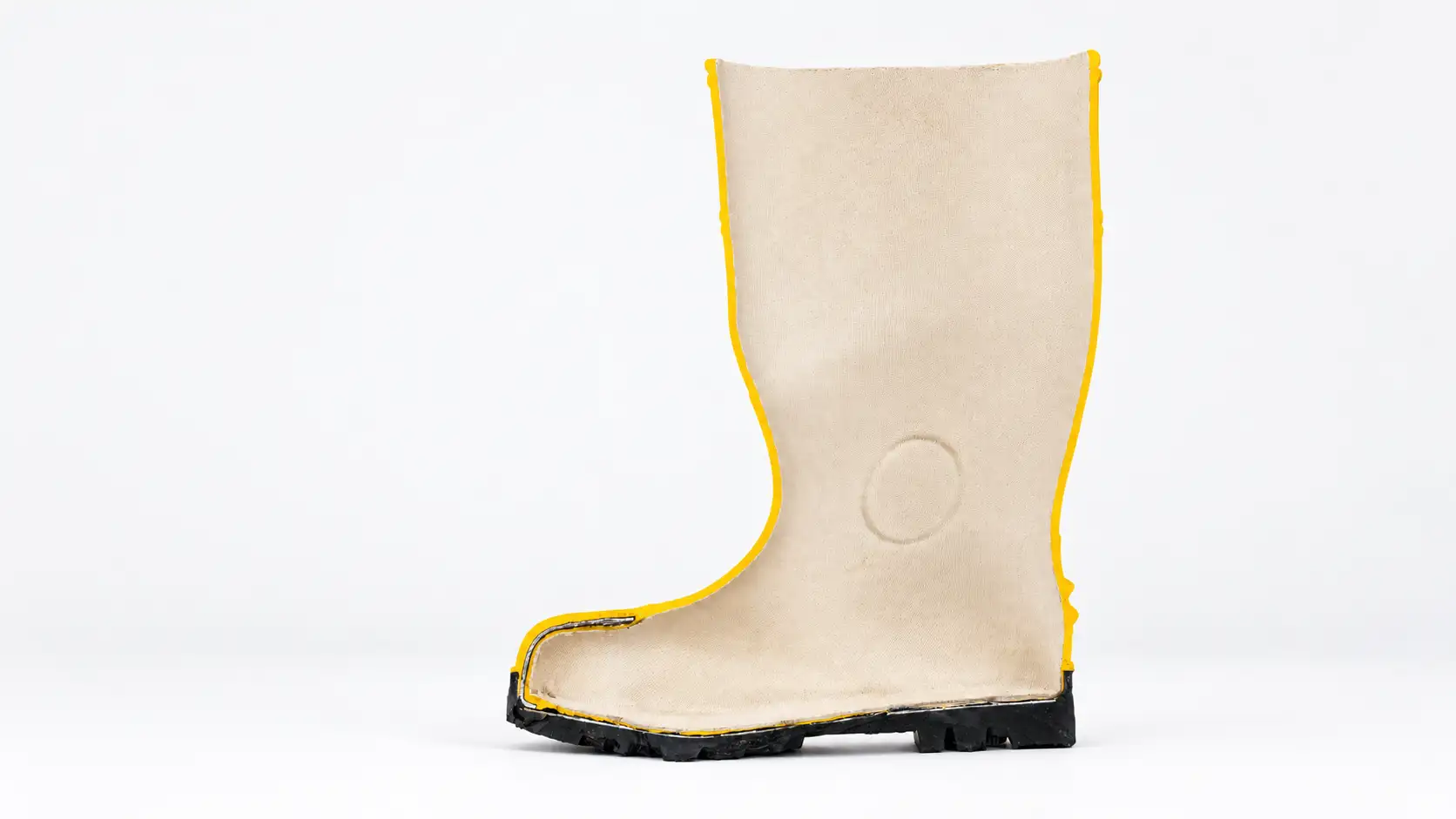
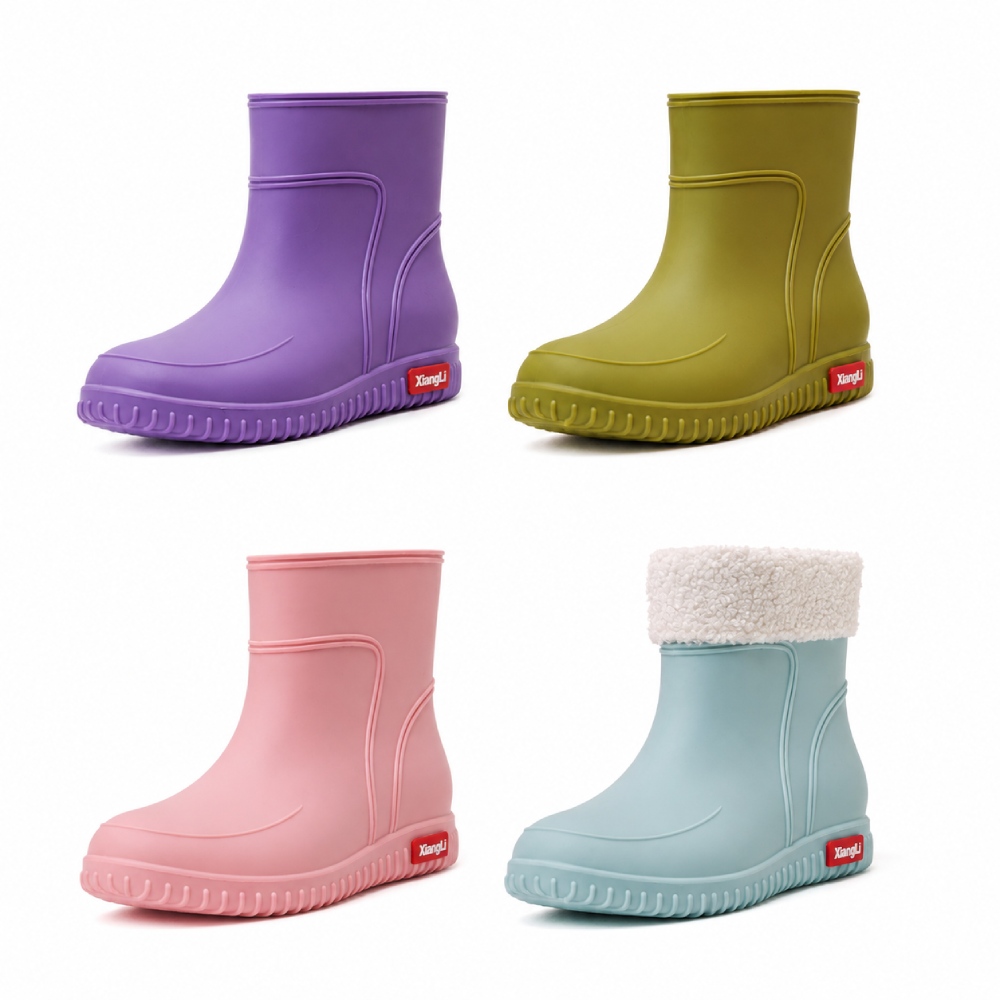
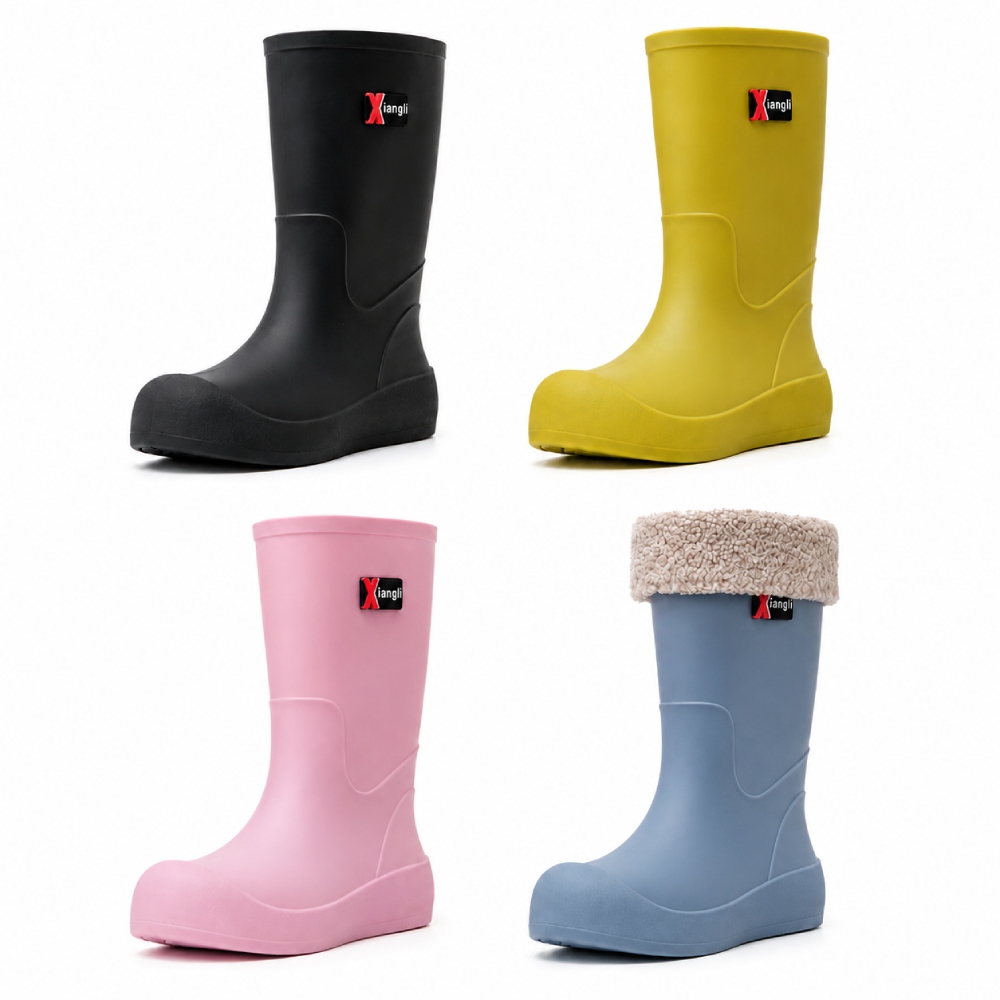
Avoid radiators, hair dryers, boilers, heated floors, and direct afternoon sun. Fast heat can warp molded parts and leave the material less flexible. A boot that feels dry on the outside may still be damp inside, so allow enough time between shifts. For models with removable liners, such as the mid-calf PVC boots with a removable warm lining, dry the liner separately and put it back only when both parts are dry.
Storage Habits That Protect the Shaft
Store rain boots upright in a cool, shaded, dry place. Keep them away from windows, heaters, machinery exhaust, and hot cars. Tall boots can be supported with a simple boot stand or a loose paper roll that holds the shaft open without stretching it.
Do not fold the boot sharply over a shelf edge. If space requires the boots to lie down, place them flat with the shaft relaxed. Heavy boxes should not sit on top of them. Before seasonal storage, clean and dry the boots, check the sole and upper, and keep them away from oils, solvents, and sharp tools.
For bulk buyers, storage instructions should be passed to distributors and end users. A boot can still crack in a warehouse if cartons sit beside a hot wall or shafts stay compressed for a long period. YUFENG’s production and quality inspection service helps buyers discuss inspection points before shipment.
Cold Weather, Oils, and Cleaning Chemicals
Cold conditions make many waterproof boots feel harder. Let them warm gradually indoors before bending or pulling them on, and never force a frozen shaft into a tight fold. If the worksite is a cold store or winter construction area, select a model and lining reviewed for the expected temperature.
Oil, fuel, solvents, bleach, and strong detergents deserve caution. They can attack surface finishes or alter the compound, especially after repeated contact. Wipe spills off promptly and follow the approved cleaning procedure for the workplace. A rubber conditioner may be suitable for some natural rubber boots, but it is not a universal answer for PVC. Never apply an oily product to the outsole tread because it can reduce grip.
A Five-Minute Inspection Before Each Wear
Run a hand over the shaft and bend the boot gently once. Look for a pale line, sticky patch, deep crease, pinhole, or split around the ankle and heel. Check the sole for lifting, missing tread, or unusual wear.
Small surface marks are a reason to watch the area, not an invitation to flood it with glue. Flexible materials move every time the wearer walks, so a hard repair can create a new stress point. For work or safety models, remove a damaged pair from service and ask the responsible safety or quality person whether repair is acceptable. Waterproof appearance alone does not prove continued protection.
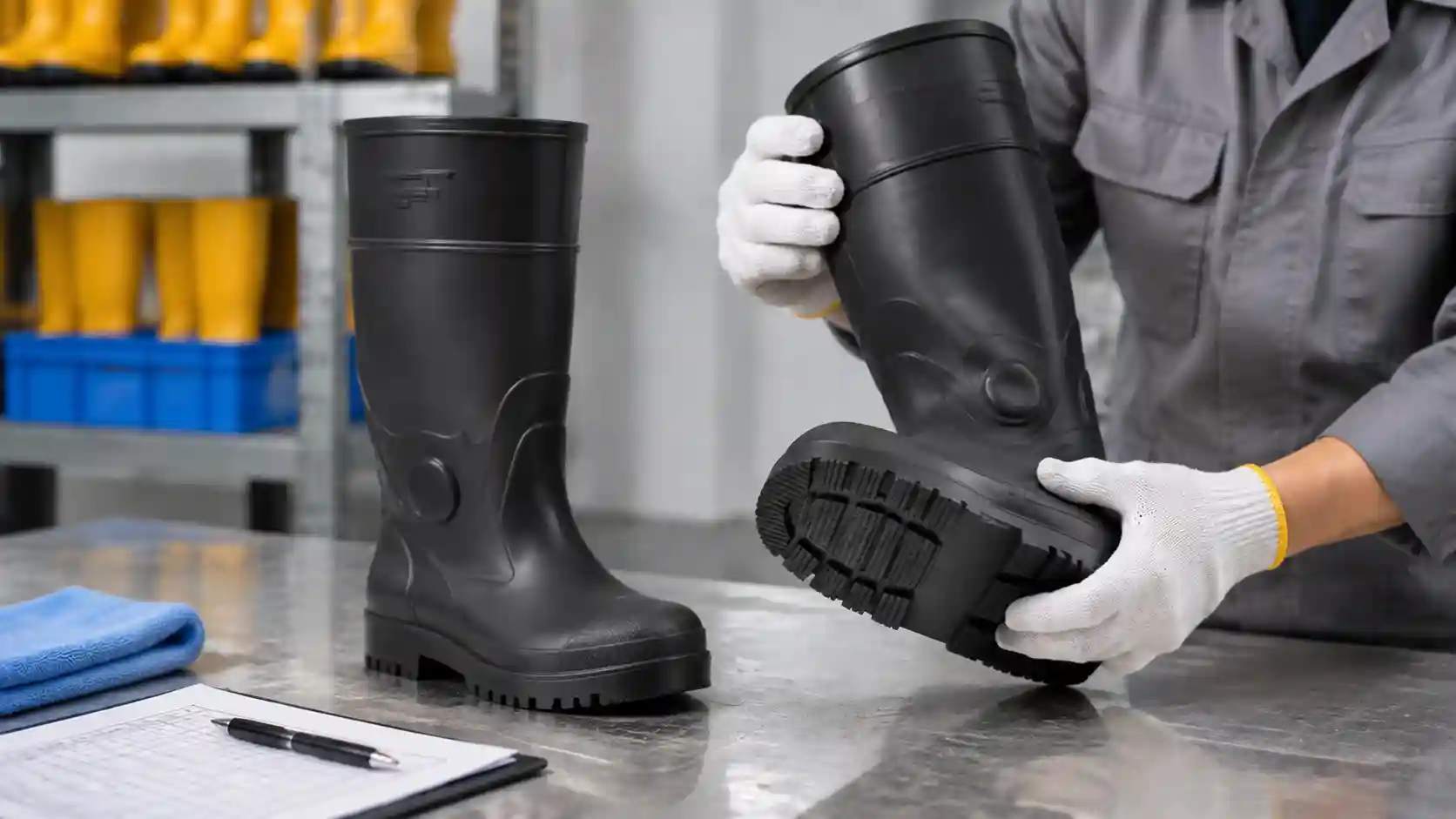
Can Early Cracks Be Repaired?
A shallow mark that has not opened may sometimes be monitored, but a through-crack, leaking sole, or damaged protective component needs a clear decision. Temporary sealants may not bond to every PVC formulation and do not restore the original material strength.
For household rain use, a small repair may be reasonable when the maker approves the method. For safety, food-processing, chemical-resistant, or long-shift use, replacement is often the better choice when the waterproof barrier is compromised. Record the model and batch if several pairs show the same crack.
A Practical Maintenance Checklist
- Rinse mud, salt, grease, and cleaning residue after use.
- Use a soft cloth and a compatible mild cleaner.
- Dry the inside and outside at room temperature.
- Keep boots away from direct heat, strong sunlight, oils, and solvents.
- Store tall shafts upright or relaxed without a sharp crease.
- Remove and dry liners separately when the design allows it.
- Inspect flex points, soles, heels, and top edges before wearing.
- Stop using a pair when a crack leaks or a safety component is damaged.
FAQ
How often should waterproof rain boots be cleaned?
Rinse them after muddy, salty, greasy, or chemical exposure. For light rain, a quick wipe may be enough, but do not allow visible residue to build up.
Can a hair dryer stop rain boots from cracking?
No. Direct heat can warp molded PVC and dry some boot materials too aggressively. Use room-temperature airflow instead.
Is silicone spray safe for PVC rain boots?
There is no universal yes. Some products are intended for rubber, while others may affect a PVC surface or make the sole slippery. Check the boot maker’s instructions and keep any dressing away from the tread.
Why do rain boots crack around the ankle?
The ankle is a high-flex area. Repeated bending, a fixed storage crease, cold stiffness, dirt abrasion, and heat exposure can combine there. A loose fit and relaxed storage reduce repeated stress.
When should cracked rain boots be replaced?
Replace them when a crack leaks, the outsole separates, the shaft splits through, or a safety feature is damaged. Do not return compromised safety or hygiene footwear to service without a documented decision.
Conclusion
The best way to prevent rain boots from cracking is to keep the material clean, dry, cool, and relaxed. Rinsing after use removes the grit and residues that weaken a surface. Natural drying protects the molded shape. Upright or relaxed storage prevents one permanent crease from taking all the stress. Regular inspection then catches a problem while it is still a decision, rather than an unpleasant surprise on a wet job.
For distributors and private-label buyers, care guidance belongs beside the product specification. YUFENG can discuss the intended application, material direction, lining, and inspection expectations before a bulk order is released. Use YUFENG’s rain boot contact page to share the working conditions, cleaning routine, and storage environment so the selected boot matches the job.