
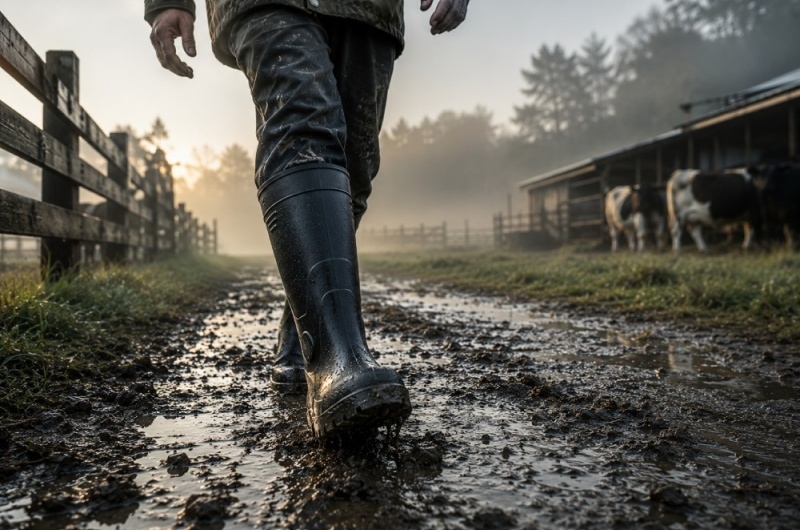
We provide boots with anti-slip and stain-resistant to solve the problem of working in muddy farms, livestock areas, gardens, and other outdoor agricultural work.
Farm work regularly involves mud, water, soil, manure, vegetation, uneven ground, equipment, and changing weather. A practical agricultural boot should be selected for the task, season, and working environment rather than treated as a one-style-fits-all product. Anhui Yufeng New Material Technology Co., Ltd. supports agricultural distributors, farm-supply companies, importers, retailers, and private-label brands with OEM rain boot programs for crop farming, livestock areas, gardens, orchards, greenhouses, and general outdoor work.
Waterproof construction is the foundation, but farmers and buyers also consider tread, cleanability, shaft height, fit, comfort, durability, lining, color, and cost. Where the job includes impact, sharp objects, chemicals, or machinery, a separate safety assessment and verified protective specification may be required.
Livestock care, field work, irrigation, planting, harvesting, greenhouse operations, gardening, and agricultural maintenance do not create identical conditions. Deep mud may call for a taller shaft and tread that can release soil, while greenhouse or garden work may favor a lighter, shorter boot that is easy to put on. Dairy, poultry, and livestock areas may place more emphasis on frequent washing and contamination control.
Before recommending a direction, we ask about ground type, mud depth, water exposure, animal areas, vegetation, temperature, shift length, cleaning method, and any contact with fertilizers, pesticides, fuels, oils, or disinfectants. The buyer should provide the substance and exposure information when material resistance is important.
An OEM farming rain boot program can consider:
- PVC or EVA molded waterproof construction based on use and market position.
- Low, mid-calf, or tall shaft directions for different tasks and weather.
- Outsole patterns reviewed for mud, soil, wet grass, yards, or hard farm surfaces.
- Flexible shaft and opening dimensions that suit movement and trouser placement.
- Unlined, textile-lined, or removable warm-liner options for seasonal programs.
- Insoles, kick-off details, collars, handles, or other practical features.
- Colors and markings for retail identity, work teams, or size recognition.
- Custom logos, labels, hangtags, individual packaging, and export cartons.
Product weight and stiffness should be considered alongside durability. A heavier appearance does not automatically mean better performance, and an extremely deep tread can be harder to clean. The best balance comes from the intended task and buyer priorities.
Agricultural surfaces can change within a single workday: wet concrete, compacted soil, loose mud, grass, gravel, and vehicle steps may all be present. Tread geometry, contact area, material, wear, and contamination influence grip. An outsole described as anti-slip cannot prevent every fall, especially when mud or organic matter fills the tread.
Buyers should identify the most important surface and any formal slip requirement. Farm operators should also maintain walking areas, clean excessive buildup, inspect tread wear, and use safe working practices. If the boot will be used around ladders, machinery, or specialized equipment, compatibility should be checked by the employer.
Livestock and controlled growing operations may use cleaning and biosecurity procedures to limit the movement of soil, manure, or microorganisms between areas. A smooth molded upper can support washing, but footwear design alone does not create biosecurity. Facilities should define where boots are worn, how they are cleaned and disinfected, how contact time is controlled, and where clean footwear is stored.
Disinfectants and agricultural chemicals can affect materials differently. Provide the chemical, concentration, temperature, frequency, and contact time when compatibility is essential. Users should follow the product and chemical instructions, rinse when required, dry footwear appropriately, and remove damaged boots from service.
Warm-season field work and winter livestock care require different comfort decisions. Unlined or lighter constructions may suit warmer conditions, while a removable liner and sock allowance can support colder use. Fit should be checked with the intended sock and liner. Moisture inside the boot should be managed through appropriate drying and rotation.
For extended low-temperature work, see our cold-weather waterproof boot solution. Any temperature or insulation claim should be tied to a defined finished product and applicable verification.
Some agricultural tasks involve heavy objects, sharp debris, tools, chemicals, or vehicles and may require certified safety footwear. Protective toe caps, penetration-resistant components, or other safety properties should be selected from a documented risk assessment. The destination standard, classification, test method, and required markings must be stated before sampling.
A general farmer boot should not be marketed as safety footwear unless the specific construction has been tested and documented for the claimed protection. Labels, catalogs, and packaging should distinguish clearly between general waterproof boots and verified protective models.
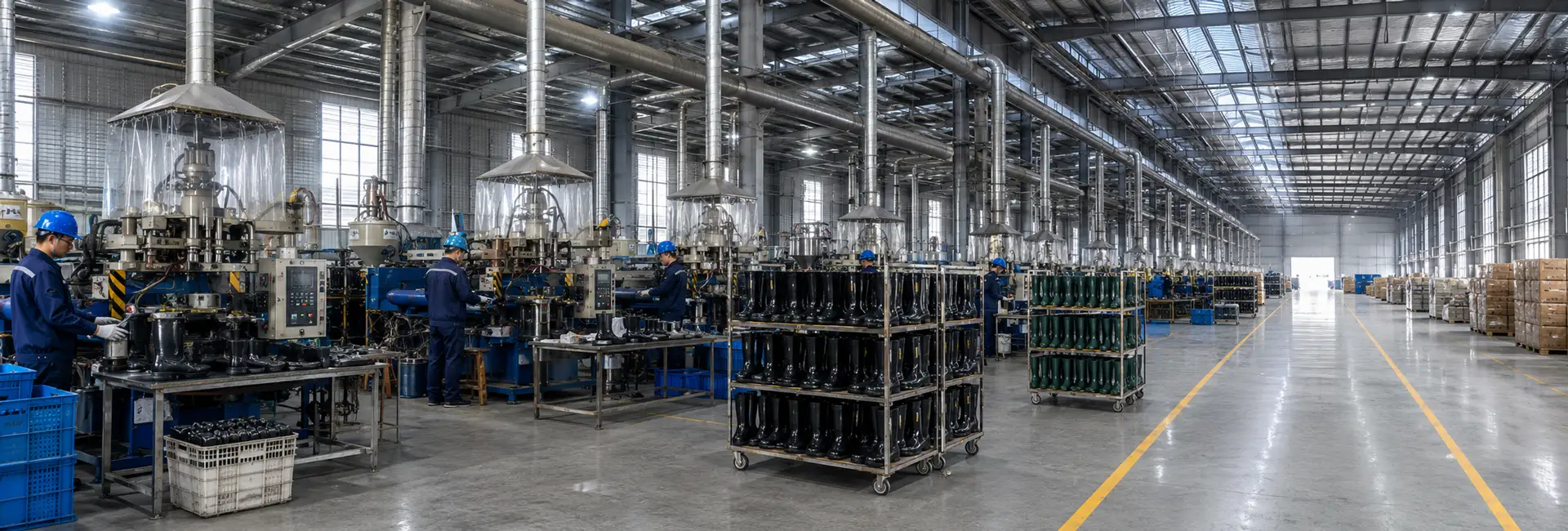
Our OEM and private-label rain boot solution supports custom colors, logos, sizes, linings, outsoles, packaging, and carton marks. Samples and specifications are confirmed before bulk production, and quality checks follow the approved references. Multi-style programs can be organized for different seasons, users, or farm applications.
To discuss a project, provide the farming application, surfaces, climate, cleaning agents, required protective features, size range, estimated quantity, target market, branding, and packaging. Contact Anhui Yufeng for wholesale agricultural rain boots, garden boots, livestock-area footwear, or custom private-label development.