
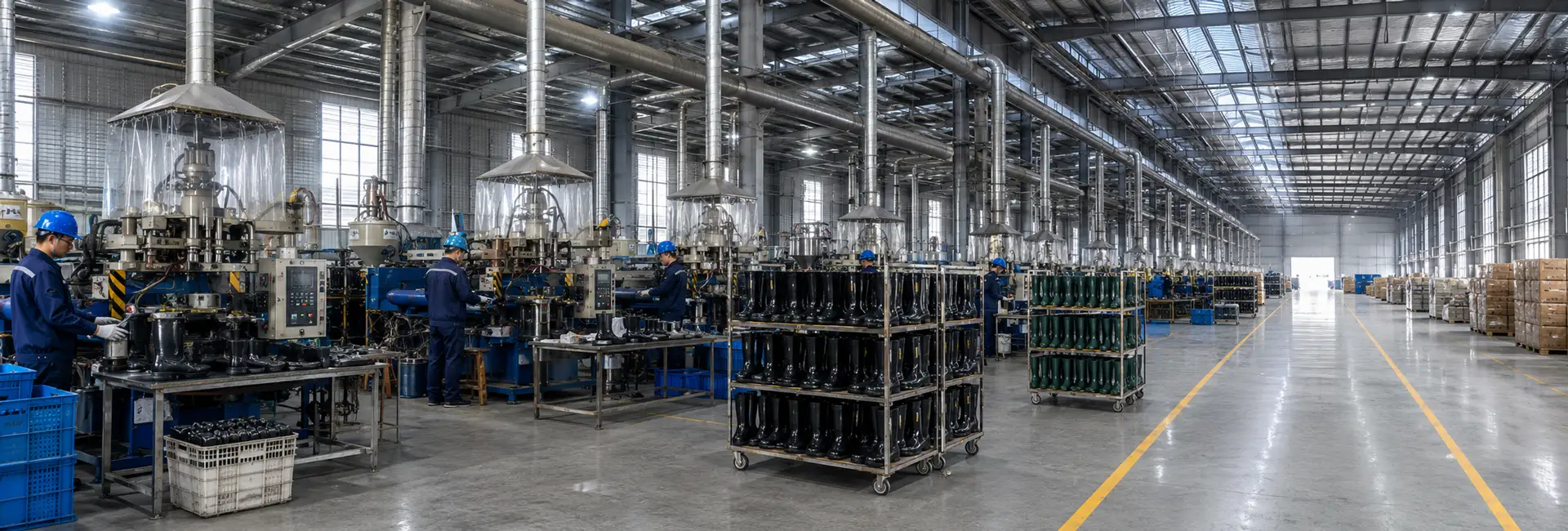
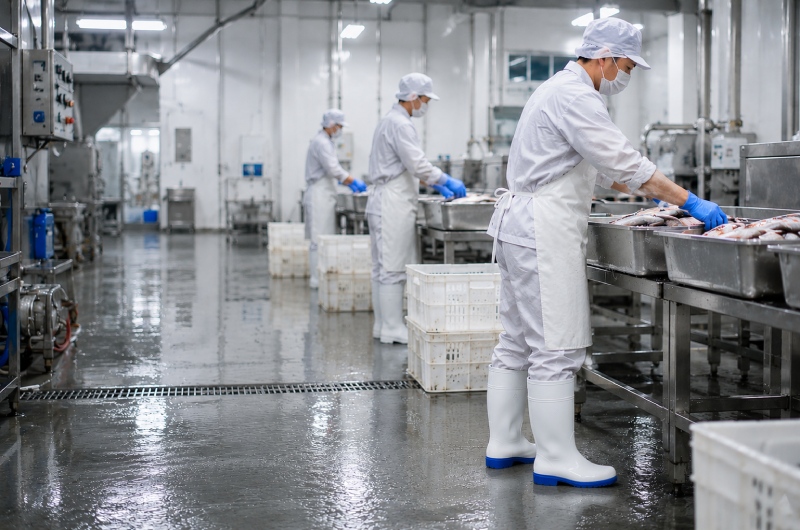
We provide a food processing rain boots to solve the difficulties of solid and liquid contaminants. Our boots are easy-to-clean and waterproofed which designed for hygienic working environments in food factories, seafood processing, and commercial kitchens.
Food factories, seafood plants, meat and poultry facilities, beverage production, commercial kitchens, and other wash-down environments need footwear selected for both workplace hazards and hygiene procedures. Anhui Yufeng New Material Technology Co., Ltd. supports importers, food-industry suppliers, PPE distributors, and private-label brands with molded waterproof boot solutions developed around the intended area, cleaning routine, floor condition, temperature, and destination requirements.
A food-processing boot should not be chosen from a generic “waterproof” description alone. Water, fats, oils, food residue, detergents, disinfectants, cold rooms, frequent washing, and long standing periods can create different performance needs. The employer or buyer should define the risk assessment and sanitation program; we then help translate those requirements into a clear product and inspection specification.
Molded rain boots provide a continuous waterproof barrier across the boot body, helping workers operate in wet areas and making the surface easier to clean than many multi-panel footwear constructions. Shaft height should match the expected splash and wash-down exposure without unnecessarily limiting movement. The opening, surface details, tread, and kick-off features should also be considered in relation to cleaning and daily use.
White and other light colors are often requested for food environments because visible contamination can be easier to notice, while color coding may help separate departments, allergen zones, visitor footwear, or job roles. Color alone does not create hygiene; it must support the facility’s documented cleaning, storage, and cross-contamination controls.
A food-processing rain boot program may include:
- A waterproof PVC or EVA construction selected for the intended temperature and task.
- A smooth, easy-to-clean upper with limited unnecessary dirt-trapping details.
- An outsole pattern reviewed for wet, greasy, or contaminated floor conditions.
- Color coding, size identification, and brand or facility markings.
- A lining or removable insole suitable for the comfort and cleaning plan.
- Protective toe or penetration-resistant options if the site risk assessment requires them.
- Packaging and labels that keep sizes and product categories easy to identify.
The selected outsole should be evaluated for the actual surface and contaminant. “Anti-slip” or “slip-resistant” is not an absolute guarantee against falls, and performance can change with wear, cleaning, floor material, and the substance present. When a formal slip rating is required, the target standard and test method must be confirmed for the specific boot.
Cleaning procedures can expose boots to hot or cold water, detergents, sanitizers, fats, oils, and repeated mechanical scrubbing. Buyers should provide the chemical name or composition, concentration, contact time, temperature, and frequency when resistance is critical. General descriptions such as “chemical resistant” are too broad for responsible selection.
Material compatibility should be reviewed and, where necessary, tested against the intended agent and method. The facility should follow its own validated hygiene procedure, inspect boots for damage, and replace footwear that has cracks, cuts, excessive wear, or contamination that cannot be removed. Boots should be cleaned and dried in a way that does not create cross-contamination between controlled areas.
Food processing may include chilled rooms, freezers, wet receiving areas, and warmer production zones. A boot suitable for an ambient wash-down area may not provide the insulation needed for extended cold exposure. For cold workplaces, the specification can consider material behavior, removable warm liners, sock allowance, outsole contact, and the length of exposure.
Temperature claims must relate to a defined product, test method, activity level, and use condition. For specialized low-temperature applications, review our cold-weather boot solution and provide the operating temperature and shift information.
Some food operations handle heavy crates, carts, knives, machinery, or sharp waste and may require certified safety footwear. Protective toe, penetration resistance, slip performance, cold insulation, or other classifications should be selected from the employer’s risk assessment and applicable regulations. The buyer must identify the target standard and required markings before development.
Testing, reports, labels, and packaging claims are confirmed for the specific construction. A standard food boot without verified safety components should not be marketed as certified protective footwear.
We support custom colors, logos, sizes, linings, outsoles, labels, and packaging for distributors and food-industry supply programs. During sample and packaging confirmation, the buyer reviews the product, marking, size information, artwork, and packing. Bulk production then follows the approved reference.
Quality inspection can cover molded appearance, color, size marking, outsole condition, protective components where applicable, waterproof-related checks, cleanliness, and packing accuracy according to the agreed plan. Third-party testing or inspection can be coordinated when specified before the order is released.
Tell us the facility type, work area, floor surface, contaminants, cleaning agents, operating temperature, exposure time, required safety standard, preferred color coding, size range, quantity, and destination. Include any existing specification, sanitation-related design rule, or approved reference used by your customer.
Contact Anhui Yufeng to discuss waterproof food-processing boots, cold-room footwear, private-label packaging, samples, and bulk supply. We will help organize the information needed for a practical product recommendation without making unsupported hygiene or safety claims.