What Makes Waterproof Rain Boots Effective in Heavy Rain and Standing Water?
-
 Tom
- 23rd Outubro 2026
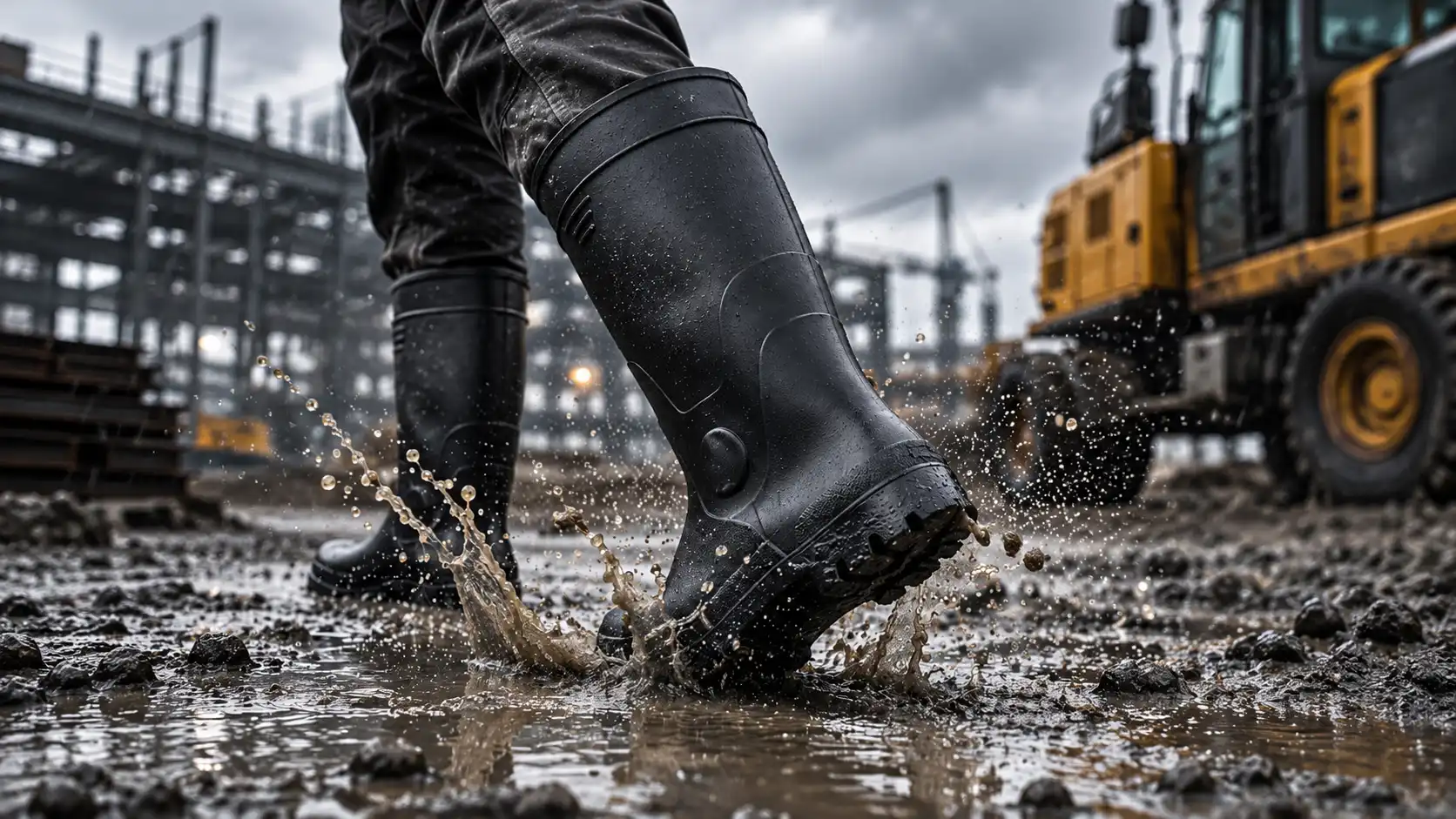
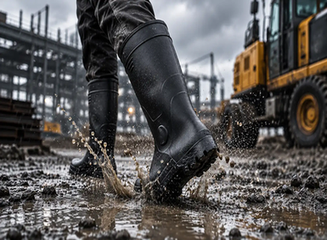
Heavy rain tests more than a boot’s outer surface. Water runs down clothing, puddles rise above the ankle, mud fills the tread, and every step bends the same points in the upper. Effective waterproof rain boots need a continuous shell, few potential leak paths, enough height for the expected water depth, and an outsole suited to wet ground.
That combination matters more than a broad “waterproof” label. A low waterproof boot can still take in water from above, while a tall but loose boot may feel unstable. Performance comes from the whole design working together.
The Waterproof Barrier Starts with the Material
PVC is widely used for molded rain boots because it does not absorb water under normal use. Formed into a continuous shell, it creates a direct barrier against rain, mud, and shallow standing water. Leather or fabric footwear may instead depend on coatings, membranes, and sealed seams.
The PVC compound still affects flexibility, abrasion behavior, and response to temperature. A stiff formulation can make walking tiring and stress flex points; one that is too soft may lack support. Judge the compound together with boot shape, wall thickness, and end use.
YUFENG manufactures PVC rain boots by injection molding and can use different formulations for the shaft and outsole in two-color designs. A flexible shaft can therefore be paired with an outsole formulated for wear. For everyday wet conditions, general work rain boots suit rain, mud, farming, gardening, cleaning, and outdoor tasks without unnecessary protective hardware.
One-Piece Molding Removes Common Leak Paths
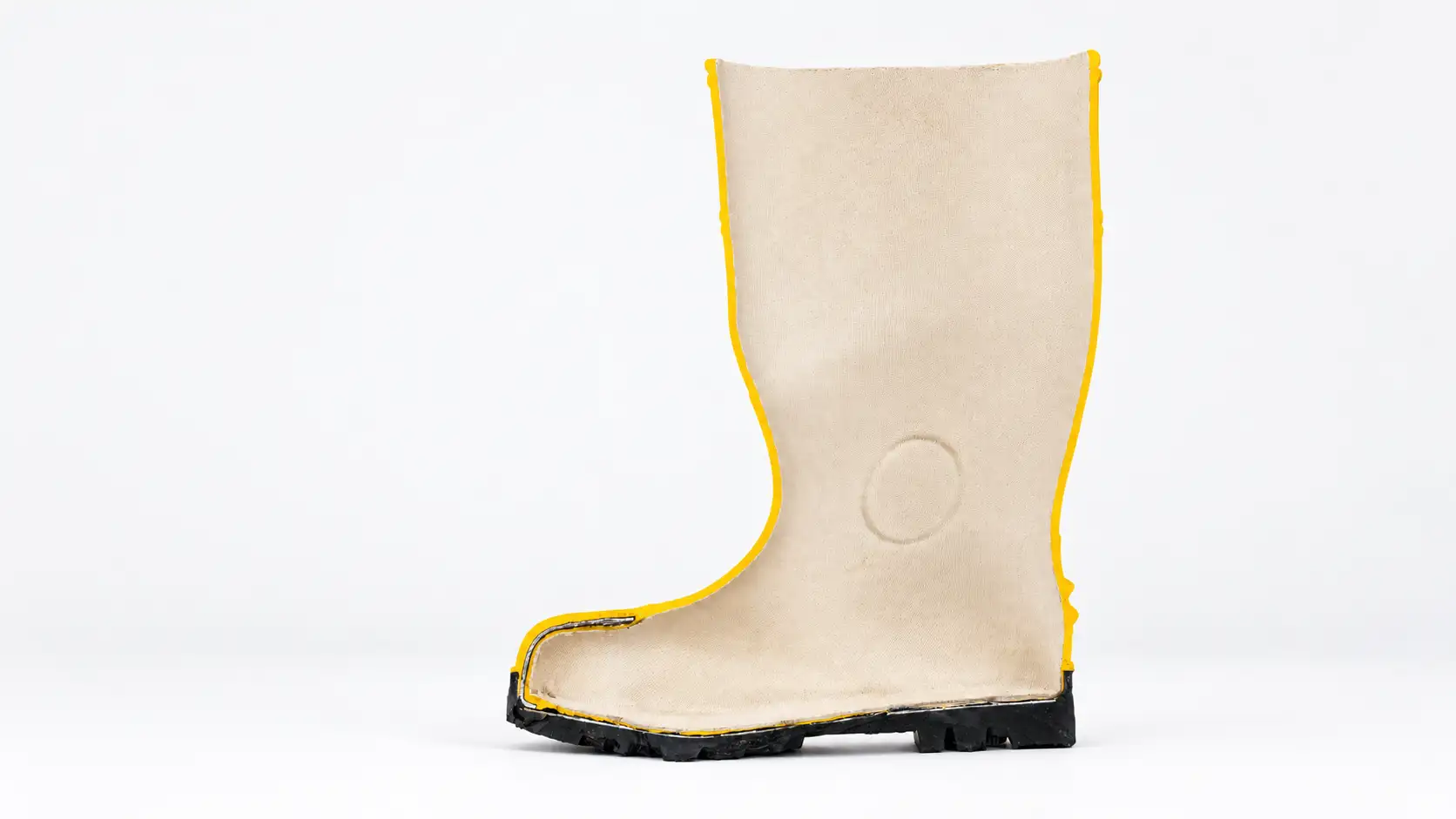
Water tends to find the weakest point. Stitched seams, eyelets, and poorly sealed joints can become entry paths after repeated bending. Pull-on PVC rain boots avoid many of these openings because the upper is molded as a continuous shell.
In one-piece injection molding, heated compound enters a boot mold and cools into the required shape. The shell has no stitched upper seams, laces, or separate tongue below the waterline.
Molding still requires control. Incomplete filling, trapped air, uneven thickness, or trimming damage can compromise the boot. Material preparation, injection settings, cooling, and inspection all affect the result.
Shaft Height and Fit Control Water Entry from Above
A waterproof shell cannot stop water entering through the opening. Wind-driven rain may run down trousers into a wide collar, while one unexpectedly deep step can put the waterline above the shaft.
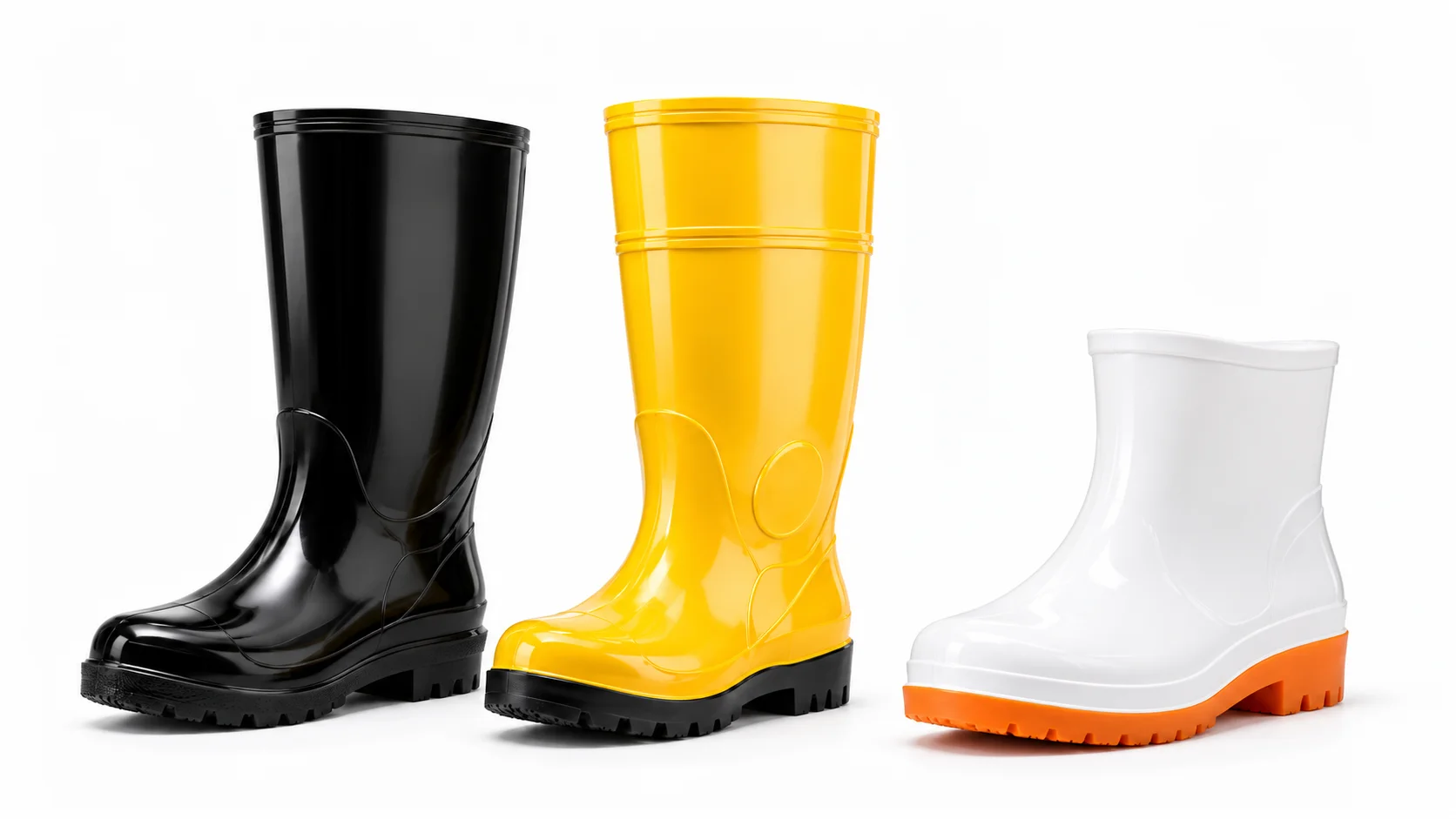
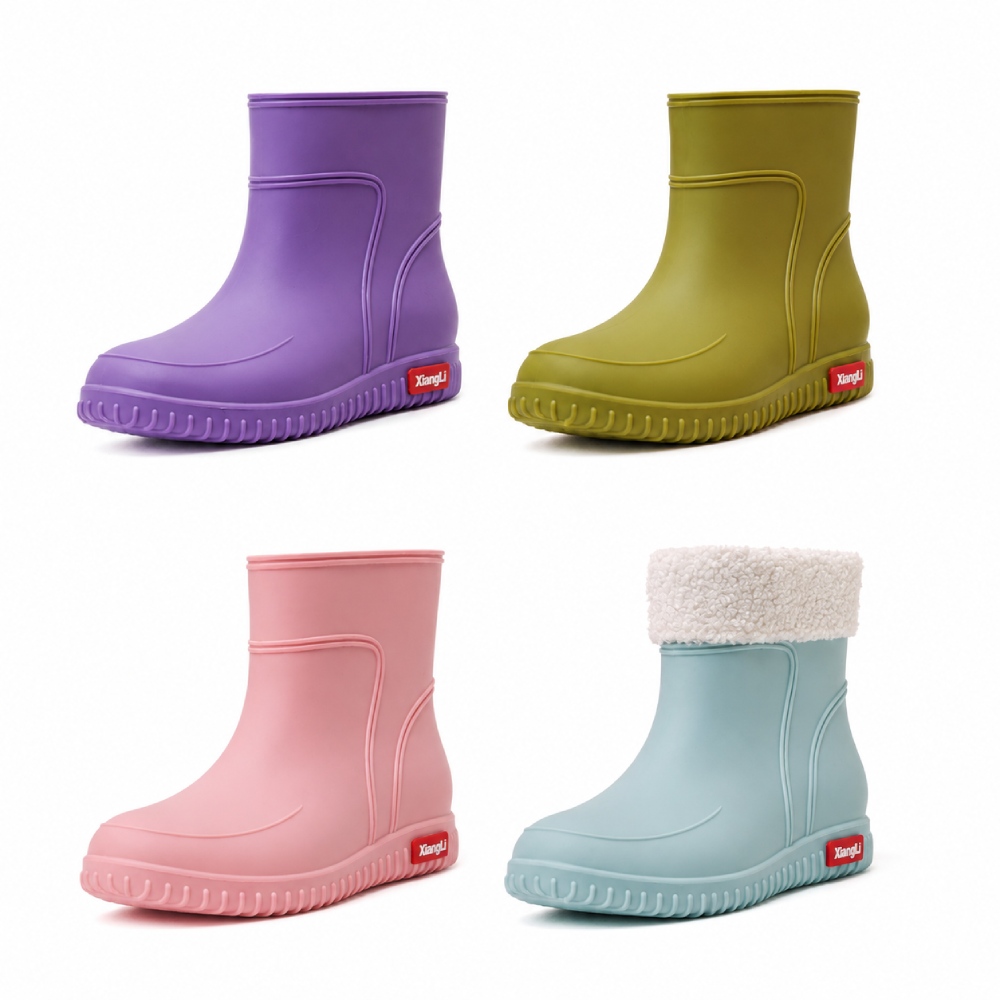
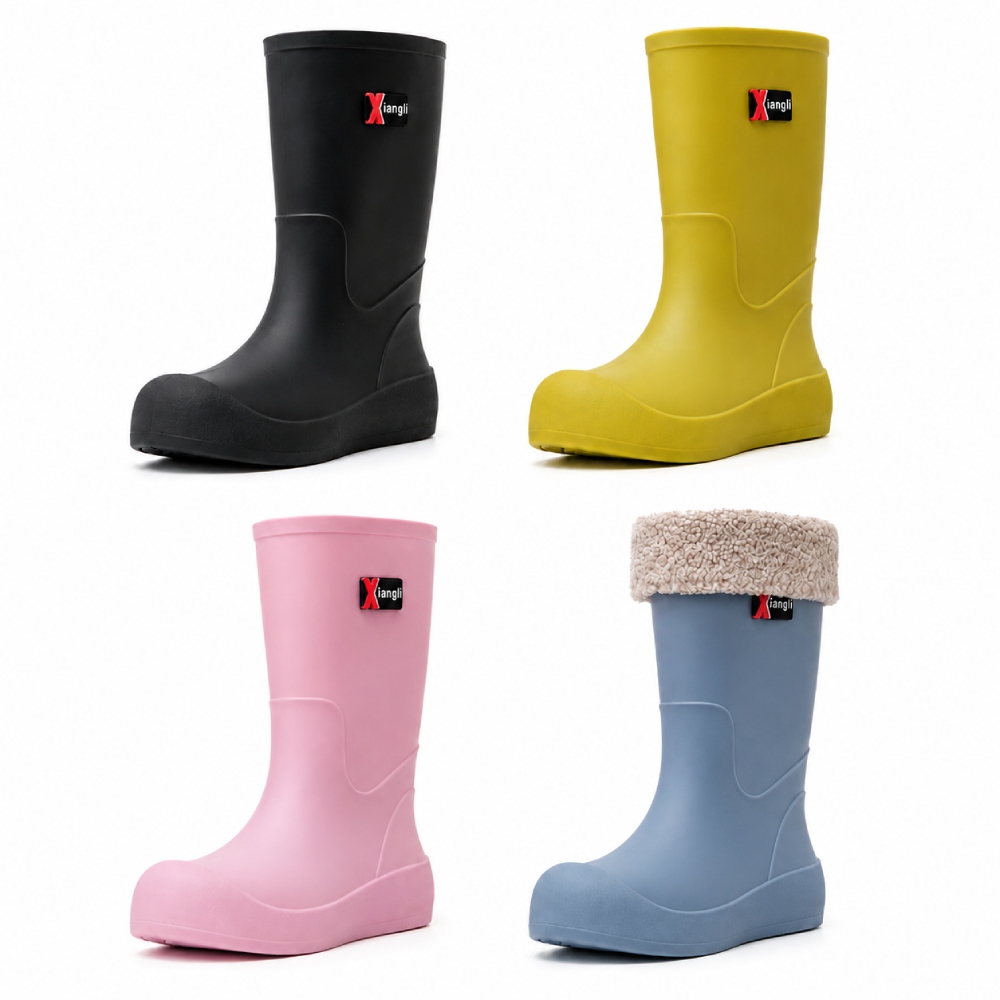
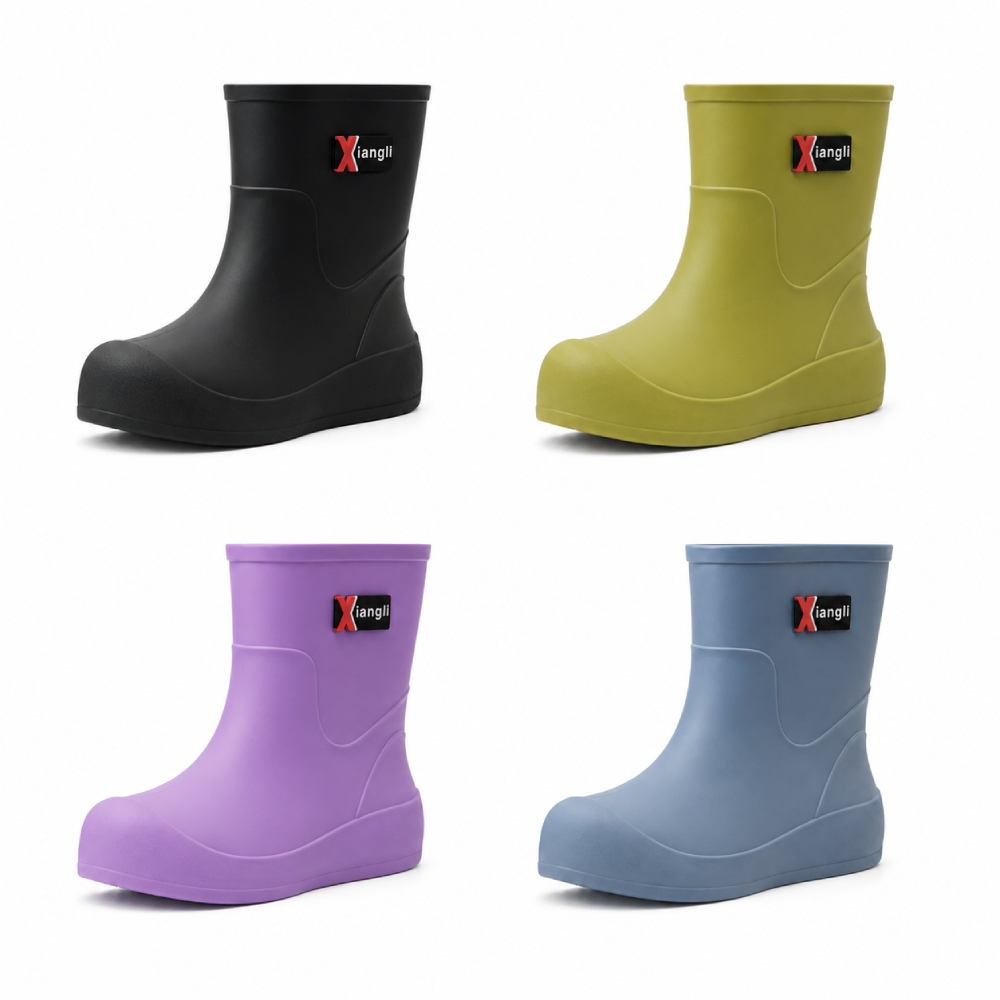
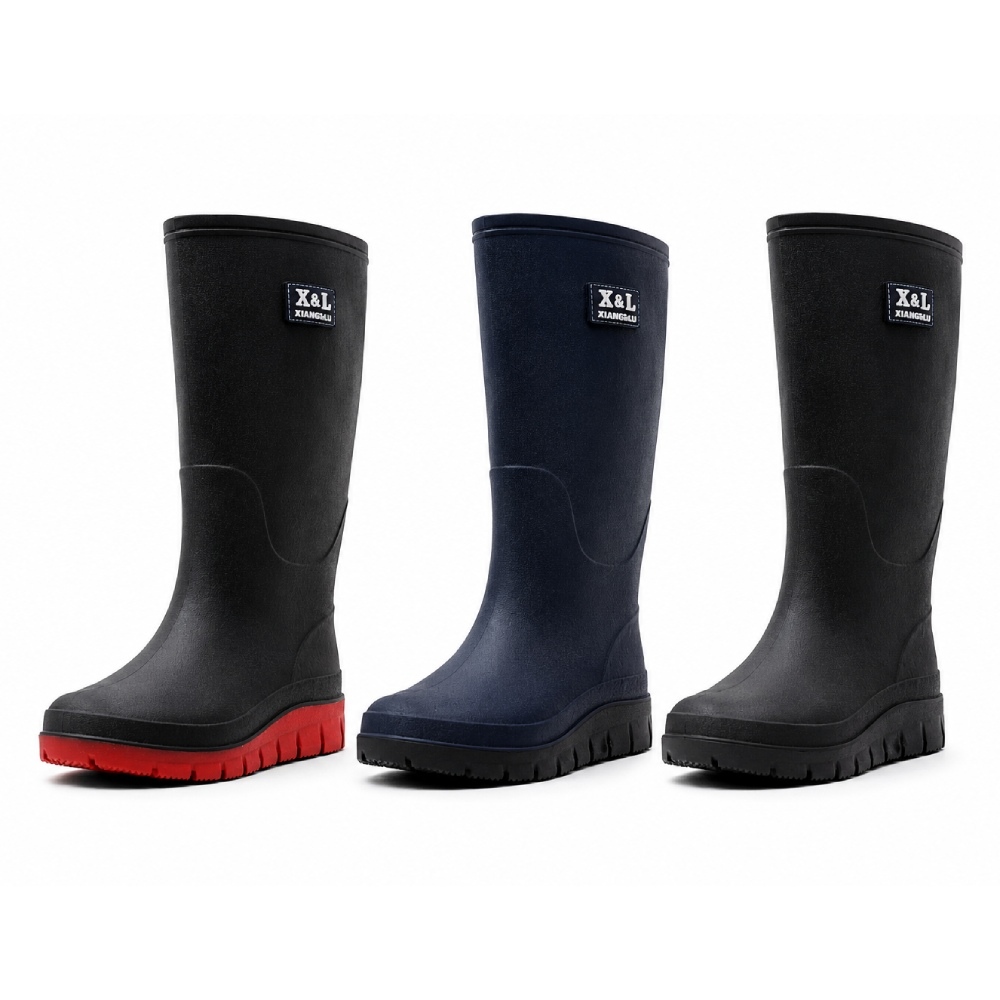
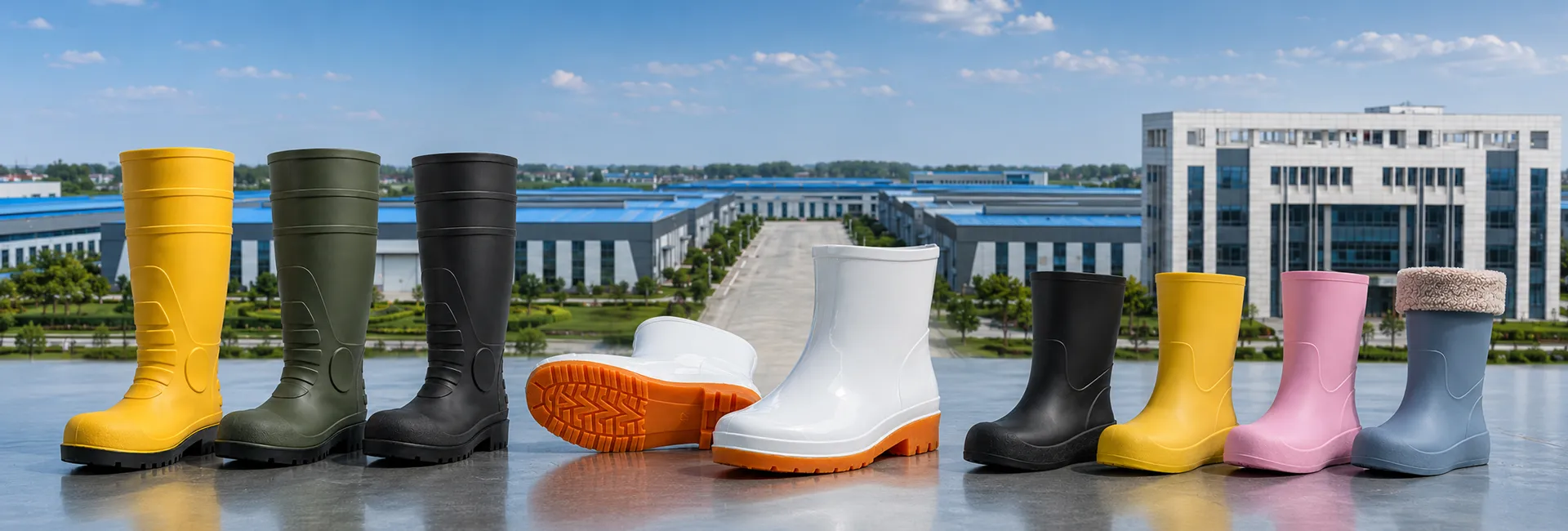
Choose height for the real environment. An ankle boot suits shallow water and short tasks. Mid-calf styles add coverage without full-height weight. Knee-high boots give more margin in deep puddles, muddy fields, and livestock areas. Tall waterproof rain boots for gardens and farms show the straight shaft often selected when lower-leg coverage matters.
The heel should not lift excessively, yet the toe box needs room for movement and work socks. Wearing waterproof trousers over the shaft usually directs runoff away from the opening more effectively than tucking a wet leg inside.
The Outsole Matters Once Water Covers the Ground
Standing water hides smooth concrete, algae, oil residue, gravel, and mud. No outsole makes every wet surface safe, but tread design, compound, and contact area can improve stability for a defined application.
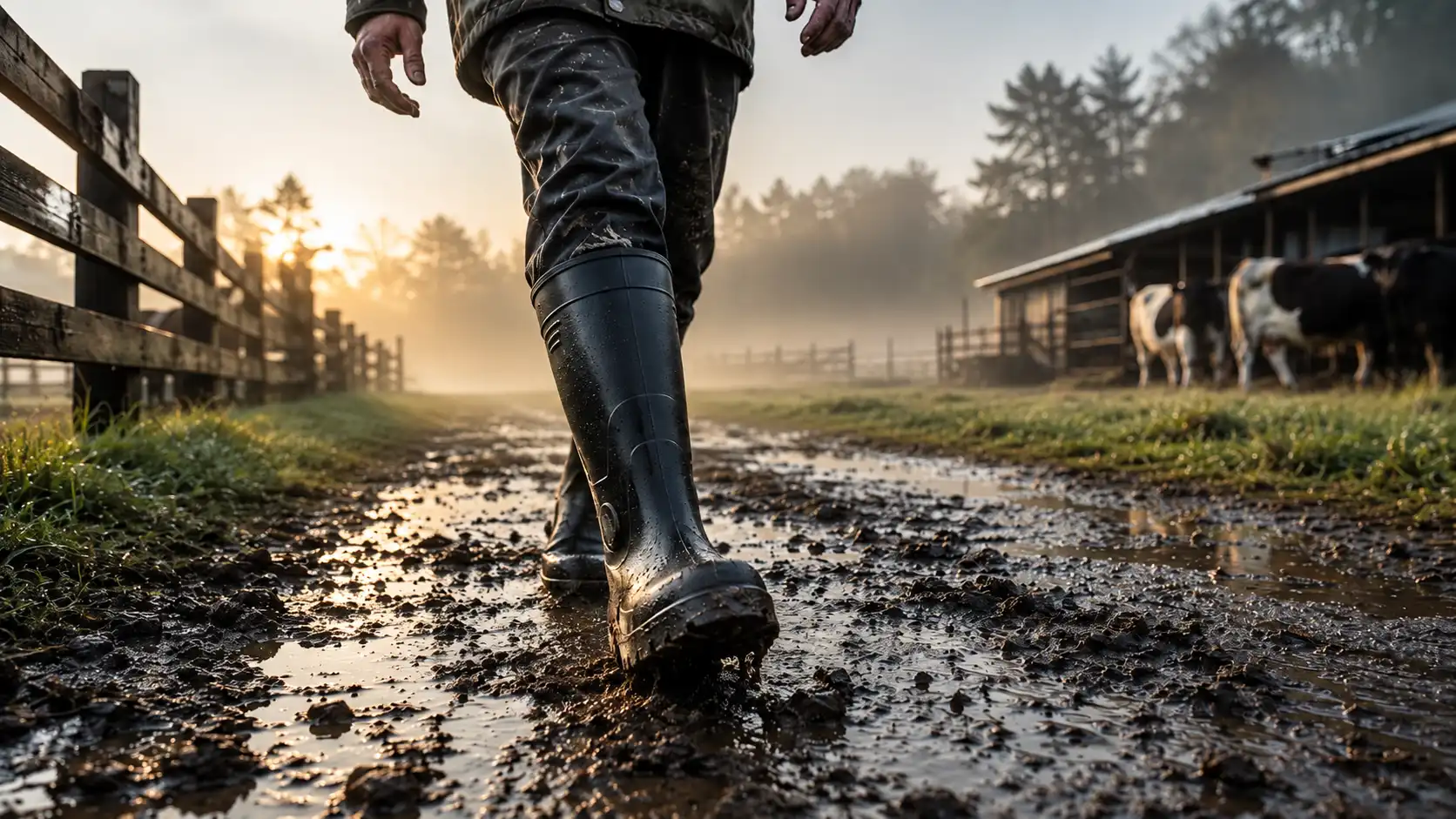
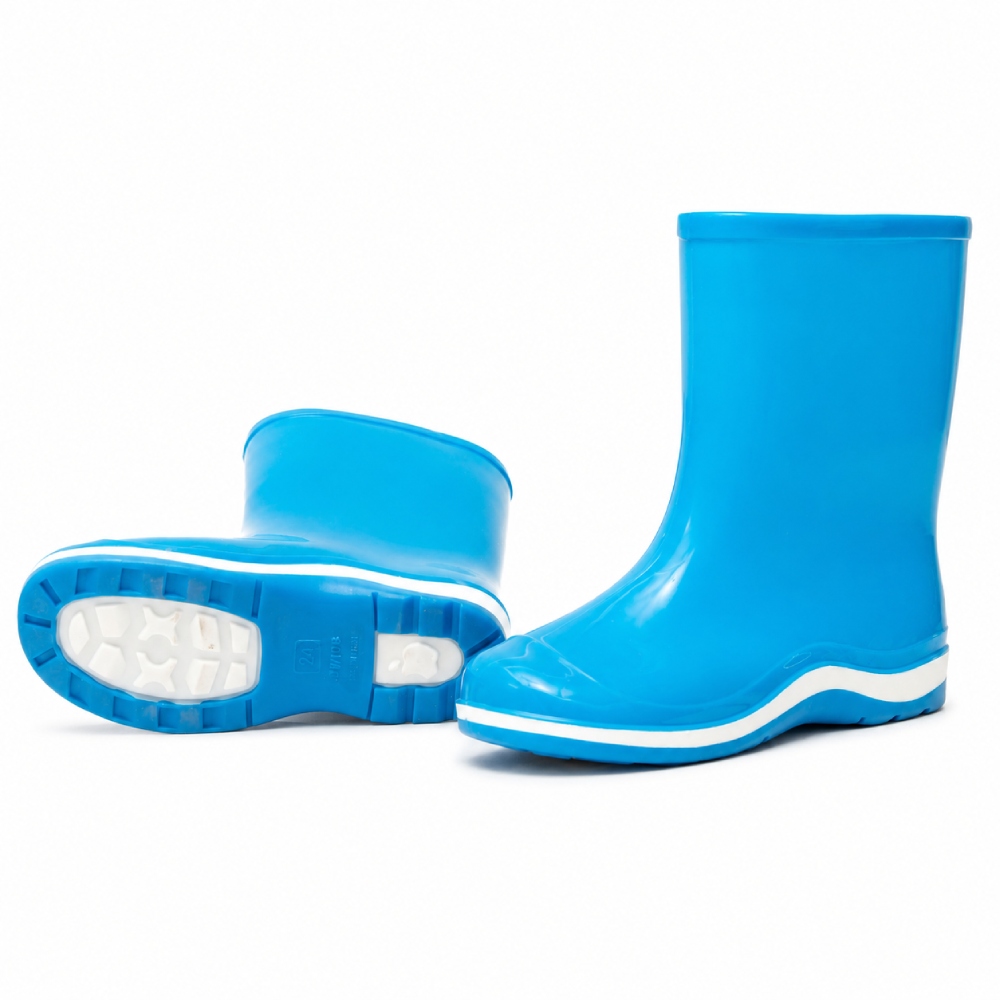
Deep, open lugs can shed soil and engage with mud. Wider channels move water and debris away from the contact area. Smooth indoor floors may require different tread geometry and compound from an agricultural outsole. Use context decides the better option.
Treat “slip resistant” as a testable specification rather than a universal promise. Identify the floor and likely contaminants, then request the relevant result for the exact model. Where impact or puncture hazards also exist, Botas de chuva de segurança em PVC can include protective toe caps and midsoles. Those parts address separate hazards and must be specified accordingly.

Flexibility Helps the Shell Survive Repeated Movement
The forefoot and ankle bend repeatedly during work. A balanced boot flexes with the foot without folding sharply into one crease. Shape, formulation, wall thickness, temperature, and fit all matter. When comparing samples, walk, kneel, turn, and climb stairs; comfort judged while standing still reveals little about a wet shift.
Waterproof Claims Need Finished-Boot Inspection
A small molding defect can undermine a sound design. Finished boots should be checked for pinholes, splits, thin areas, trimming damage, outsole defects, and irregularities at high-flex zones.
YUFENG uses incoming inspection, in-process checks, final inspection, and batch traceability. Water-immersion leakage testing can be included for safety rain boots, and third-party testing may be arranged where required. A wholesale test plan should name the model, sample size, method, acceptance criteria, and response to failure. “Check waterproofness” is too vague to audit.
Match the Boot to the Water, Work, and Wear Time
Heavy rain is not one use case. A delivery worker on wet pavement needs a different balance of weight and flexibility from a farm worker in mud. A food plant may prioritize easy cleaning and grip on greasy floors. A construction site can add impact and puncture risks.
Ask these questions before selecting a model:
- How deep can the standing water become, and is the depth predictable?
- Will the user walk continuously, stand for long periods, or climb frequently?
- Is the ground smooth, muddy, oily, uneven, or covered with loose debris?
- Are protective toes, puncture-resistant midsoles, warm linings, or chemical resistance required?
- What temperatures will the boots encounter in use and storage?
- Which waterproof, slip, or safety tests must be documented for the destination market?
The answers determine shaft height, outsole, formulation, protective parts, lining, and test plan. They also support a more meaningful sample instead of one boot for every wet environment.
Know the Limits of Ordinary Rain Boots
Waterproof rain boots keep water out below the opening when the shell is intact. They are not waders for water approaching the shaft height, nor protection against fast-moving floods, electrical hazards, sewage, fuel, or aggressive chemicals unless specifically designed and tested for that exposure.
Standing water can conceal holes, sharp scrap, unstable ground, and missing drain covers. Move carefully and leave if depth or current cannot be judged. Waterproof footwear does not remove hazards hidden by water.
Care Preserves the Features That Keep Water Out
After use, rinse away mud and grit, use mild soap when needed, and dry the boots at room temperature away from heaters and prolonged sun. Store them upright without tight folds or heavy objects on the shafts.
Check the toe bend, ankle crease, outsole edge, and lower shaft before the next wet shift. The guide to rain boot care after wet use explains how cleaning, drying, and storage affect long-term condition.
A Practical Selection Checklist
An effective boot for heavy rain and standing water should combine:
- A waterproof material suited to the expected temperature and workload
- A continuous molded shell with no unnecessary openings below the waterline
- Enough shaft height for the likely water depth and rain runoff
- A secure fit that controls heel movement without crowding the toes
- An outsole selected for the actual floor, mud, and contaminants
- Finished-boot inspection and a defined leakage test where required
- Clear limitations for water depth, chemical contact, and safety hazards
- Cleaning and storage instructions that protect the shell and tread
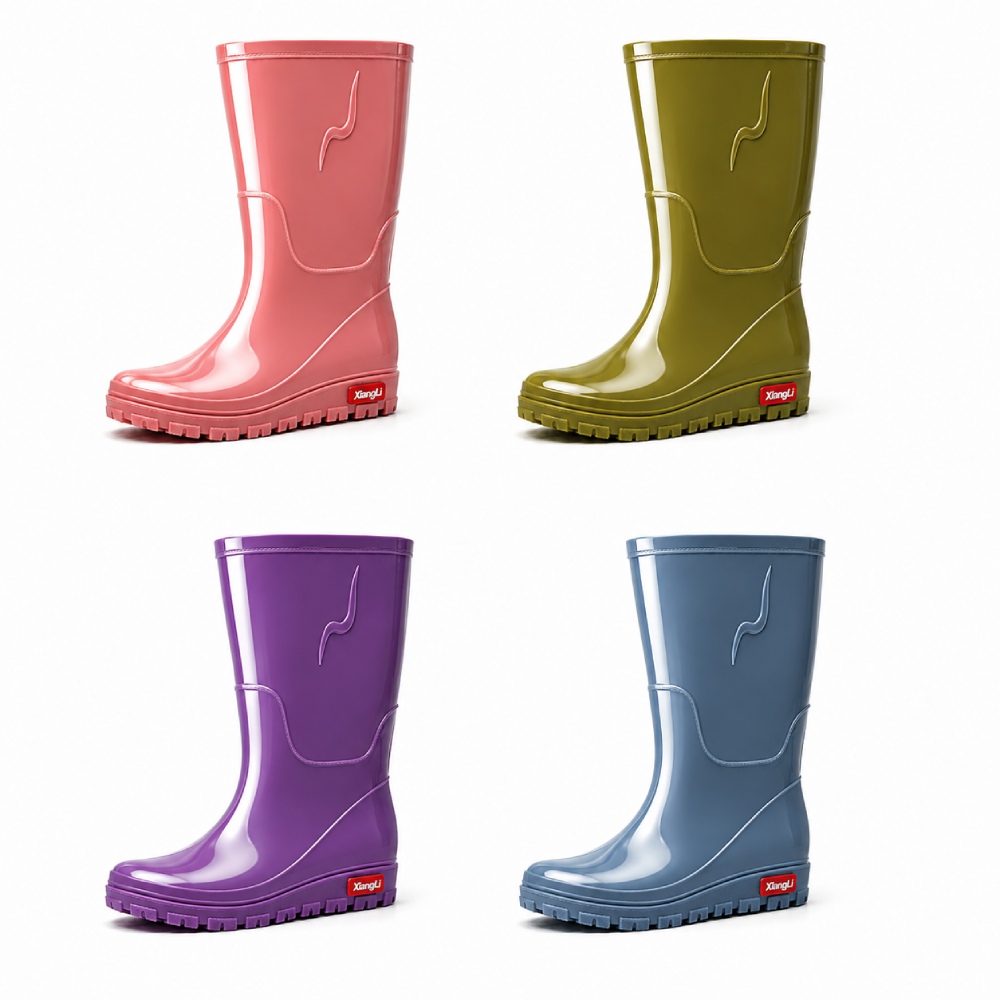
For wholesale orders, these points belong in the specification and sample approval. YUFENG can develop PVC rain boots with selected colors, logos, shaft heights, linings, outsole patterns, and packaging. Buyers can discuss the application and required specification before sampling.
Perguntas frequentes
Are PVC rain boots fully waterproof?
The molded PVC shell is waterproof under normal use when it is free from defects and water remains below the opening. Cuts, cracks, punctures, or top entry can still leave the foot wet.
What boot height is best for standing water?
Keep the shaft comfortably above the expected waterline, with margin for splashing and uneven ground. Ankle and mid-calf boots suit shallower water; knee-high styles add coverage. If water may reach the top, ordinary rain boots are the wrong equipment.
Do deep treads guarantee slip resistance?
No. Deep lugs can help in mud, but wet tile, oily concrete, and greasy floors need different combinations of geometry and compound. Review evidence for the exact model and relevant surface.
How can a buyer check waterproof performance before a bulk order?
Approve a representative sample, define the finished-boot leakage test, and record acceptance criteria in the purchase specification. If third-party evidence is needed, agree on the laboratory and method before production.
Why do feet sometimes feel damp inside waterproof rain boots?
PVC blocks external water but also traps more internal moisture than an open shoe. Warm conditions and heavy work create perspiration. Suitable socks, correct fit, and drying between shifts can improve comfort.
When should waterproof rain boots be replaced?
Replace boots when a crack, puncture, split, separation, or persistent leak compromises the shell. Heavily worn tread can reduce stability even if the upper remains waterproof. Follow workplace replacement rules for safety footwear.
Conclusão
Waterproof material is only the starting point. Effective boots combine a continuous molded shell, suitable height, secure fit, appropriate outsole, controlled production, and finished-pair inspection. Match those features to water depth, ground conditions, movement, temperature, and additional hazards.