How PVC Rain Boots Are Made: A Step-by-Step Injection Molding Guide
-
 توم
توم
- 2nd أكتوبر 2026
A finished PVC rain boot looks simple. The factory work behind it is not. The material has to flow cleanly into a tall, narrow mold, the sole needs enough wear resistance, and every pair must leave the line without leaks, thin spots, or badly trimmed edges. If the boot includes a steel toe or puncture-resistant midsole, those parts also have to stay in the right position while hot PVC enters the mold.
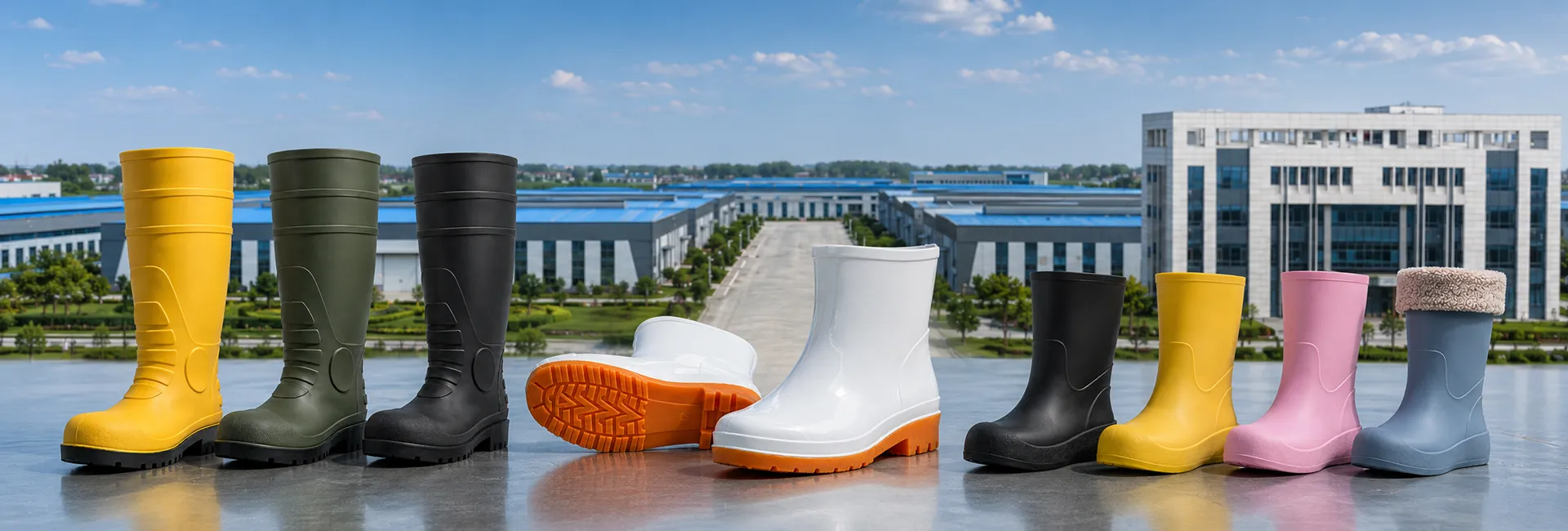
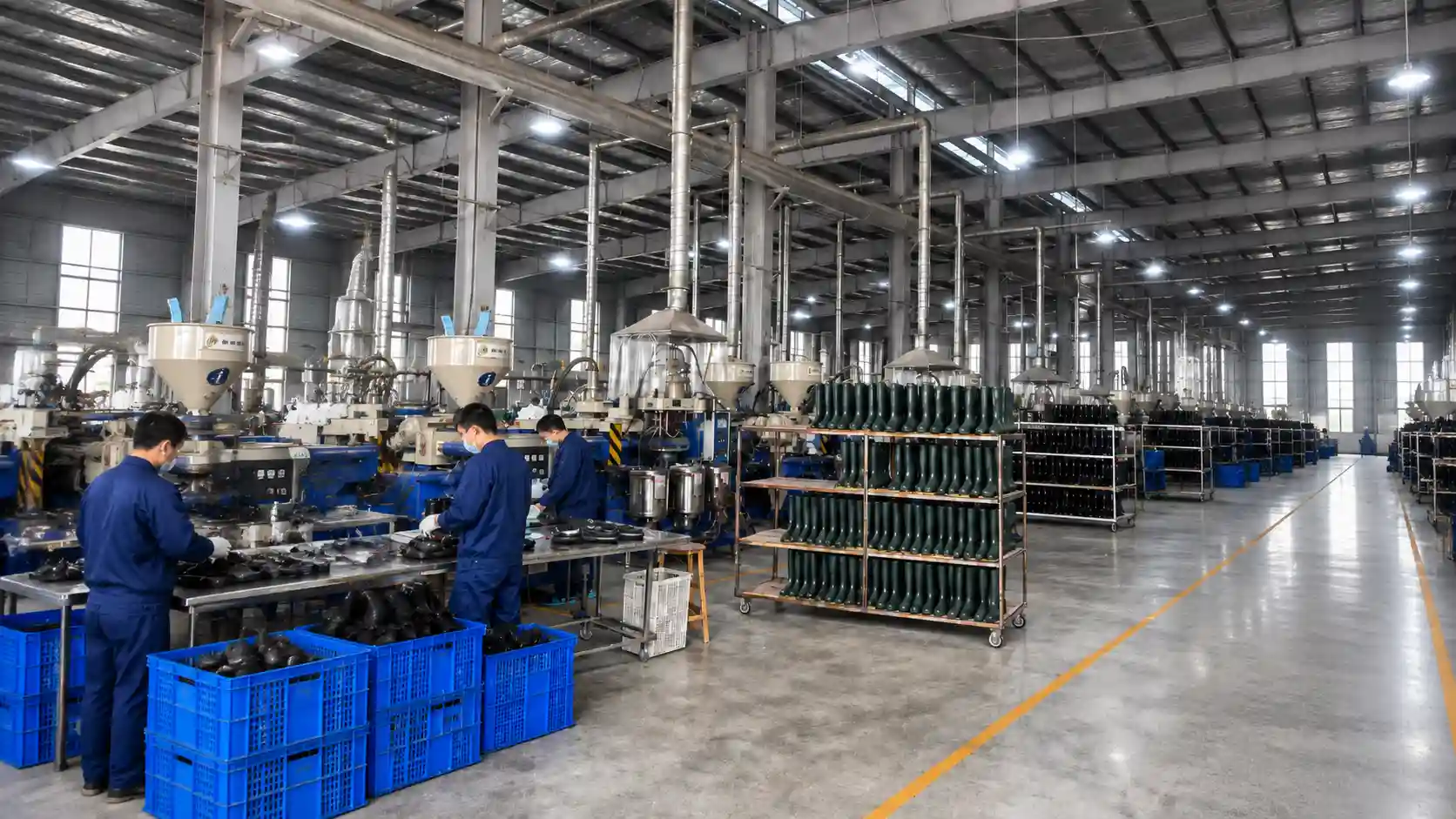
This guide follows the actual production route used by a PVC rain boots manufacturer, from material preparation to packing. YUFENG uses rotary one-piece injection molding for its PVC footwear. Buyers comparing factories can browse the company’s PVC rain boot range before looking at how the process changes by model.
Why Injection Molding Is Used for PVC Rain Boots
PVC becomes flowable when heated, so a factory can inject it directly into a boot-shaped mold. Once the compound cools, the shaft and outsole form one molded body. There are no stitched seams running through the main waterproof shell.
That construction suits rain, farm, food-processing, and industrial boots. It also works for repeat orders because the mold fixes the shape, tread, height, and surface details. Consistency still depends on compound, settings, cooling, and inspection.
Single-color and two-color machines handle the job differently. A single-color machine uses one compound for the molded body. A two-color machine can place a softer compound in the shaft and a harder, more wear-resistant compound in the outsole. The second approach gives the factory more room to tune feel and performance.
Step 1: Confirm the Product Specification
Production starts before PVC reaches the machine. The factory confirms the model, size run, boot height, color, outsole pattern, lining, logo, packaging, and quantity. Safety models also need toe, midsole, test, and market requirements.
These choices affect the mold, materials, inspection plan, and price. YUFENG’s custom rain boot design service covers the early design stage for OEM and ODM projects.
A confirmed sample settles questions about surface finish, logo position, flexibility, and fit.
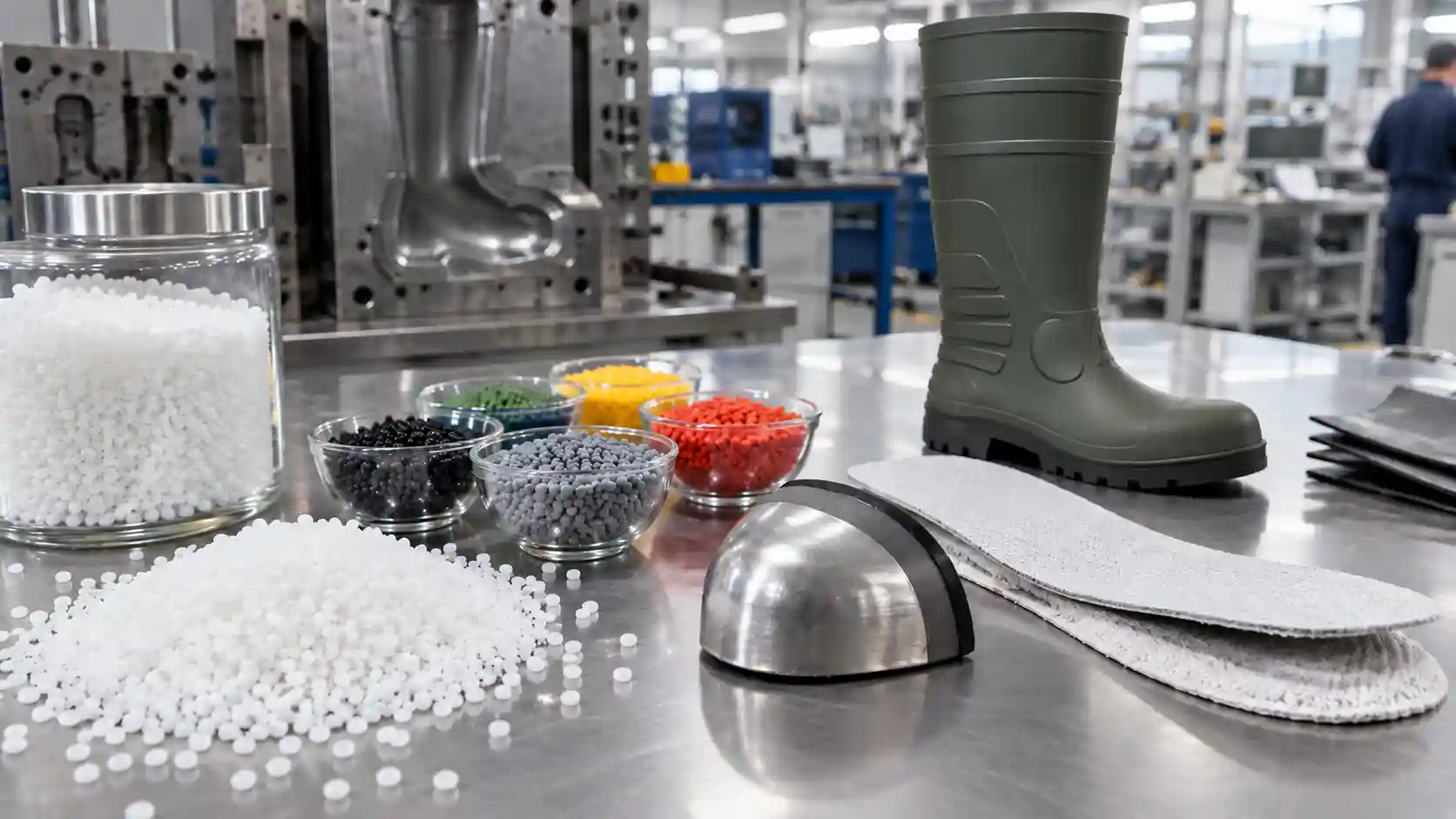
Step 2: Prepare the PVC Compound
The basic formula can include PVC resin or modified PVC pellets, plasticizers, stabilizers, pigments, and anti-UV additives. Each ingredient has a job. Plasticizers affect softness, stabilizers help the compound tolerate processing heat, pigments control color, and outdoor additives may improve weathering performance.
Factories may purchase ready-modified pellets or mix a formulation for the order. Either route needs control. Moisture, contamination, an incorrect color addition, or an unapproved recipe change can show up later as odor, poor flow, inconsistent hardness, or a visible color shift.
Incoming materials should be checked against the order and stored by batch. For traceable production, the material batch stays linked to the shift, mold, and customer order.
Step 3: Prepare the Mold and Optional Safety Parts
Rain boot molds are usually steel and built as matched sections. Before production, operators clean the mold, inspect the surface, and confirm that it matches the required size and style. Worn edges, residue, or damage can leave marks on every boot produced after that point.
For safety rain boots, the toe cap and puncture-resistant midsole are positioned before injection. Placement matters. A shifted cap can affect fit and protection; a missing component can turn a safety model into a serious quality failure. Factories use work instructions and in-process checks to keep these parts in place.
Lined models may also use a textile inner sock fitted over the last or mold assembly. The lining must sit smoothly so it does not wrinkle or interfere with material flow.
Step 4: Inject the PVC
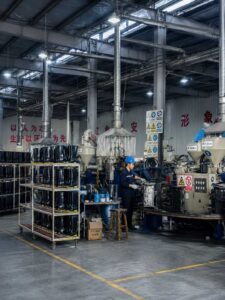
The rotary table moves the prepared mold to the injection station. The machine heats the compound until it can flow through the barrel and into the mold under pressure. YUFENG’s project records describe barrel temperatures around 160–190°C, with the exact setting controlled for the material and machine.
Pressure, temperature, shot size, and timing have to work together. Too little material can create a short shot or thin area. Poor venting may trap air. Excess material can increase flash around the mold line. Operators watch the process rather than relying on one fixed setting for every compound and size.
On a two-color line, the shaft and outsole compounds enter in separate stages. This creates the familiar contrasting sole and can give each section a different hardness.
Step 5: Cool and Demold the Boot
Hot PVC needs time to set. Circulating water cools the mold until the boot holds its shape. The project process records give a typical cooling window of 60–120 seconds, though mold size, wall thickness, compound, and line settings can change the cycle.
Open the mold too early and the boot may distort. Leave it too long and output drops without improving the product. Once the piece is stable, an operator or mechanical device removes it from the mold and places it in post-processing.
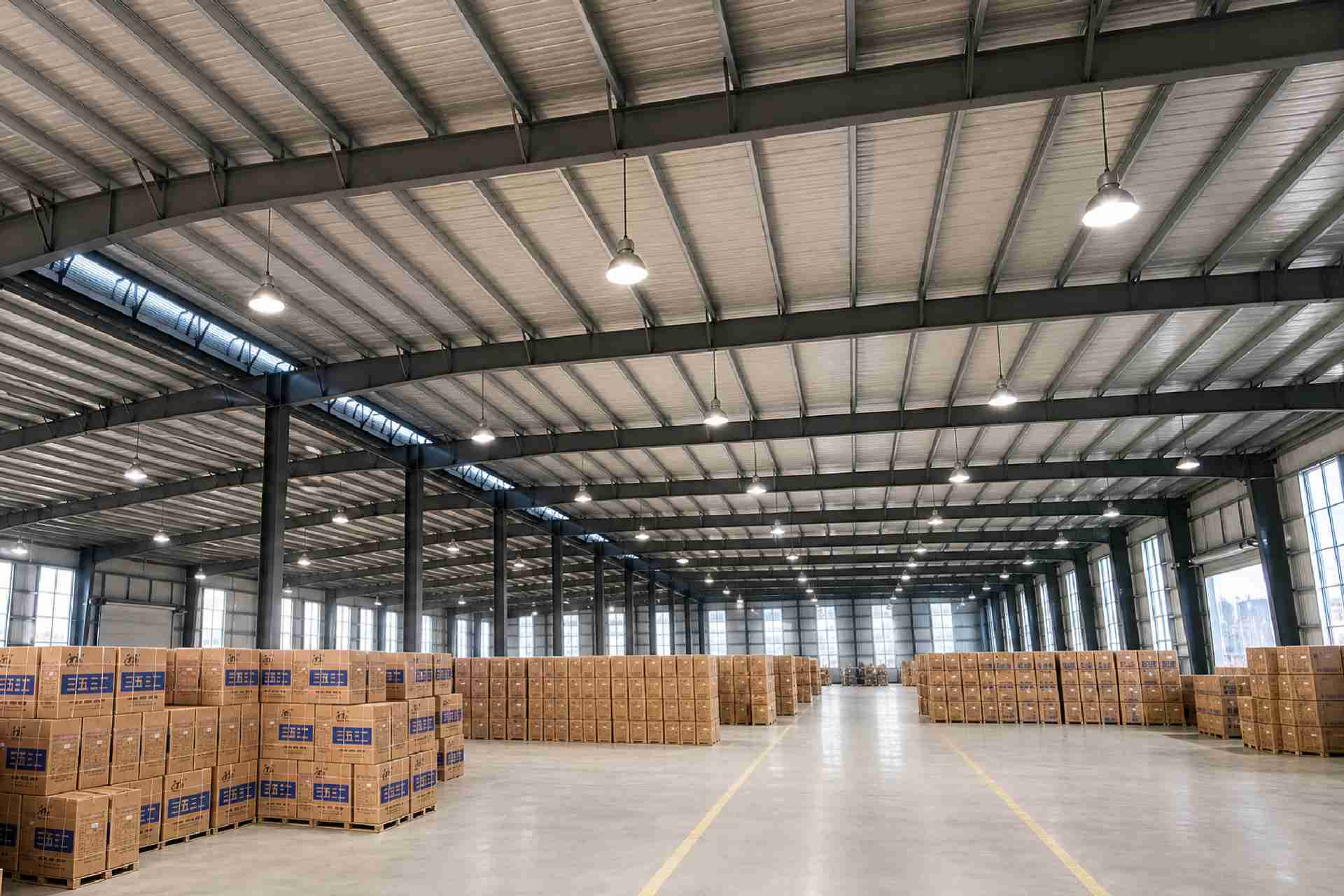
Factory capacity cannot be judged by machine count alone. Mold availability, cycle time, size mix, changeovers, staffing, and reject rate all influence output.
Step 6: Trim and Finish
Freshly molded boots may have runners or thin flash along the mold line. Workers trim this material and inspect the surface for incomplete filling, bubbles, burns, contamination, color variation, or deformation.
The finishing team then adds the insole, completes logo printing or labeling, and handles any model-specific work. Clean trimming matters more than it sounds. A rough edge can make an otherwise sound boot look cheap, while an aggressive cut can damage the waterproof shell.
Step 7: Test for Leaks and Safety Performance
Every production order needs inspection, but the test plan should match the boot. General rain boots require visual and waterproof checks. Safety boots may also need impact, puncture, flexing, abrasion, or other tests tied to the product specification and destination market.
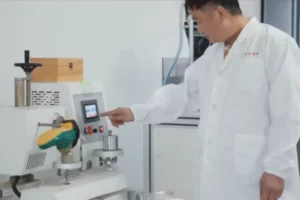
YUFENG lists equipment for water leakage, tensile or bonding, toe impact, puncture resistance, flexing, and abrasion testing. Incoming inspection, in-process checks, and final inspection create three opportunities to catch problems before shipment.
A buyer should still ask a precise question. Which tests apply to this model and order? A factory capability list is useful, but it does not prove that every boot carries every safety feature or certification.
Step 8: Approve Packaging and Release the Batch
Finished pairs are matched by size, cleaned, fitted with insoles where required, and packed according to the approved method. Carton markings, labels, logos, pair counts, and size assortments should match the purchase order.
YUFENG provides a separate عملية تأكيد العينات والتعبئة والتغليف for buyers who need private-label cartons or presentation details. Approval before production avoids last-minute changes after thousands of pairs are finished.
The factory then records the batch and moves the order into warehousing. Keeping production samples and inspection records makes a later complaint easier to investigate.
التعليمات
Are PVC rain boots made in one piece?
The main boot upper and outsole can be formed as one injection-molded piece. Linings and safety components may be integrated during molding, while labels, insoles, and cotton liners are added separately.
How long does injection molding take?
The cooling stage may take roughly 60–120 seconds in the documented YUFENG process. Total cycle time varies with the mold, material, boot size, wall thickness, and machine setup.
Can steel toes be added during molding?
Yes. The toe cap and puncture-resistant midsole can be positioned in the mold before PVC injection. Their inclusion and required performance must be specified and verified for the model.
What causes leaks in molded PVC boots?
Incomplete filling, thin sections, trapped air, contamination, mold damage, poor settings, or finishing damage can create leak paths. Water testing helps catch affected pairs.
Conclusion
PVC rain boot manufacturing is a controlled sequence of specification, compound preparation, mold setup, injection, cooling, trimming, testing, and packing. The machines provide speed, but process discipline produces repeatable boots. Buyers should approve the material, sample, safety configuration, and packaging before bulk production, then ask for inspection evidence tied to the actual order.
For an OEM or ODM project, send the model, size range, intended workplace, safety requirements, quantity, and packaging details when you contact YUFENG. That gives the factory enough information to recommend a mold and production plan.