What Are PVC Rain Boots Made Of? Materials, Benefits, and Limitations
-
 Tom
Tom
- 25th septembre 2026
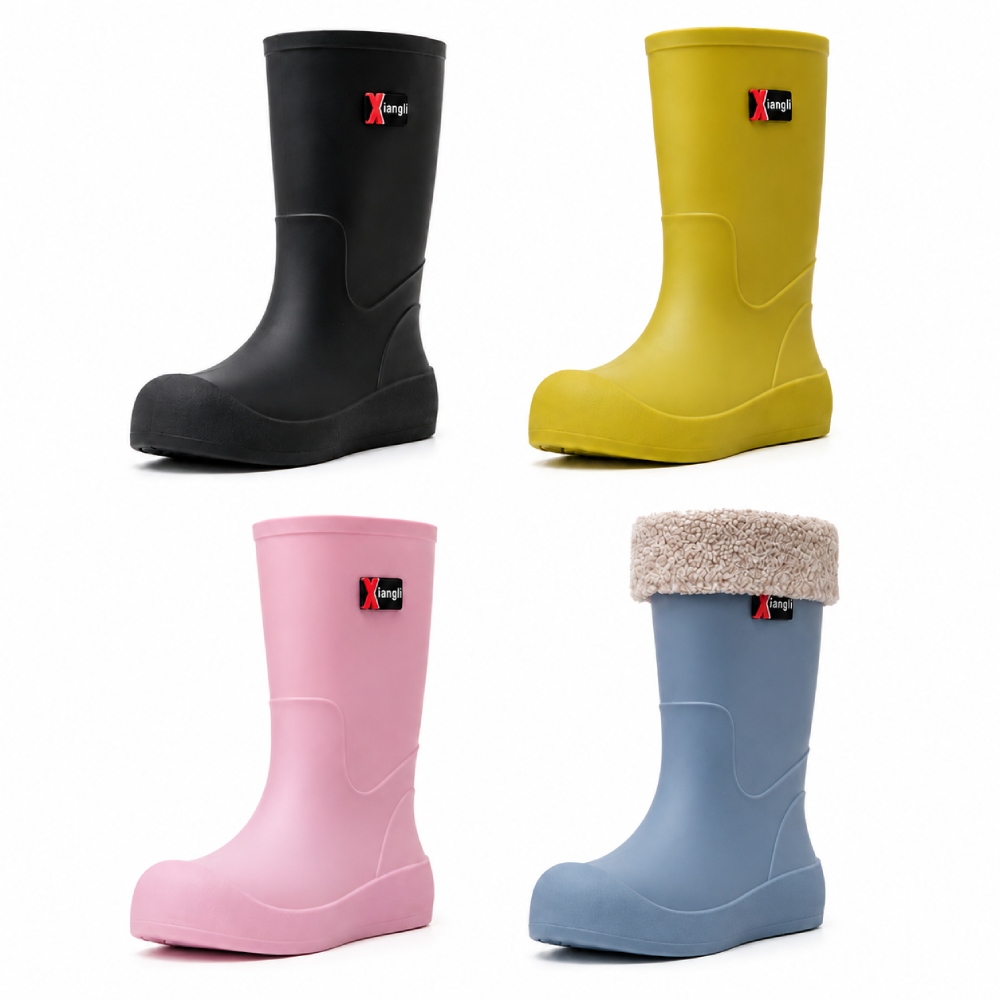
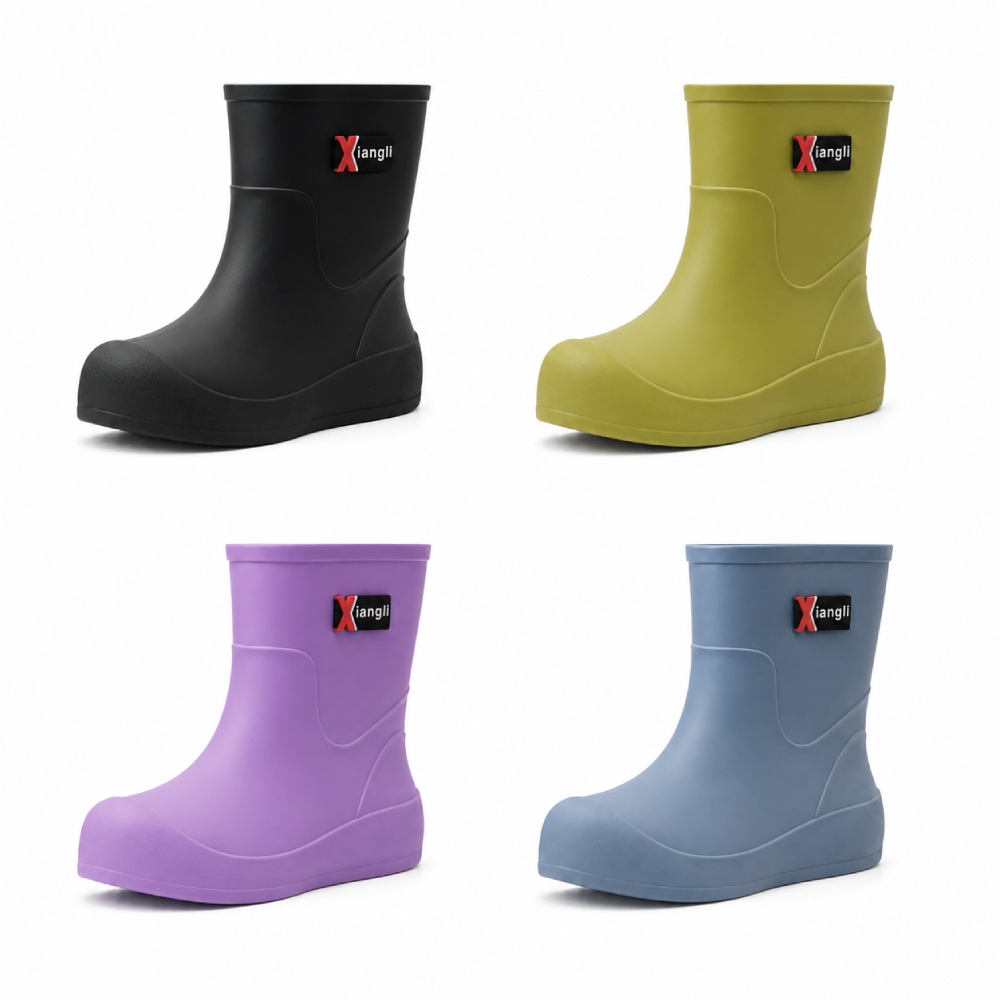
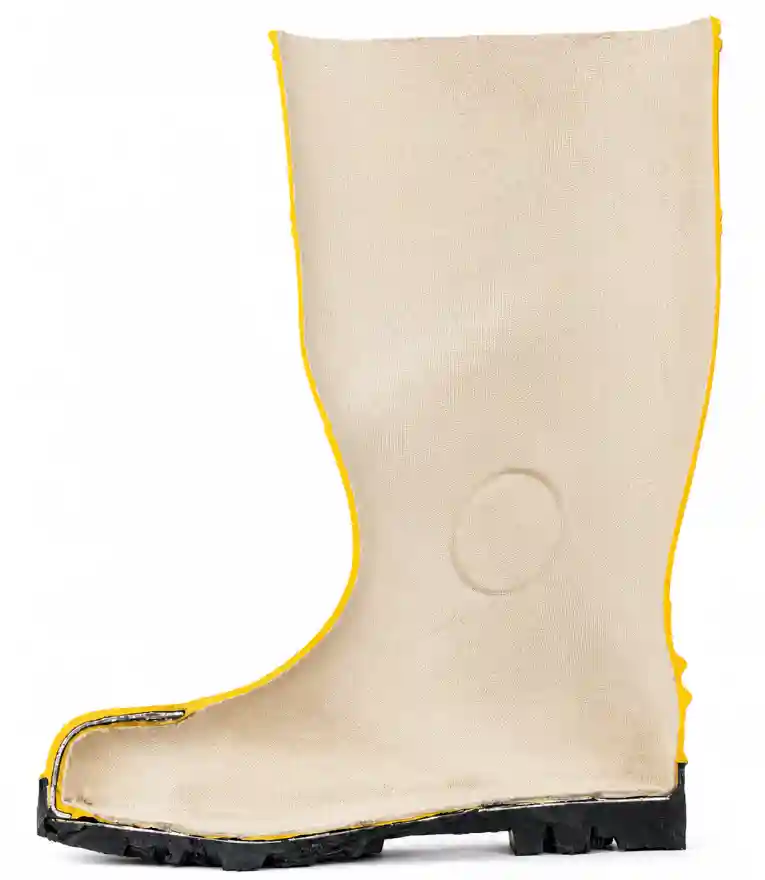
Cut open a PVC rain boot and you will find a molded PVC compound, not a sheet of rubber stitched around a last. The compound contains the polymer plus ingredients that tune softness, color, heat stability, and outdoor performance. A factory heats it, injects it into a boot mold, and cools the piece into a mostly seamless upper and outsole. That is why a pair can handle mud, while the same label says little about cold weather or chemicals.
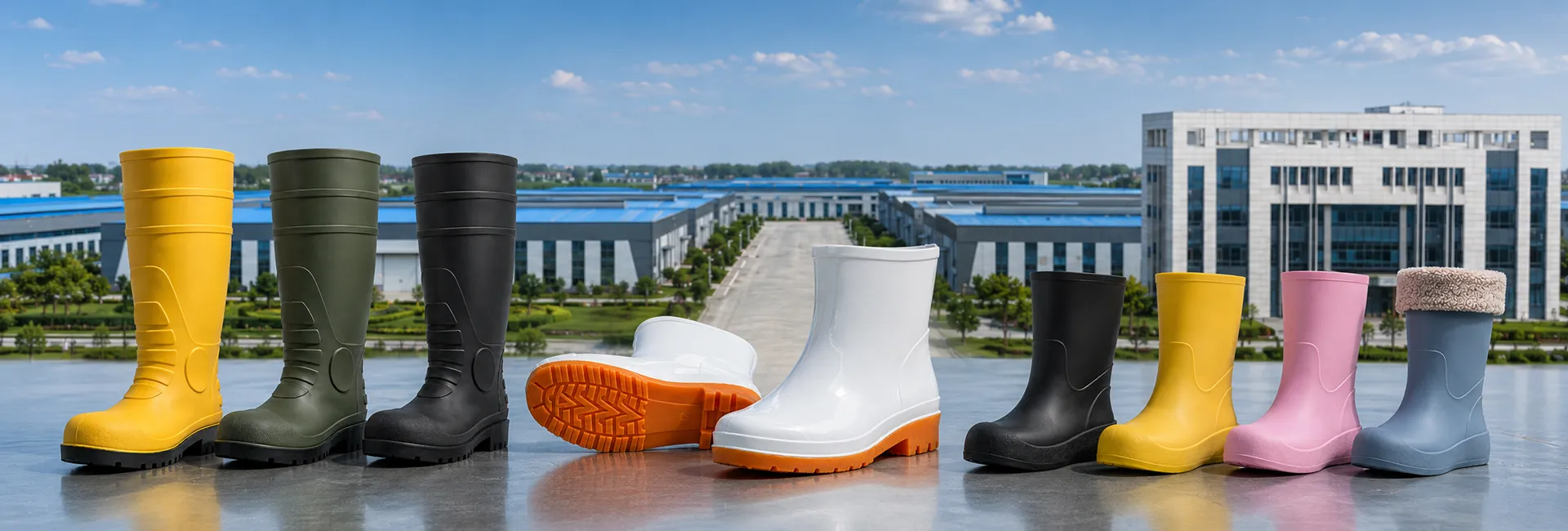
For a buyer, the useful question is simple. Which formulation fits the job? YUFENG makes PVC rain boots for outdoor, food-processing, agricultural, and industrial use. Its PVC rain boots product range lets you compare those jobs.
What Materials Are Used in PVC Rain Boots?
PVC Resin and Modified PVC Compounds
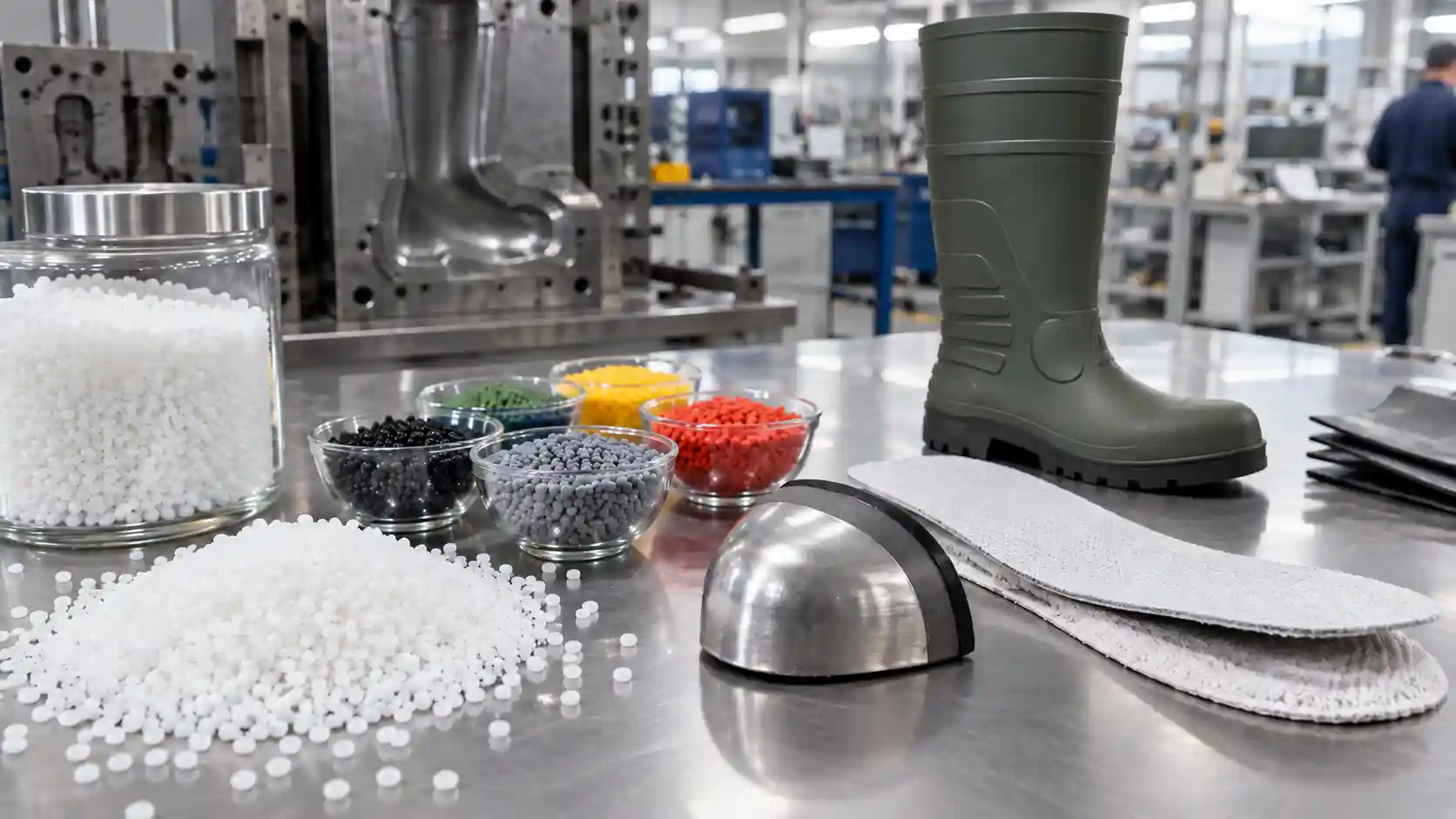
PVC resin is the starting point. Rigid resin alone would make an awkward pull-on boot, so the compound is adjusted with plasticizers, stabilizers, pigments, and other ingredients. Small changes in that recipe show up as a softer shaft, a harder sole, a different color, or a boot that stiffens sooner in winter.
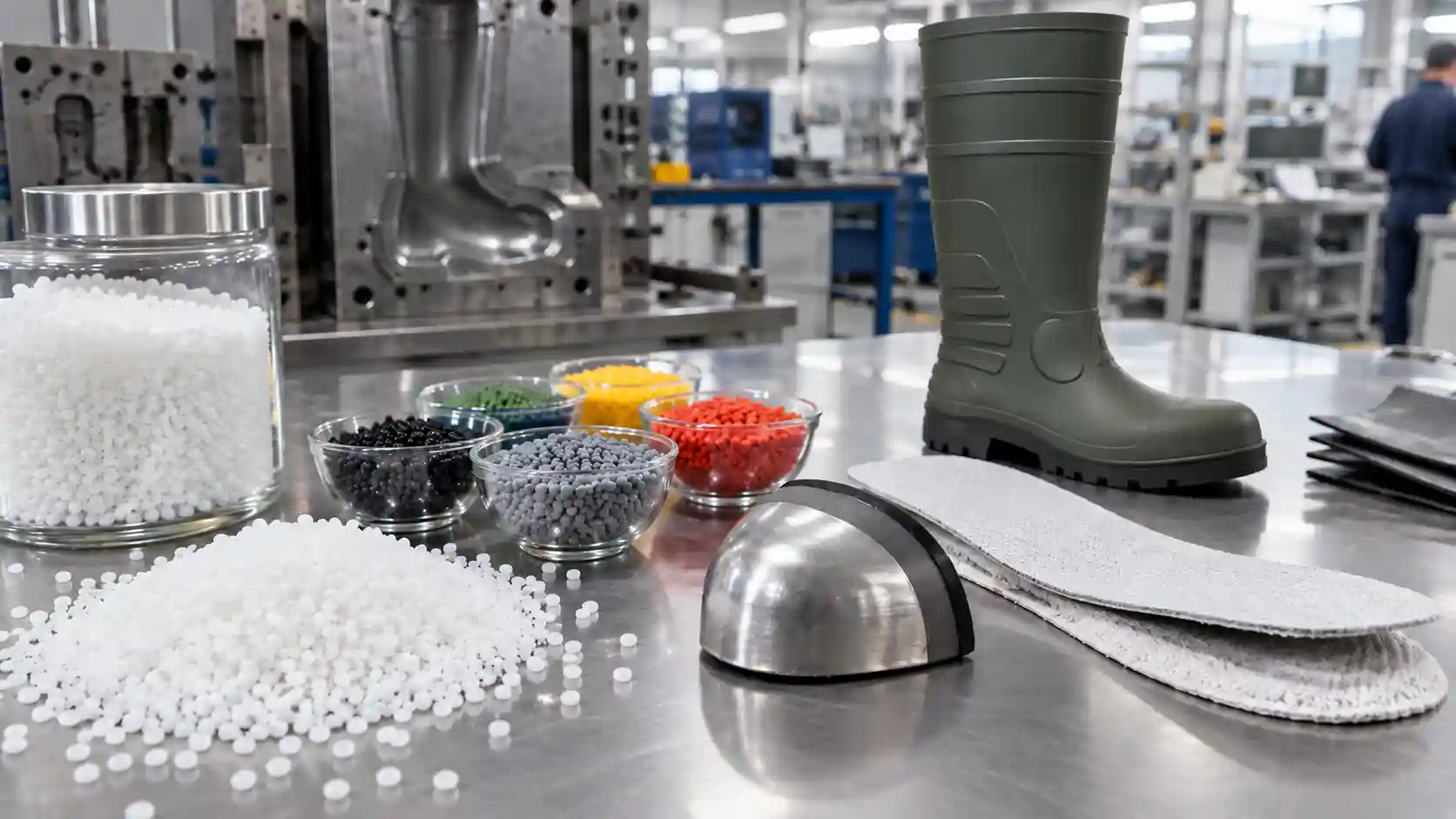
YUFENG describes a batching and mixing process that can include PVC resin or recycled PCR-PVC pellets, plasticizers, stabilizers, color powder, and anti-UV additives. The materials are mixed before injection molding. This is why “PVC boot” describes a material family rather than one identical recipe.
Additives and Color Systems
Stabilizers help the compound survive the heat of molding. Pigments provide color, and anti-UV additives may help with outdoor exposure. Change the recipe and you can change hardness, odor, flexibility, or appearance. Private-label buyers should approve a sample and keep the material specification with the order record.
Protective Components in Safety Models
Some PVC safety rain boots include components that ordinary rain boots do not. A steel toe cap can protect against impact from falling objects, while a steel or other puncture-resistant midsole can reduce the risk from sharp objects underfoot. These components are positioned in the mold and encapsulated by PVC during injection molding.
Do not assume that every PVC boot has these features. Confirm the exact model, protective components, test evidence, and applicable market requirements. YUFENG’s safety work rain boots are intended for construction, mining, agriculture, factories, cleaning, and other wet or demanding work settings, but the selected configuration still needs to match the hazard assessment.
How Are PVC Rain Boots Manufactured?
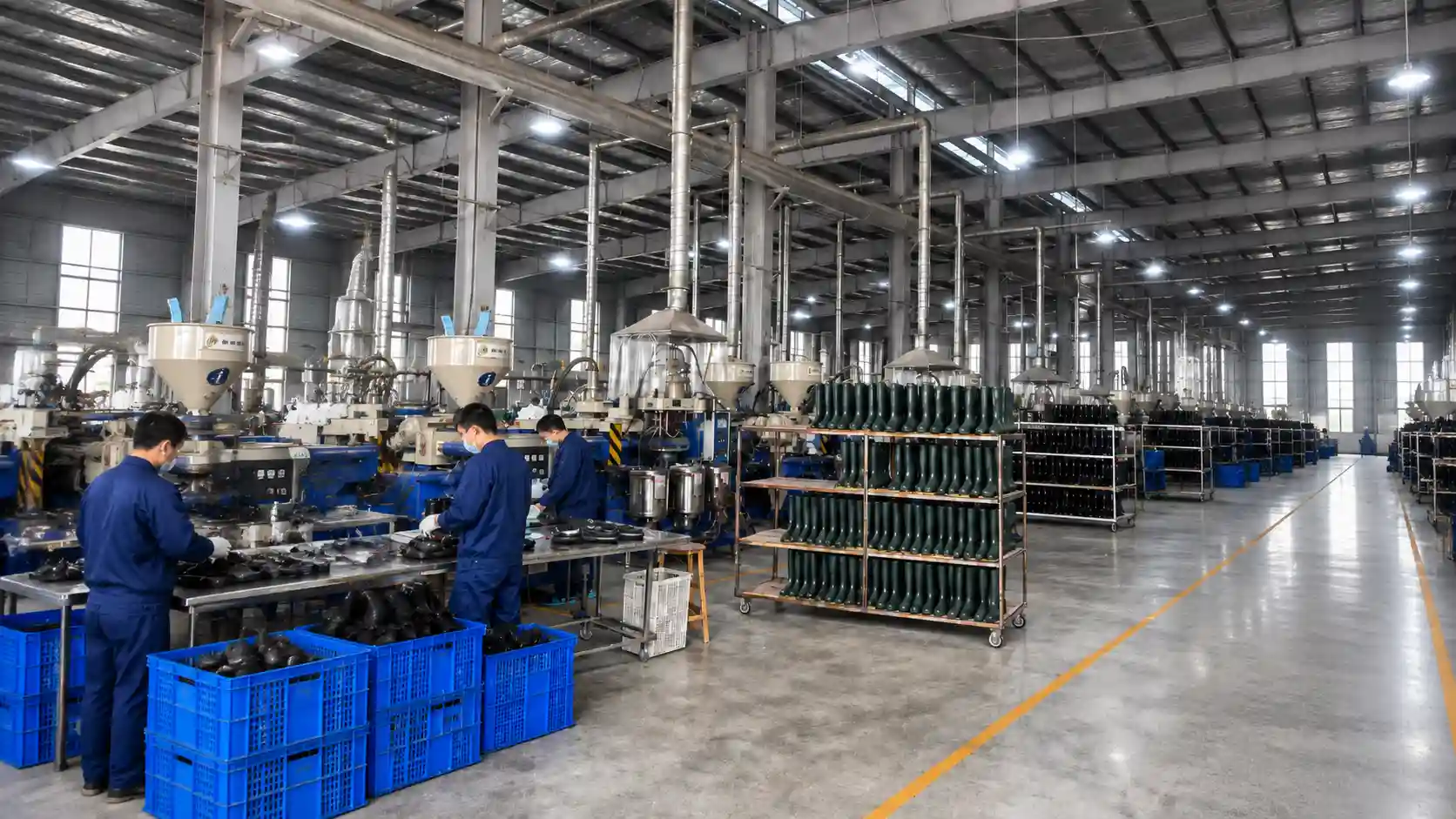
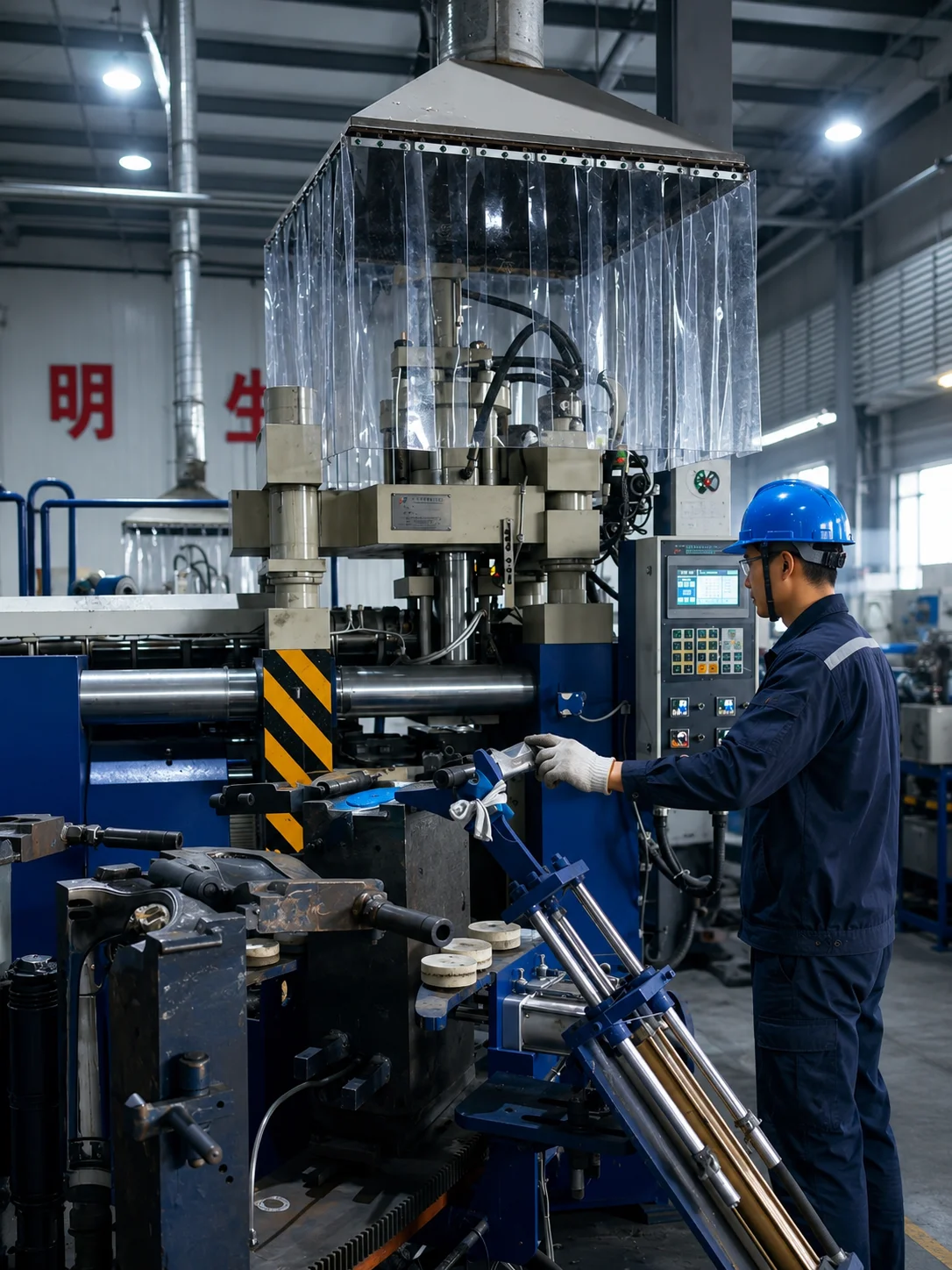
Most PVC rain boots use rotary one-piece injection molding. The compound reaches a flowable state, enters the boot-shaped mold, cools, and comes out ready for trimming and inspection. The main water barrier is continuous, so there are no stitched seams running through the molded body.
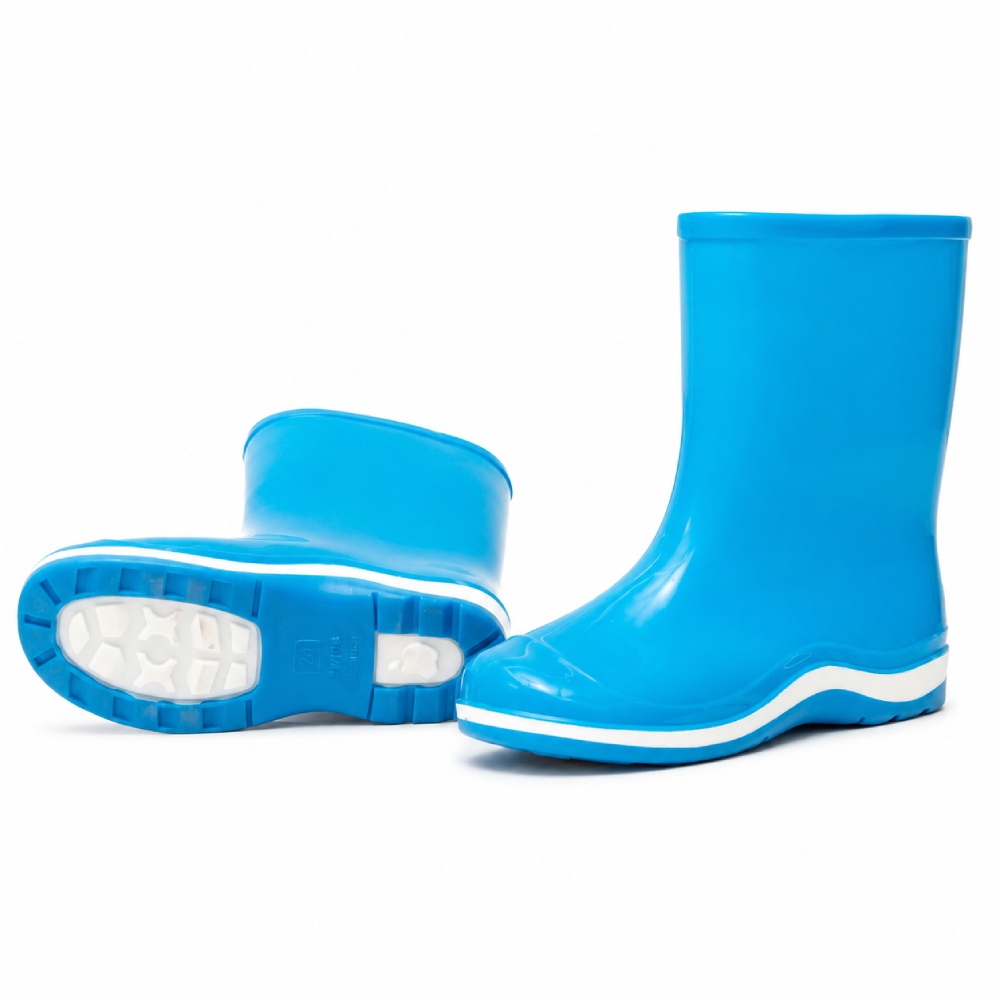
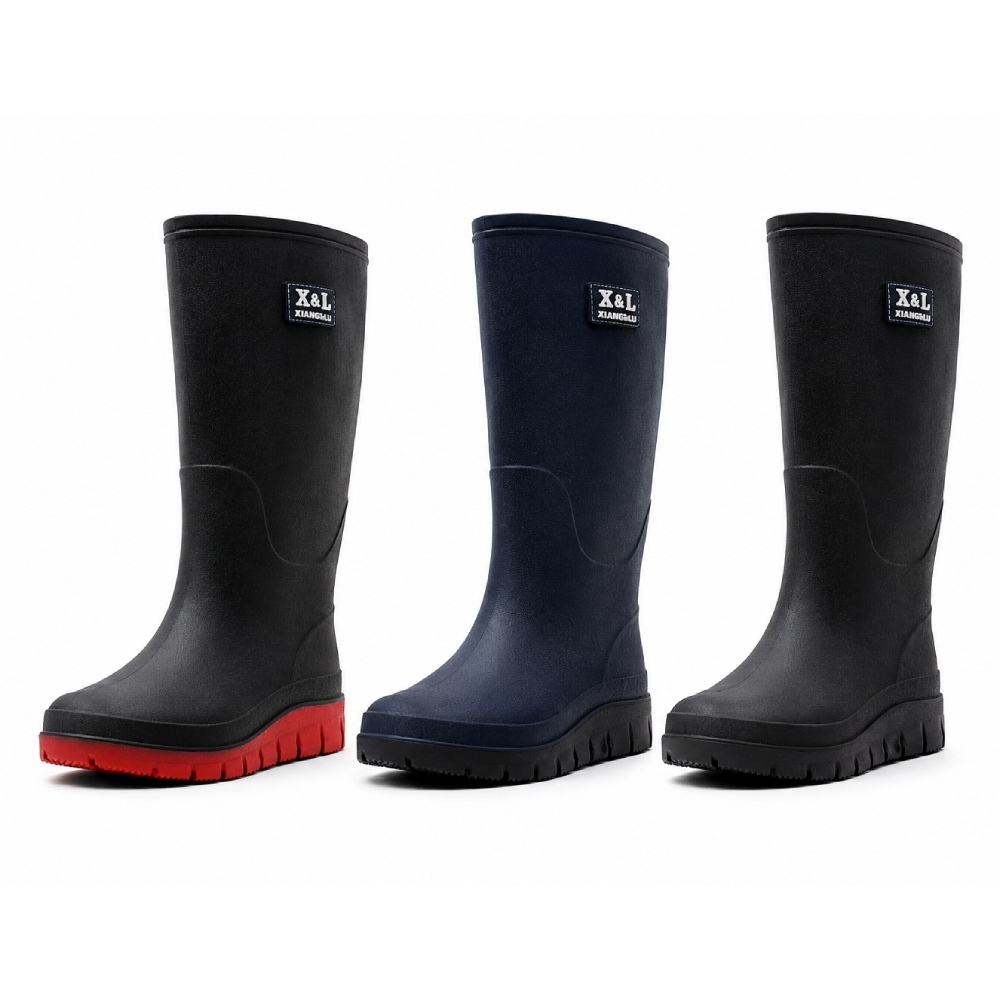
In a two-color process, different PVC compounds may be used for the shaft and outsole. A softer shaft can improve wearing comfort, while a denser outsole compound can support traction and wear resistance. Actual performance depends on the formulation, mold design, tread pattern, and process control rather than color or appearance alone.
YUFENG describes a process that includes material mixing, protective-component positioning where required, injection at controlled barrel temperatures, circulating-water cooling, demolding, trimming, leakage inspection, insole insertion, logo printing, and packaging. The company also records raw-material batch, production shift, mold number, and customer order information for traceability.
Benefits of PVC Rain Boots
Waterproof, Seam-Reduced Construction
PVC is naturally resistant to water, and one-piece injection molding can reduce the number of seams exposed to rain, mud, and washdown. That makes PVC rain boots useful for farms, gardens, outdoor work, cleaning, and wet industrial areas.
Easy Cleaning
The smooth outer surface can be rinsed and wiped more easily than porous footwear materials. This is useful in food-processing and sanitation environments where dirt, grease, and residue must be removed regularly. Cleaning routines still need to follow the employer’s hygiene procedures and the boot’s actual material compatibility.
Scalable B2B Production
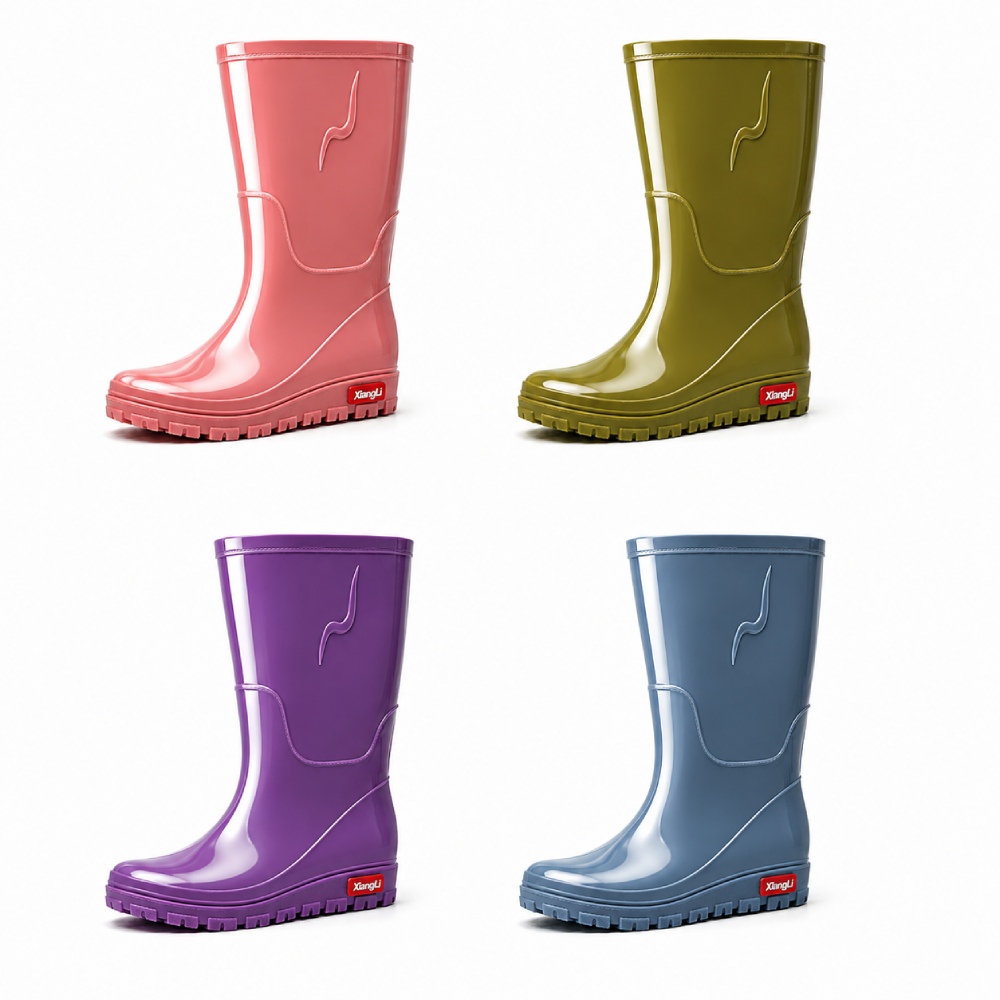
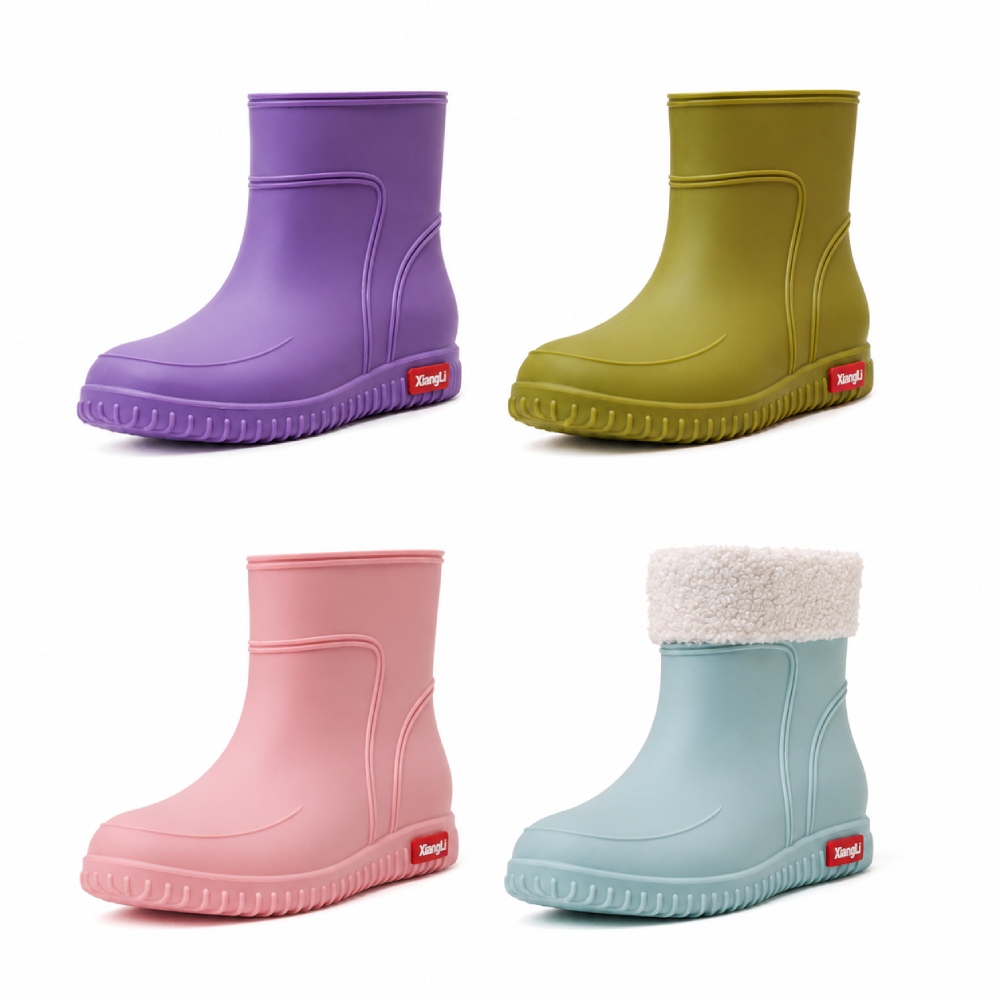
PVC injection molding is suited to repeatable shapes and large-volume orders. Buyers can request changes such as color, logo, height, lining, packaging, or selected protective components. YUFENG lists OEM/ODM support and separate minimum quantities for several customization options; the confirmed quotation should control the final order.
Functional Protection Options
Depending on the model, PVC boots can be configured with anti-slip outsoles, steel toe protection, puncture-resistant midsoles, linings, or oil- and chemical-resistance requirements. These are model-specific properties, not automatic characteristics of all PVC footwear.
Limitations Buyers Should Understand
Cold-Temperature Stiffness
PVC can become harder and less flexible in low temperatures. A boot designed for mild rain may not be suitable for cold storage, winter construction, or prolonged outdoor exposure without a tested insulation or low-temperature design. Ask for the intended temperature range and evaluate a sample in realistic conditions.
Breathability
Keeping water out and letting air in are totally different goals. A solid PVC boot can keep outside puddle water out just fine. But, it may also retain body heat and sweaty moisture inside the shoe. Your daily comfort depends on a few things. It depends on the tight fit, your thick socks, the inside lining, and taking ventilation breaks. The total work duration changes how you feel, too. For very long work shifts, smart buyers should compare the complete boot design. You should not judge the plastic polymer alone.
Abrasion and Heavy-Duty Trade-Offs
PVC offers very practical, everyday durability. However, a super high-end vulcanized rubber boot may act differently. Rubber might perform differently under severe ground abrasion, heavy flexing, extreme heat, or nasty chemical exposure. Finding the right exact comparison depends entirely on the specific workplace hazard. It does not depend on a general, simple claim that one single material is always superior to everything else.
Chemical Compatibility Is Not Universal
PVC boots may be offered with resistance claims for selected oils, acids, alkalis, or cleaning agents. Resistance depends on concentration, temperature, exposure time, and the exact compound. Request a compatibility statement or test evidence for the chemicals in your workplace. Never treat a general PVC label as proof of protection against every chemical.
PVC Rain Boots vs. Rubber and EVA
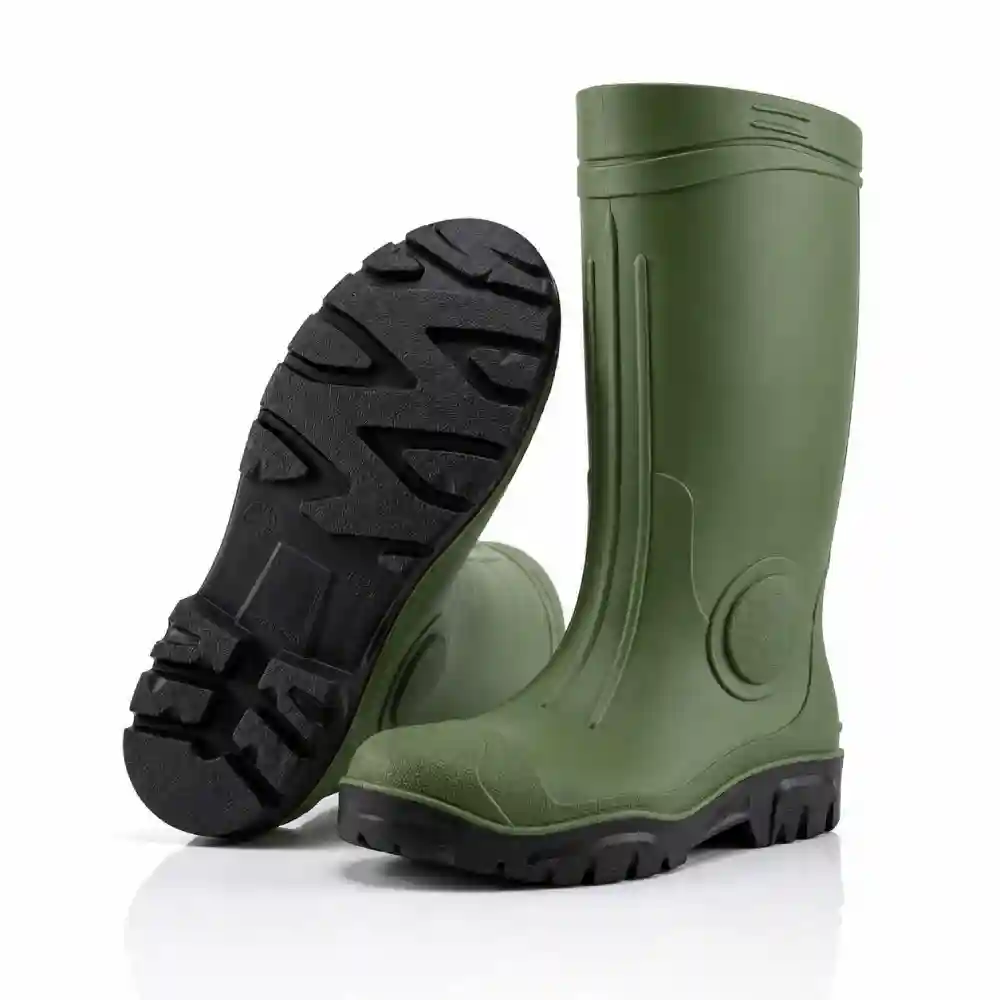
People often select PVC for waterproof molded footwear for good reasons. It supports super efficient injection molding. It offers bright color options and cheap, competitive large-volume production. On the flip side, natural or synthetic rubber may offer a totally different balance. Rubber gives different flexibility, strong abrasion resistance, and better hot/cold temperature behavior. But, rubber is commonly made through a completely different, slower manufacturing route. What about EVA? EVA is very lightweight. It can feel super soft on your feet. Yet, its heavy compression, high heat, and sharp cut-resistance behavior differs wildly from normal PVC.
The absolute best material always depends on the specific job. For normal rain, sticky mud, and easy washdown days, PVC may be very sensible. But for heavy crushing impact, sharp nail puncture, extreme freezing temperatures, or aggressive acid chemicals, you must ask for material-specific test evidence.
How to Choose the Right PVC Rain Boots
Start with a written use profile:
- Is the boot for rain, mud, food processing, farming, construction, mining, or chemical handling?
- Will workers stand for short tasks or full shifts?
- Are impact, puncture, slip, oil, acid, or alkali hazards present?
- What temperatures and cleaning agents will the boot encounter?
- Is a steel toe, composite toe, or puncture-resistant midsole required?
- What sizes, colors, logos, packaging, and order quantities are needed?
Then ask the manufacturer for the exact material description, model parameters, sample, inspection method, and available certificates or test reports. YUFENG’s product design and OEM services can be used to discuss customization, packaging, and production requirements before a purchase order is released.
FAQ
Are PVC rain boots made entirely from PVC?
The main molded body is PVC-based, but the complete boot may also include additives, an insole, lining, logo materials, and protective components. Confirm the construction of the selected model.
Are PVC rain boots suitable for food-processing work?
Some models are designed for food-processing environments because they are waterproof, smooth, and easy to clean. Confirm the specific hygiene, slip, and testing requirements for your facility.
Do all PVC rain boots have steel toes?
No. Steel toes and puncture-resistant midsoles are features of selected safety models. General rain boots normally do not provide the same protection.
Can PVC boots be used with chemicals?
Only when the exact compound has been assessed for the chemical, concentration, temperature, and exposure time involved. Obtain product-specific evidence before use.
Conclusion
PVC rain boots are made from a formulated PVC compound shaped through injection molding, sometimes with additional components for impact, puncture, slip, lining, or workplace-specific performance. Their strengths include waterproof construction, easy cleaning, scalable production, and flexible customization. Their limitations include possible cold stiffening, limited breathability, and chemical or abrasion performance that varies by formulation.
For a reliable purchase, match the material and boot configuration to the actual work environment, approve a representative sample, and verify the documents for the exact model. To discuss bulk specifications or private-label requirements, contact YUFENG.